




Understanding Positive Reinforcement: Definition and Key Principles
Positive reinforcement means encouraging desired behaviors with rewards.
It focuses on adding pleasant consequences to increase behavior frequency.
This topic frames the following sections on definition, principles, and types.
Definition of Positive Reinforcement
Parents or caregivers give rewards to encourage specific actions.
Verbal praise after homework completion motivates a child to repeat the behavior.
Such praise helps children link actions to rewarding outcomes quickly.
Core Principles of Positive Reinforcement
Apply reinforcement consistently to encourage predictable behavior patterns.
Give immediate feedback so children connect their actions to rewards.
Communicate expectations clearly so children understand which behaviors earn rewards.
Use verbal praise, tokens, or extra privileges as appropriate rewards.
Tailor reinforcement to individual preferences to enhance motivation and engagement.
Types of Positive Reinforcements Commonly Used
Practitioners choose reinforcement types based on context and child age.
Families select rewards that match a child’s preferences when possible.
The list below shows common reinforcement types used in families.
- Verbal Praise: Use compliments to acknowledge good actions.
- Tangible Rewards: Give gifts or treats to encourage positive actions.
- Privileges: Allow extra playtime or screen time as incentives.
- Social Recognition: Publicly acknowledge achievements to boost self-esteem.
Why Positive Reinforcement Works Effectively
Positive reinforcement builds trust between parents and children.
Parenting Made Just for You
Get personalized Parenting Solutions tailored to your child’s needs. Transform your parenting journey with expert guidance in 1-3 days.
Get StartedMoreover, it promotes a supportive and encouraging family environment.
It encourages children to develop self-discipline voluntarily over time.
Additionally, it reduces conflicts often caused by punishment-based discipline.
The method aligns with communal and relational values found in Nigerian families.
Cultural Context: How Nigerian Family Values Align with Positive Reinforcement
Nigerian family life emphasizes respect and collective wellbeing.
These cultural values align with supportive parenting practices.
The following sections explore specific cultural links to encouragement.
Emphasis on Respect and Hierarchy
Families teach children to honor elders and authority figures.
Respect for roles maintains family dignity and social order.
Children learn duty through modeled behavior and expectations.
Community and Collective Success
Households prioritize group success and mutual responsibility.
Adults reward actions that benefit the family and community.
Such recognition strengthens bonds and encourages cooperation.
Oral Tradition and Storytelling
Storytelling transmits values across generations in families.
Unveil the Perfect Name that Tells Your Family's Story
Let us help you find a name that embodies your family's values, traditions, and dreams. Our personalized consultation weaves cultural insights to create a name that's uniquely yours.
Get StartedParents use narratives to model desirable behaviors for children.
Positive feedback highlights those behaviors and promotes repetition.
Applying Positive Reinforcement in Daily Interactions
Families often give public praise for achievements and kindness.
Elders and teachers provide affirmations to guide youth behavior.
Household members acknowledge effort in chores and schoolwork.
- Parents praise children openly for achievements and acts of kindness.
- Grandparents share encouraging words that reinforce desirable traits.
- Family members acknowledge effort during chores and schoolwork.
- Teachers and community leaders use affirmations to guide youth.
Respecting Emotional Expression
Families increasingly value emotional wellbeing for all members.
Caregivers praise constructive expression of feelings in daily life.
Such encouragement nurtures resilience and balanced emotional growth.
Benefits of Positive Reinforcement in Child Development
Positive reinforcement encourages desired behaviors in children.
This approach rewards good actions to increase their frequency.
Consequently, families can build supportive environments for growth.
Enhancing Self-Esteem and Confidence
Parents can raise children’s self-esteem with consistent praise.
When caregivers praise good behavior, children feel valued and confident.
Moreover, praise encourages children to accept new challenges and learn.
Oluchi observed her son’s confidence increase with daily encouragement.
She often praises effort, which motivates ongoing improvement.
Promoting Positive Behavior Consistently
Positive reinforcement helps children repeat desired behaviors.
Parents who reward success focus attention on positive choices.
Additionally, this reduces emphasis on mistakes and encourages learning.
For example, Mr. Adeyemi rewards his daughter when she completes chores.
As a result, she helps consistently without repeated reminders.
Strengthening Parent-Child Relationships
Positive reinforcement fosters trust and warmth between parents and children.
Children feel safer expressing themselves with supportive caregivers.
Consequently, families experience fewer conflicts and misunderstandings at home.
Mrs. Funke reported that kind words improved her family atmosphere.
This encouragement strengthens emotional bonds within the household.
Encouraging Lifelong Learning and Growth
Positive reinforcement nurtures a child’s love for learning.
Recognizing effort inspires curiosity and sustained persistence.
Moreover, this practice helps children build resilience for later challenges.
Mr. Balogun described how rewards supported his daughter’s study habits.
Consequently, she remained motivated during difficult examinations and projects.
Supporting Emotional Regulation and Social Skills
Reinforcing positive behavior helps children regulate their emotions.
This method teaches patience, empathy, and cooperation over time.
Parents who reward kindness support the development of social skills.
For example, Ngozi praises her son when he shares toys with friends.
Therefore, he shows greater understanding and stronger friendships in groups.
Practical Ways Nigerian Families Apply Positive Reinforcement
Nigerian families apply positive reinforcement in familiar ways.
Parents combine praise and small rewards to reinforce good habits.
Additionally, cultural and religious activities offer chances for consistent recognition.
- Verbal praise for achievements and good manners
- Providing small rewards such as favorite snacks or extra playtime
- Encouraging words during homework and chores
- Celebrating milestones with family gatherings and affirmations
- Consistent recognition of efforts in cultural and religious activities
See Related Content: How to Balance Traditional Nigerian Values with Modern Parenting Styles
Practical Examples of Positive Reinforcement in Nigerian Households
This collection presents practical examples from Nigerian households.
Each section highlights real family practices and outcomes.
Readers can see how parents encourage children through everyday actions.
Encouraging Academic Excellence
Mrs. Olufunke Adebayo praises her children when they perform well in school.
She rewards Amina with extra playtime after she scores good grades.
Consequently, this motivates Amina to keep improving her academic performance.
Similarly, Mr. Chukwuemeka Okoro uses verbal affirmation to celebrate his son’s reading progress.
He often expresses pride, strengthening his son’s enthusiasm for learning.
Promoting Respect and Good Manners
Mrs. Ifeoma Nwosu acknowledges her children whenever they show respect to elders.
She offers kind words and sometimes small treats to reinforce polite behavior.
This approach encourages them to value respect consistently.
Furthermore, Mr. Emeka Uche often praises his daughter for using polite language.
He explains how good manners positively impact family relationships.
Supporting Household Responsibilities
Mr. Tunde Balogun rewards his children when they complete chores without reminders.
He gives extra screen time or allows them to invite friends over as incentives.
As a result, the children take more initiative around the home.
Likewise, Mrs. Grace Adeyemi offers positive feedback when her kids help prepare meals.
This encouragement creates a sense of teamwork and responsibility.
Fostering Emotional Expression
Mrs. Funmi Olateju praises her son when he talks about his feelings openly.
She listens attentively and responds with warmth and validation.
Therefore, he feels safe expressing emotions without fear of judgment.
In the same way, Mr. Chika Nnamdi uses positive language to reinforce emotional honesty.
This practice strengthens trust and connection within their family.
Using Community Praise for Motivation
In many Nigerian communities, public recognition serves as strong positive reinforcement.
Mrs. Kemi Abiola’s son receives praise during church gatherings for volunteering.
This public acknowledgment boosts his confidence and desire to contribute more.
Moreover, local schools often celebrate students’ achievements with certificates and ceremonies.
Such recognition motivates children to maintain high standards.
Incorporating Cultural Values in Reinforcement
Families often use proverbs and stories to highlight desired behaviors positively.
Mrs. Aisha Bello shares encouraging folktales that reward honesty and kindness.
This method connects positive reinforcement with cultural heritage.
Consequently, children better understand why good behavior matters beyond the household.
Learn More: Managing Aggressive Behavior in Toddlers and Older Kids
Positive Reinforcement vs. Punishment: Impact on Nigerian Children
This article examines positive reinforcement and punishment in Nigerian homes.
It highlights emotional outcomes and family dynamics.
The following sections provide details and practical guidance.
Differences Between Positive Reinforcement and Punishment
Positive reinforcement encourages desired behavior through rewards or praise.
In contrast, punishment aims to reduce unwanted behavior by applying negative consequences.
Both methods influence children’s actions but yield different emotional outcomes.
Furthermore, positive reinforcement builds motivation and self-esteem in children.
Meanwhile, punishment often leads to fear, anxiety, and resentment.
Effects of Positive Reinforcement on Nigerian Children
Positive reinforcement fosters a supportive and loving family atmosphere.
Parents like Mrs. Amina Okeke use praise to boost their children’s confidence.
This method helps children feel valued and understood, promoting healthy development.
Moreover, Nigerian children respond better to encouragement than to harsh discipline.
Positive feedback also strengthens parent-child relationships and improves communication.
Consequences of Punishment in Nigerian Households
Punishment may cause children to withdraw emotionally or act out aggressively.
Mr. Chukwudi Eze recalls that strict corporal punishment damaged his own sense of trust.
Children fear punishment more than they learn correct behavior through it.
This fear can lead to dishonesty or avoidance to escape consequences.
Therefore, reliance on punishment may stunt children’s emotional growth in many Nigerian homes.
Why Positive Reinforcement Works Better in Nigerian Families
Nigerian culture values respect and encouragement in family dynamics.
Positive reinforcement aligns well with communal values and emotional warmth.
It nurtures cooperation and willingness to learn rather than obedience from fear.
Parents who employ positive techniques, like Mrs. Ifeoma Nnaji, observe greater child resilience.
Consequently, positive reinforcement improves long-term behavior and emotional health.
Practical Ways Nigerian Parents Can Use Positive Reinforcement
Parents can apply simple techniques at home to encourage good behavior.
These techniques reward effort and promote consistent positive responses.
Families often notice improved communication when they use these methods.
- Offer specific praise for good behavior, such as completing homework diligently.
- Use rewards like extra playtime or small treats after chores are done well.
- Encourage efforts publicly to boost children’s pride within the family and community.
- Create family routines that celebrate achievements with kind words and hugs.
- Focus on strengths to build confidence rather than only correcting mistakes.
Discover More: How to Set Clear Boundaries and Expectations for Nigerian Kids
Role of Parents and Guardians in Applying Positive Reinforcement Effectively
Parents and guardians shape how positive reinforcement works at home.
They reward desirable behaviors to encourage those behaviors to continue.
This approach builds trust and respect between adults and children.
Understanding Positive Reinforcement in the Family Context
They notice and reward actions that parents want to see again.
That reinforcement encourages repetition of good behaviors over time.
Families also strengthen relationships by using trust and mutual respect.
Building Consistency and Clarity
Consistency proves crucial for positive reinforcement to be effective.
Parents should state expectations clearly to prevent confusion and mixed signals.
For example, Mrs. Adebayo praises her daughter whenever she completes homework.
Using Appropriate and Immediate Rewards
Rewards must match the behavior they follow to remain meaningful.
Mr. Okoro gives extra playtime after his son helps with chores.
Immediate praise strengthens the link between action and recognition.
Modeling Positive Behavior for Children
Guardians model positive actions through their own daily behavior.
Children tend to imitate behaviors they frequently observe at home.
Thus, Mr. Eze uses polite language to inspire respectful speech.
Encouraging Open Communication and Emotional Support
Parents foster open dialogue to learn about children’s needs.
They listen actively and respond with empathy to build confidence.
Mrs. Yusuf talks often about feelings and future goals with her children.
Empowering Extended Family and Community Support
Extended relatives often influence children’s development in Nigerian families.
Guardians invite grandparents, aunts, and uncles to reinforce good behaviors.
The Johnson family asks elders to share stories that praise proper conduct.
Addressing Challenges and Adapting Strategies
Parents may struggle to maintain patience and steady reinforcement.
They should treat setbacks as learning chances to improve their methods.
Mr. Chukwu changes rewards so they match his son’s evolving interests.
See Related Content: How to Teach Emotional Regulation to Nigerian Children
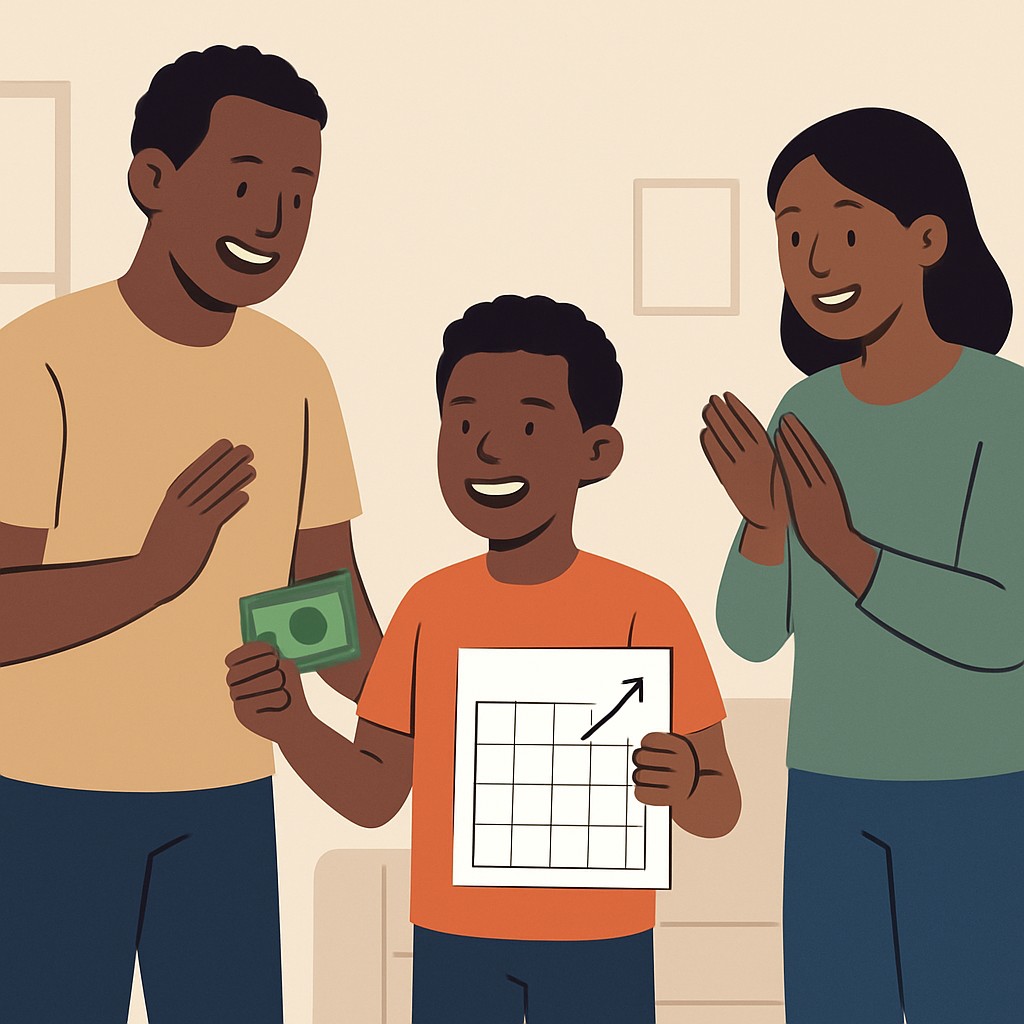
Challenges Nigerian Families May Face When Implementing Positive Reinforcement
This article lists challenges families may face when implementing positive reinforcement.
Each section presents distinct practical issues drawn from the provided content.
Readers will see barriers and suggested approaches based on the original text.
Cultural Expectations and Traditional Parenting Styles
Nigerian families often emphasize respect and obedience in child rearing.
This focus may make consistent positive reinforcement seem unusual or weak.
Moreover, using praise might be mistaken for spoiling children.
However, adapting reinforcement techniques can complement existing cultural values.
Limited Awareness and Understanding of Positive Reinforcement
Many parents may not fully understand how positive reinforcement works.
Consequently, they might apply it inconsistently or incorrectly.
Parenting workshops and community programs can help bridge this knowledge gap.
Additionally, families can learn from educators like Mrs. Adebayo, a Lagos-based psychologist.
Challenges Related to Socioeconomic Factors
Financial stress can limit the time parents spend with their children.
Busy work schedules often reduce opportunities for meaningful positive interactions.
Furthermore, access to resources like books or toys for rewards may be constrained.
Despite this, simple verbal praise remains a powerful and accessible tool.
Balancing Discipline and Positive Reinforcement
Some parents struggle to balance firmness with encouragement.
This struggle may stem from fear of losing control over the child.
Sudden shifts from strict discipline to positive methods confuse children.
Therefore, gradual integration of positive reinforcement works best in these families.
Influence of Extended Family and Community
Extended family members often play a significant role in child upbringing.
They might hold differing views on discipline and reward systems.
Such conflicts can hinder consistent implementation of positive reinforcement.
Open communication among family members can create a unified approach.
Language Barriers and Communication Styles
Nigeria’s diverse languages sometimes challenge clear communication of praise.
Parents may find it difficult to express positive feedback in ways children understand.
Children respond better to reinforcement framed in their native tongue.
To solve this, families can use culturally relevant expressions of encouragement.
Long-term Effects: Building Confidence and Emotional Well-being in Children
Long-term positive reinforcement shapes children’s confidence and emotional stability.
Over years, consistent encouragement supports healthy self-image and adaptive coping.
Consequently, families often observe sustained motivation and improved relationships.
Fostering Lasting Self-Esteem
Positive reinforcement helps children feel valued and appreciated.
This approach nurtures their self-esteem over time.
As a result, children develop a strong sense of self-worth.
Moreover, it encourages them to embrace challenges with confidence.
For instance, Chinedu, a Lagos-based father, observed his daughter bloom after consistent praise.
Enhancing Emotional Health
Children exposed to positive encouragement tend to manage emotions better.
They develop resilience against stress and setbacks.
Therefore, emotional well-being improves through such consistent support.
Mariam, a school counselor in Abuja, emphasizes the importance of praise in calming anxious children.
Creating Secure Family Bonds
Positive reinforcement strengthens trust between parents and children.
It builds a secure foundation for open communication.
Consequently, children feel safe expressing their feelings and concerns.
In many Nigerian households, this trust leads to healthier relationships and cooperation.
Supporting Lifelong Motivation
Children who experience encouragement tend to foster internal motivation.
They pursue goals driven by personal growth rather than fear of punishment.
Thus, positive reinforcement cultivates a genuine love for learning and achievement.
This effect was evident in Adeola, whose son excelled academically after his efforts were celebrated.
Practical Elements of Positive Reinforcement at Home
Apply clear praise promptly and with sincerity.
Highlight specific efforts and achievements when you praise children.
Encourage small successes to help children build confidence gradually.
- Consistently acknowledging good behavior promptly and sincerely
- Using specific praise to highlight children’s efforts and achievements
- Encouraging small successes to build momentum and confidence
- Creating an emotionally supportive environment where mistakes are learning opportunities
- Involving teachers and community leaders like Mrs. Okoye to reinforce positive behavior
Incorporating Positive Reinforcement in Nigerian Educational Settings
This section focuses on practical steps schools can take to apply positive reinforcement.
Moreover, the guidance emphasizes classroom practices, staff training, and parental involvement.
Consequently, educators gain actionable methods that support student engagement.
Fostering a Supportive Classroom Environment
Teachers can create a more supportive classroom atmosphere through consistent positive reinforcement.
For example, Mrs. Adebayo from Lagos Elementary praises effort rather than just correct answers.
As a result, students feel valued and engage more meaningfully in lessons.
Training Educators on Effective Reinforcement Techniques
School administrators should organize workshops on effective reinforcement strategies.
Moreover, experts like Mr. Chinedu Okoro deliver practical training tailored to classroom challenges.
Through ongoing sessions, teachers learn to recognize and reward desirable behaviors promptly.
Involving Parents to Strengthen Learning Outcomes
Positive reinforcement achieves better results when schools and families collaborate.
For instance, parents like Mrs. Funke Iwuchukwu praise homework completion at home.
Additionally, schools can host meetings to share techniques and set common goals.
Utilizing Rewards and Recognition Programs
Many schools implement reward systems to highlight student achievements publicly.
Examples include Student of the Month awards and certificates for positive behavior.
Consequently, recognition enhances a child’s sense of belonging among peers and staff.
Adapting Approaches to Diverse Educational Contexts
Schools vary in resources, languages, and cultural practices across Nigeria.
Thus, teachers must tailor reinforcement techniques to fit each local environment.
For example, rural classrooms may use verbal praise instead of material rewards.
Tips for Nigerian Parents to Maintain Consistency in Positive Reinforcement
This guide presents practical steps parents can use at home.
Apply these tips consistently to support children’s steady behavior change.
Local family examples appear within the section explanations.
Create Clear and Simple Expectations
Parents should establish clear and simple rules for their children.
This clarity helps children understand expected behavior.
Mrs. Adaobi Okeke uses familiar language with her children.
For example, she explains household tasks in simple terms.
Develop a Routine for Reinforcement
Set a daily routine to deliver praise regularly.
Mr. Chinedu Eze notes that consistent timing boosts motivation.
Choose moments like mealtime or bedtime for reinforcement.
Routines stop reinforcement from becoming unpredictable or forgotten.
Use Specific Praise
Use praise that identifies the exact behavior you want to encourage.
Mrs. Funke Adeyemi says specific phrases work better than generic praise.
Tell children what they did, for example, cleaning a room well.
Specific recognition helps children feel valued for their efforts.
Involve Extended Family Members
Include grandparents and relatives in reinforcement efforts.
Encourage relatives like Aunt Nkechi and Uncle Emeka to praise good behavior.
This shared approach strengthens the child’s sense of family expectations.
It also creates a supportive environment for positive growth.
Communicate Regularly with Co-Parents
Discuss strategies with your spouse or other caregivers.
Mrs. Amaka and Mr. Tunde Ogunleye emphasize unified approaches.
Regular communication prevents mixed messages between adults.
Try family meetings or WhatsApp chats to coordinate reinforcement.
Track Progress and Adjust Reinforcement
Keep a simple journal or checklist to monitor responses.
Mrs. Kemi Abiola finds this method useful to spot motivators.
Adapt praise and rewards to fit each child’s evolving needs.
Flexibility helps keep reinforcement effective as children change.
Be Patient and Persistent
Remember that positive reinforcement takes time to shape behavior.
Mr. Sola Balogun advises parents to stay patient during slow progress.
Continued efforts establish a lasting positive pattern for children.
Above all, persistence shows a family’s commitment to positive parenting.
Encourage Open Dialogue with Children
Invite children to share their thoughts about praise and rewards.
Mrs. Ifeoma Chukwu believes conversation builds mutual respect and understanding.
Use dialogue to tailor reinforcement methods to children’s needs.
Also, involve children so they feel engaged in their development.


