




Understanding Your Child’s Feelings
Starting school can bring different feelings, including excitement, worry, uncertainty, or sadness.
Therefore, give your child space to share thoughts without pressure.
Listen carefully, and notice both spoken words and emotional expressions.
Inviting Honest Conversations
Choose calm moments to talk about starting school.
Ask open questions that encourage your child to express personal feelings.
For example, ask what feels exciting, difficult, or unfamiliar.
Then, allow enough time for your child to answer.
Avoid interrupting, dismissing concerns, or rushing toward solutions.
Creating Emotional Safety
Show acceptance when your child shares positive or difficult feelings.
Reassure your child that every feeling deserves attention.
Additionally, respond calmly when your child expresses worry.
Use simple, supportive language that confirms you are listening.
Keep conversations open, so your child can return with new concerns.
Recognizing Changing Feelings
Children’s feelings may change as school approaches.
Therefore, continue checking in without making conversations feel demanding.
Parenting Made Just for You
Get personalized Parenting Solutions tailored to your child’s needs. Transform your parenting journey with expert guidance in 1-3 days.
Get StartedWatch for changes in mood, communication, or willingness to discuss school.
However, avoid assuming what those changes mean.
Instead, invite your child to explain feelings in their own words.
Supporting Personal Expression
Encourage your child to describe feelings honestly and clearly.
Let your child pause, think, or try again when needed.
Respect feelings even when they differ from your expectations.
Most importantly, remain patient, present, and willing to listen.
Build Confidence Through Familiar Preparation
Begin by introducing school routines in a calm, age-appropriate way.
Gradually, help your child understand what school may involve.
This preparation can help your child approach school routines with greater familiarity.
Discuss Daily Routines
Explain that school includes familiar routines throughout the day.
Talk about transitions between different activities.
Also, describe routines using simple language your child can understand.
Keep explanations clear, brief, and suitable for your child’s age.
Unveil the Perfect Name that Tells Your Family's Story
Let us help you find a name that embodies your family's values, traditions, and dreams. Our personalized consultation weaves cultural insights to create a name that's uniquely yours.
Get StartedThen, invite your child to repeat or describe the routine.
Explore School Activities
Discuss the activities your child may experience at school.
Mention learning, playing, listening, and participating in age-appropriate ways.
Use general descriptions when specific details remain unknown.
Additionally, explain that activities may change throughout the school day.
This approach helps your child picture school as manageable experiences.
Explain What To Expect
Prepare your child for the general structure of attending school.
Explain that adults will provide guidance during school routines and activities.
Clarify that your child will receive instructions during different parts of the day.
However, avoid overwhelming your child with too much information at once.
Instead, introduce expectations gradually and revisit them when appropriate.
Use Practice Conversations
Practice simple conversations about routines, activities, and expectations.
Ask your child to explain what they remember.
Then, gently clarify anything that needs further explanation.
Use encouraging language while your child practices describing school experiences.
Furthermore, allow your child to ask questions at their own pace.
Encourage Active Participation
Invite your child to help discuss school routines and activities.
Offer choices about which part of school preparation to discuss first.
This participation can support confidence while keeping preparation age-appropriate.
Continue using simple, consistent language as school approaches.
Building Emotional Regulation Skills
Teach simple skills that help your child notice feelings and respond calmly.
Practice these skills regularly, especially when your child feels comfortable.
These skills can help your child communicate feelings and choose supportive responses.
Naming Strong Feelings
Encourage your child to name fear, sadness, frustration, or worry.
Use simple words that match your child’s understanding.
Then, acknowledge the feeling without dismissing or criticizing it.
For example, explain that worry can happen during changes.
Naming emotions helps your child communicate instead of reacting immediately.
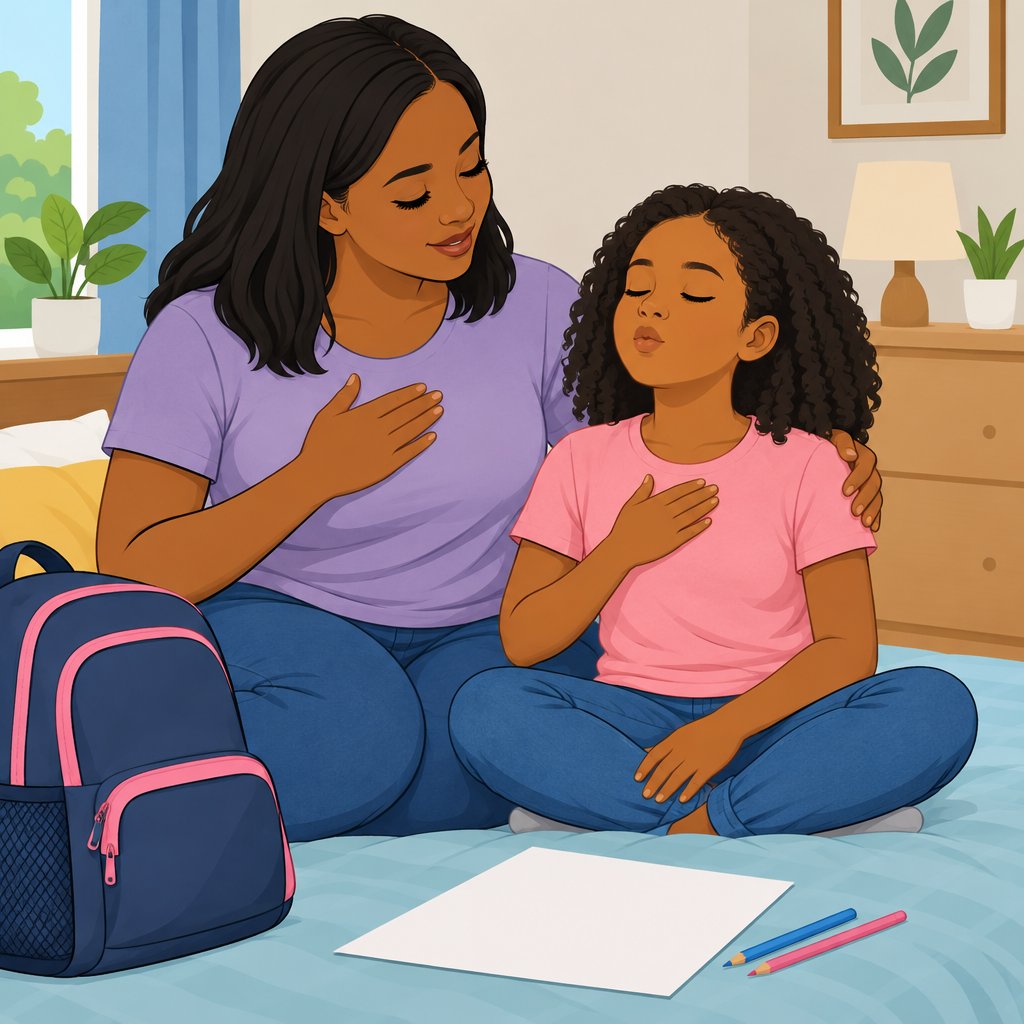
Using Calm Breathing
Teach your child to pause and take slow, gentle breaths.
Invite your child to notice the breath moving in and out.
Practice breathing together before strong emotions appear.
Later, remind your child to use this skill during fear or frustration.
Managing Frustration
Help your child pause when frustration begins to rise.
Encourage your child to relax their body and take one slow breath.
Next, support your child in describing the problem with simple words.
Then, guide your child toward one manageable next step.
Remind your child that asking for help remains appropriate.
Responding to Sadness
Give your child space to express sadness without rushing the feeling away.
Offer calm presence and gentle reassurance.
Encourage your child to breathe, talk, or sit quietly.
Let your child choose the response that feels most comfortable.
Afterward, invite your child to identify helpful support.
Handling Separation Anxiety
Teach a brief, consistent goodbye routine.
Keep your words calm, clear, and reassuring.
Encourage your child to use a calming skill during separation.
For example, your child might breathe slowly or repeat a reassuring phrase.
Practice the routine so your child understands each step.
Keep departures focused, supportive, and emotionally steady.
Creating a Personal Calm Plan
Help your child choose a few strategies for different feelings.
- For fear, practice slow breathing.
- For sadness, encourage talking or quiet time.
- For frustration, suggest pausing and asking for help.
- For separation anxiety, use the consistent goodbye routine.
Review the plan together and keep its language simple.
Praise your child for practicing emotional skills, not only for staying calm.
Explore Further: Helping Your Child Adjust Without Fear Or Tears
Practise Separation Gradually
Separation practice can help your child prepare emotionally for school.
Begin with manageable periods apart and increase them gradually.
Meanwhile, clear reassurance and predictable reunions can support each practice.
Begin With Short Periods Apart
Start with brief periods apart when your child feels ready.
Choose a calm moment for each practice separation.
Then, gradually practise longer periods apart without rushing the process.
Offer Clear Reassurance
Before leaving, reassure your child that you will return.
Use simple, confident words to explain that you are going away temporarily.
Also, repeat the reassurance calmly whenever your child needs support.
Keep Departures Predictable
Use a consistent approach when beginning each separation.
Speak warmly, keep your message clear, and avoid creating uncertainty.
Additionally, acknowledge your child’s feelings while maintaining reassurance.
Reconnect After Separation
When you return, remind your child that you kept your promise.
Next, offer warm reassurance after each period apart.
Over time, these repeated experiences can support your child’s emotional preparation for school.
Delve into the Subject: How To Build School Confidence Before Resumption
Build Independence Through Everyday Responsibilities
Start with one manageable responsibility at a time.
Then, let your child practise organising personal belongings.
These responsibilities help your child practise independence through everyday actions.
Organise Personal Belongings
Encourage your child to place belongings in their designated spaces.
Allow enough time for your child to complete each task independently.
Offer guidance when needed, but avoid taking over immediately.
Additionally, let your child practise returning items after using them.
As a result, your child can gradually manage personal belongings with less support.
Communicate Needs Clearly
Encourage your child to use clear words when communicating needs.
Practise asking for help calmly and directly.
Also, invite your child to explain when something feels difficult.
Listen carefully, then acknowledge the message without speaking for your child.
Gradually, encourage your child to communicate needs with greater independence.
Follow Simple Routines
Create a simple sequence for completing regular responsibilities.
Next, encourage your child to follow that sequence independently.
Use consistent prompts while your child learns each routine.
Then, reduce reminders as your child manages more steps alone.
Recognise steady effort as your child practises these responsibilities.
Support Progress Patiently
Keep tasks manageable so your child can focus on one responsibility.
Offer encouragement while allowing your child to make reasonable attempts.
When mistakes happen, guide your child toward trying again.
Meanwhile, acknowledge effort without expecting immediate perfection.
Finally, maintain a calm approach while independence develops gradually.
Gain More Insights: Preparing Your Child For A New Daily Routine
Building Positive Friendship Skills
Positive friendship skills help children interact kindly and respectfully with classmates.
These skills support sharing, cooperation, and thoughtful responses during shared activities.
With regular practice, your child can use these behaviours during everyday school interactions.
Practise Kindness
Teach your child to treat classmates with kindness.
For example, explain how kind words and considerate actions support friendly interactions.
Encourage your child to notice how other children may feel.
Also, remind your child to include others during shared activities.
Encourage Sharing
Help your child practise sharing materials, space, and attention.
Meanwhile, explain that sharing requires patience and consideration.
Encourage your child to ask before taking something another child uses.
Likewise, teach your child to wait while someone else has a turn.
Develop Cooperation
Show your child how cooperation helps children complete activities together.
Encourage your child to listen, contribute, and respect different ideas.
When disagreements arise, teach your child to use calm words.
Additionally, help your child practise solutions that consider everyone involved.
Support Help-Seeking
Teach your child to identify trusted adults at school.
Explain that trusted adults can listen when a problem feels difficult.
Encourage your child to describe what happened clearly.
Finally, remind your child to keep asking for help when necessary.
Reassure your child that seeking help shows good judgment.
You Might Also Like: What Nigerian Parents Should Do Before School Starts
Use Encouraging Language About School
Speak about school with warmth, confidence, and realistic optimism.
Positive language can help your child view school as a place they can approach gradually.
Describe school as a new experience rather than a test your child must pass.
Emphasize that learning, adjusting, and asking for help all take time.
Choose Supportive Phrases
Use words that encourage your child without demanding immediate confidence.
For example, say, “You can take things one step at a time.”
You could also say, “We can talk about anything that feels difficult.”
Remind your child that uncertainty does not mean they cannot manage school.
Keep your language simple, calm, and suitable for your child’s understanding.
Avoid Pressure and Threats
Avoid presenting school as something your child must handle perfectly.
Do not use threats, guilt, or pressure to force a positive reaction.
Threatening consequences can make school feel more frightening or overwhelming.
Instead, explain your expectations calmly and offer reassurance when needed.
Also avoid comparing your child’s response with another child’s response.
Each child may need different kinds of encouragement when facing change.
Respond Respectfully to Worries
Do not dismiss worries by telling your child they should not feel concerned.
Instead, acknowledge the worry and respond with patience.
You might say, “That sounds difficult to think about.”
Then add, “We can consider what might help you feel more ready.”
This response respects your child’s concern without making the worry seem permanent.
Avoid promising that everything will feel easy immediately.
Offer honest reassurance while keeping your message hopeful and supportive.
Keep Encouragement Consistent
Use similar supportive messages when discussing school at different times.
Consistent language can help your child recognise that you remain available and calm.
However, allow your child to share concerns without correcting every negative statement.
Gently guide the conversation toward support, preparation, and manageable next steps.
Above all, show confidence in your child without expecting them to hide difficult feelings.
Bring Familiar Comfort
Offer a familiar comfort item when appropriate and permitted.
This familiar connection can help your child feel steadier during an unfamiliar transition.
Choose comfort that feels reassuring without making the departure feel urgent or dramatic.
Additionally, keep the comfort item easy to access during the transition.
Keep Reassurance Consistent
Use calm, simple reassurance before leaving and during arrival.
Repeat the same reassuring message so your child hears steady support.
Speak confidently, because your tone can reinforce your words.
However, avoid making promises about details you cannot control.
Instead, reassure your child that you will reconnect after the school day.
Keep your goodbye clear, warm, and consistent.
Then, allow your child to begin the transition without extending the farewell.
Create a Gentle Arrival Moment
Give your child a calm moment to settle before entering the school setting.
Stay present while your child adjusts to the immediate surroundings.
Next, acknowledge the transition without adding pressure.
For example, you might say that starting school can feel different.
Then, remind your child that support remains available.
Keep the focus on moving through the moment together.
Make Space Afterward
Afterward, invite your child to share thoughts about the experience.
Ask open questions that encourage conversation without demanding details.
Listen carefully and let your child decide what to discuss first.
Also, accept brief answers if your child does not want to talk immediately.
Later, offer another opportunity to share.
Notice both comfortable and difficult moments without judging either response.
Finally, thank your child for talking and acknowledge the effort involved.


