



Parenting programmes in Nigeria deserve careful questions before a family commits money, time or personal information. A moving success story can open a useful conversation. However, choosing a programme also requires clear answers about its evidence, staff, child-protection arrangements and practical demands.
This report separates a new Jigawa family account from older national statistics. It provides five figures and four CSV tools for making a private comparison. We have not interviewed providers, tested a programme or created a quality ranking. The checklists help families organise questions; they do not certify any service.
What the Kudai story contributes
A UNICEF Nigeria story published on 23 October 2026 describes a family in Kudai, Jigawa State. The parents attribute changes in communication and family relationships to their participation in a Gender Transformative Parenting programme. UNICEF identifies the Isa Wali Empowerment Initiative as the implementing organisation.
The account explains what the experience meant to that family. It supplies no comparison group, representative participant sample or programme-wide effect size. Therefore, it cannot establish how much the programme changed an average family’s outcomes. Nor does it show that another provider, using the same broad label, offers an equivalent service.
Keep the 2021 national context in its period
The National Bureau of Statistics’ 2021 MICS infographic, page 2, reports that 90% of children aged 1–14 experienced at least one form of violent discipline by caregivers. It describes a rise of five percentage points from the survey five years earlier.
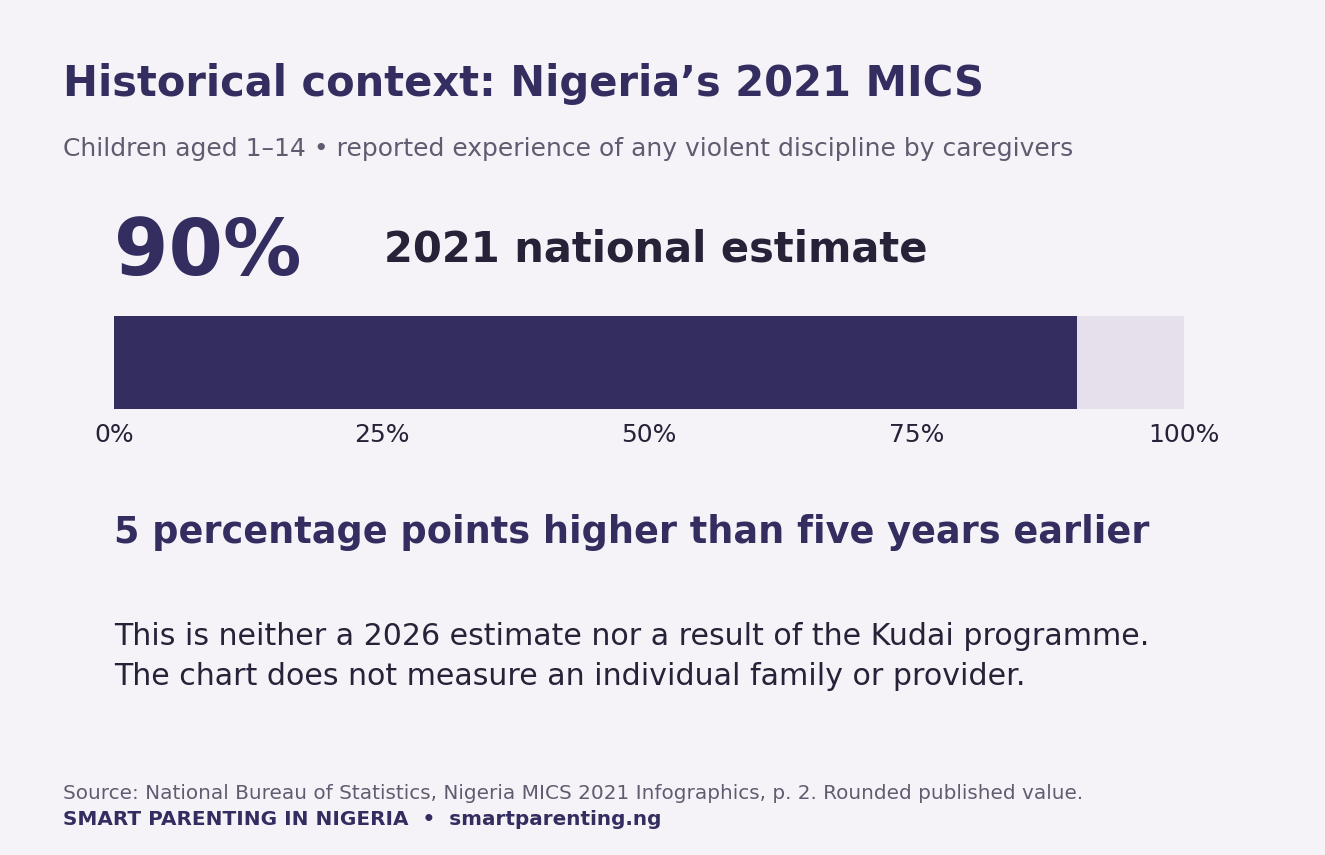
The survey year matters. This is not a 2026 prevalence estimate, an assessment of the Kudai family or a programme result. A five-percentage-point change also differs from a five-percent relative change. We retain the published rounded figure and calculate no current-year estimate or significance test from it.
Ask what evidence supports parenting programmes in Nigeria
Start by asking which curriculum the provider uses and whom it is designed to support. Confirm the intended ages, delivery language and format. Then request the evaluation behind any effectiveness claim. An attendance total, a satisfied participant and a comparative study each answer different questions.
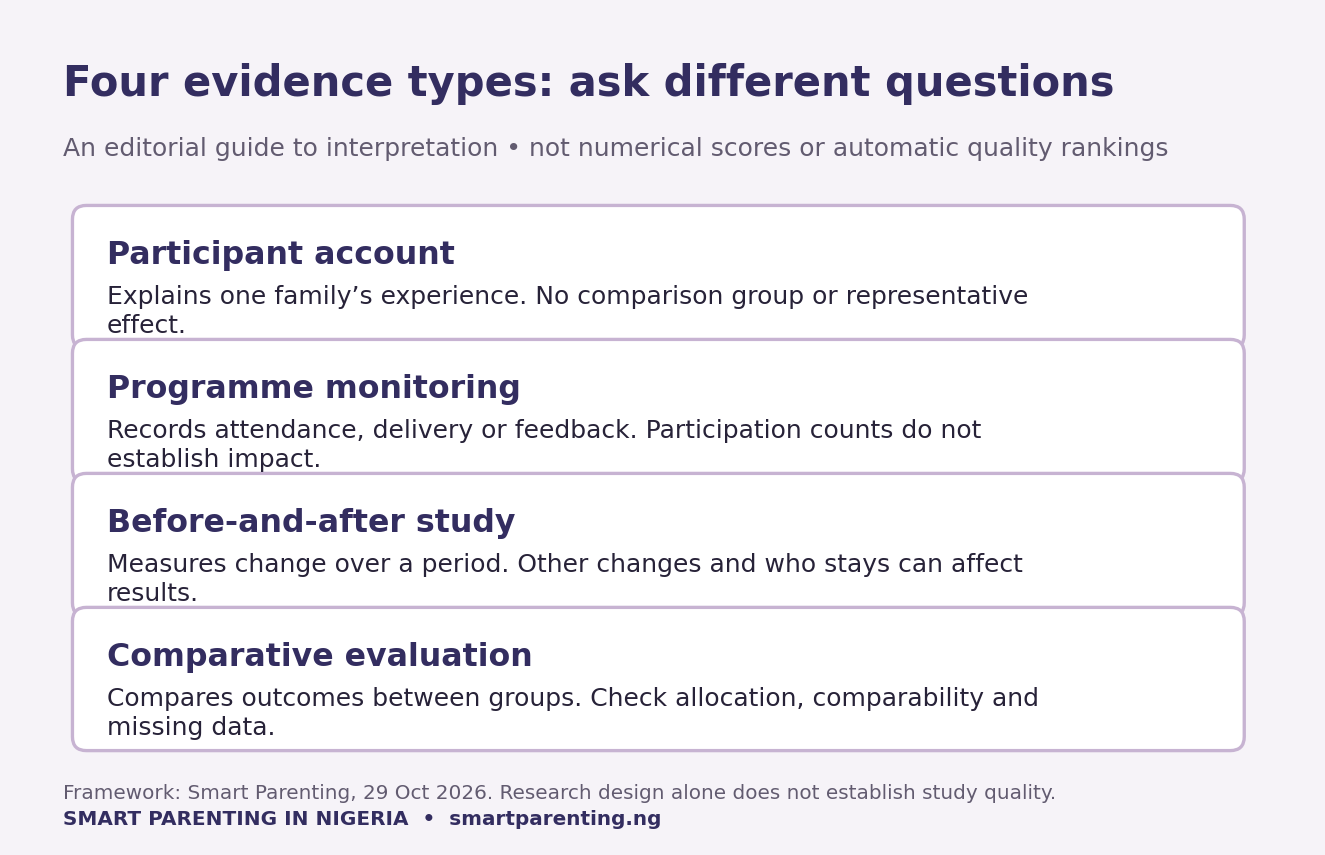
For a participant account, ask how the family was selected and whether other experiences are reported. For monitoring, check who attended, who completed the course and which outcomes were actually recorded. A before-and-after study also needs an explanation of other changes during the same period.
For a comparative evaluation, ask how the groups were formed, whether they were comparable and how missing follow-up data were handled. Look for the full methods and limitations. An impressive percentage without its population, outcome definition and reference period gives a family little basis for judging the claim.
UNICEF Innocenti’s October 2026 evidence-brief series addresses programme design, adaptation and measuring change. Its accompanying tool supports programme strengthening. These resources provide wider context; their existence does not validate a particular local provider or guarantee an individual family’s outcome.
Check staff, protection arrangements and privacy
Ask the provider to explain facilitators’ relevant training, supervision and responsibilities. Request its written child-protection policy, its route for raising a concern and its escalation process. If children attend, confirm who supervises them and which activities involve direct contact. Record unanswered questions before deciding.
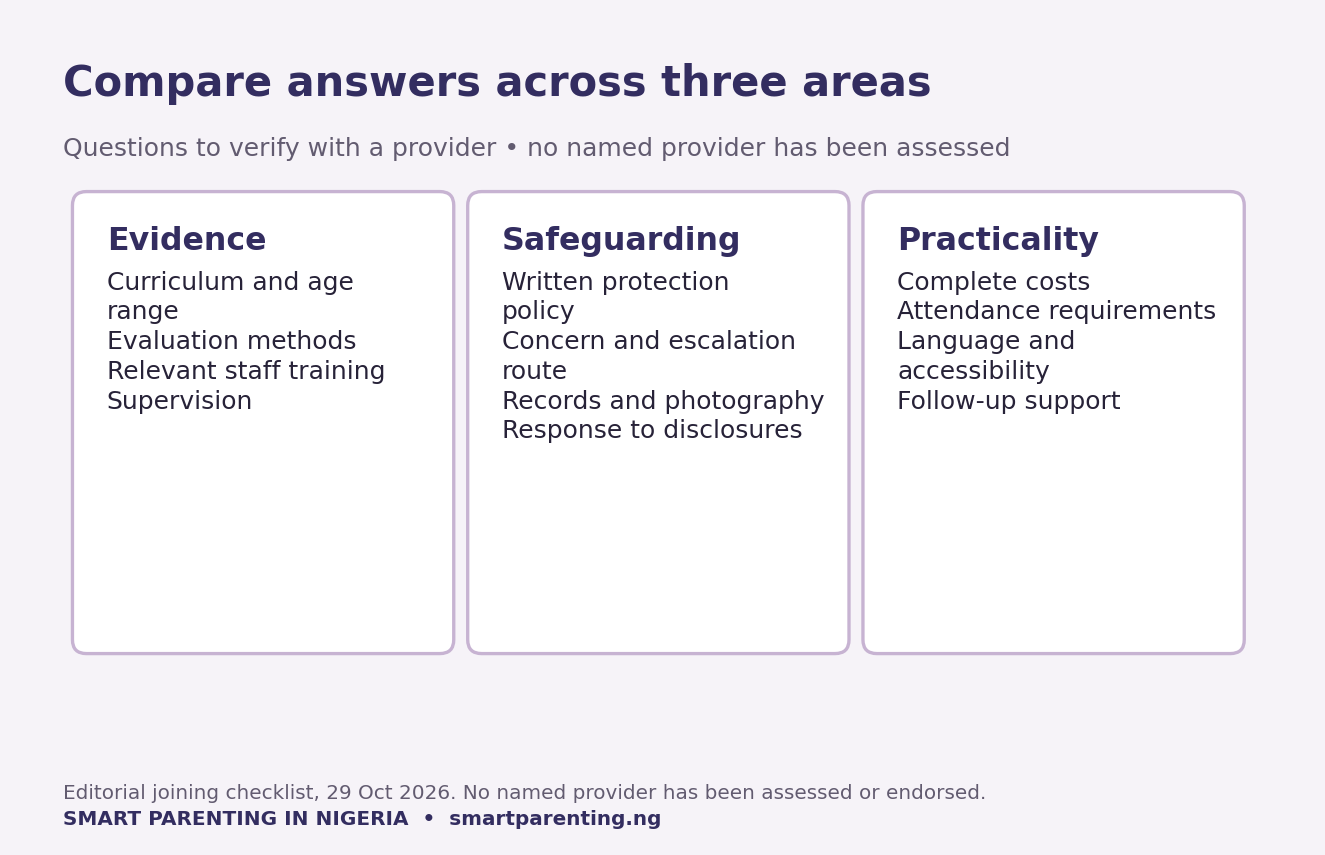
Also ask how trained staff respond when a participant reports harm. Clarify who can access records, how photographs are used and whether testimonials are optional. A provider should explain its own arrangements and limits. Our checklist cannot establish legal compliance, assess an individual incident or replace professional child-protection support.
Keep the comparison focused on the provider’s processes. The private reflection sheet does not request a child’s account of harm. Avoid putting children’s identities, private disclosures, photographs or account details into a public comparison file. A family’s experience does not have to become promotional material to make its questions useful.
Compare costs of parenting programmes in Nigeria
Confirm session length, number of meetings, location and missed-session arrangements. Ask about language, accessibility, childcare and any follow-up support. These practical questions matter even when the headline fee is zero. A useful option must also fit the family’s circumstances.

Use the cost planner to record the fee, transport per session, number of sessions, childcare, data and other cash costs. Leave unconfirmed amounts blank. Keep paid-work time affected in its own column because a missed hour does not automatically equal lost income. No provider prices or household budgets have been surveyed for this article.
Parenting Made Just for You
Get personalized Parenting Solutions tailored to your child’s needs. Transform your parenting journey with expert guidance in 1-3 days.
Get Started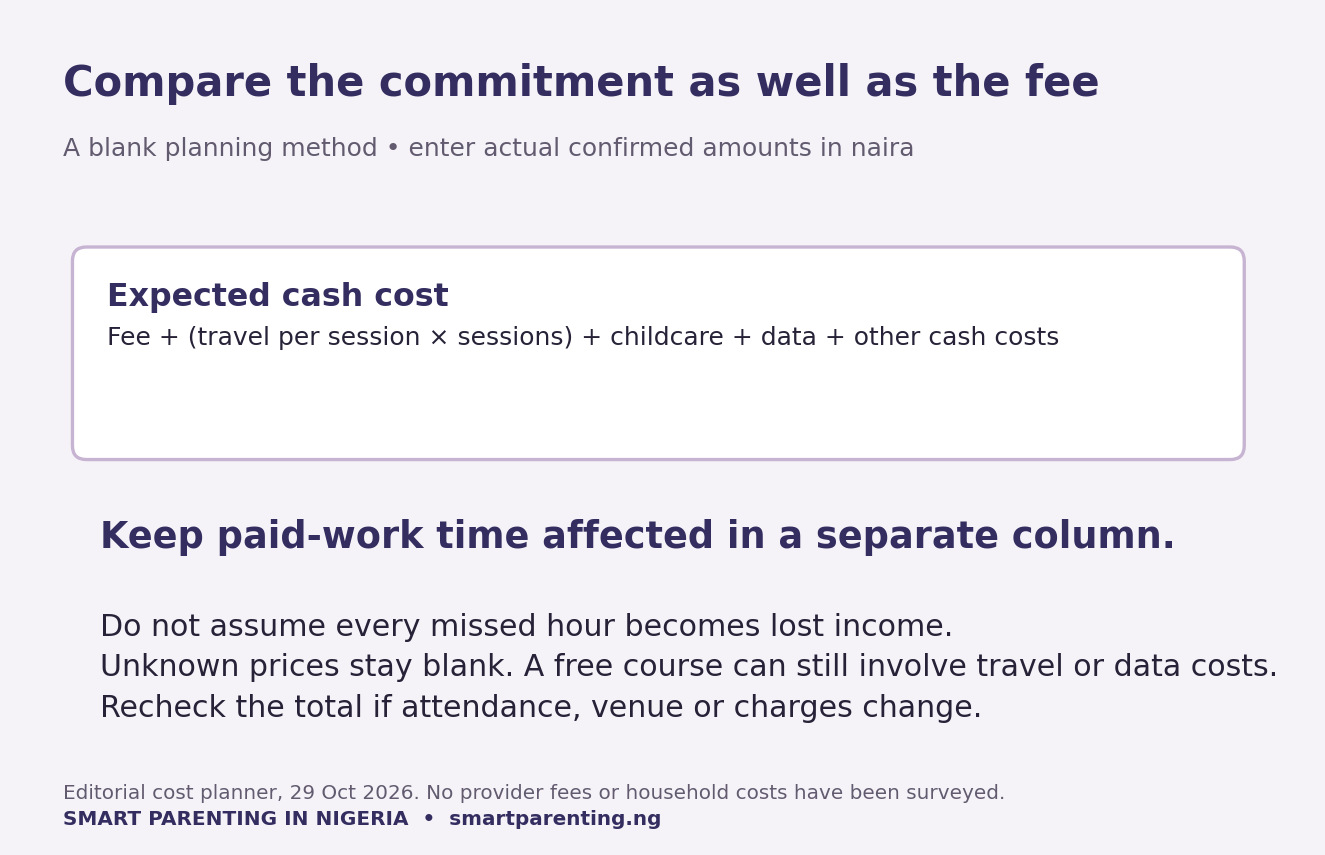
For digital sessions, our household learning-access and cost checklist explains how device access, electricity and network conditions can affect participation. The same distinction between an advertised service and usable access can help frame questions about an online course.
Compare parenting programmes in Nigeria without scores
For each provider, retain the document or source, the answer received and its date. Label a policy supplied by the provider separately from an independent assessment of that policy. Likewise, a phone answer records what someone said; it does not independently verify every underlying claim.
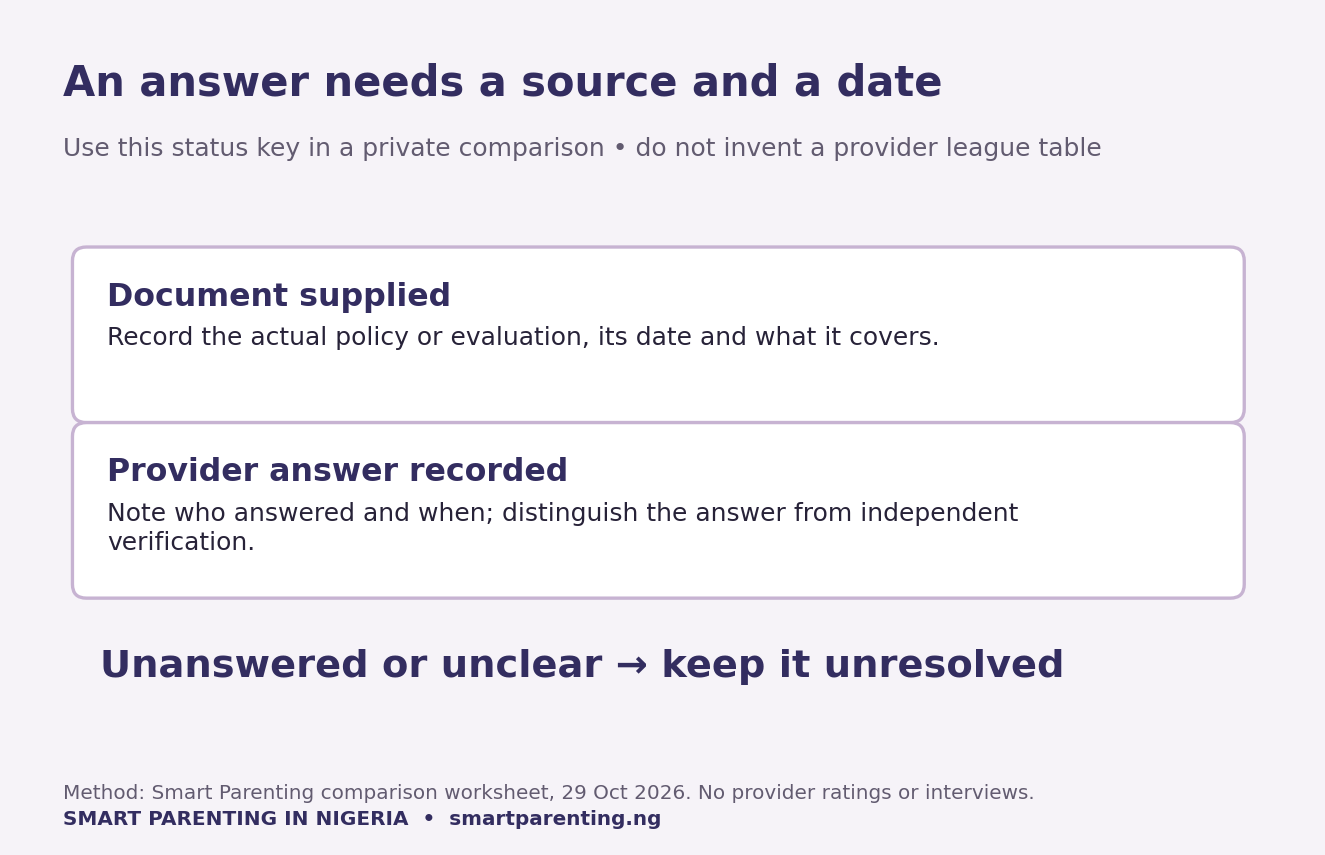
Compare the answers against what your family needs, rather than awarding unsupported numerical scores. If an answer remains unclear, ask for clarification. For a related education decision, our questions before choosing a Nigerian school also shows the value of asking about written policies and communication arrangements.
Download the source record and comparison tools
- Historical MICS context record (CSV): the source, year, population and limits of the 90% figure.
- Blank provider questions worksheet (CSV): 12 questions, source fields, dates and unresolved follow-up.
- Programme cost planner (CSV): three blank provider slots with cash-cost and time fields.
- Private family reflection sheet (CSV): four general prompts for preparing questions.
Methods, limits and citation
Smart Parenting reviewed the linked primary sources on 29 October 2026. We preserve the 2021 national survey figure separately from the October 2026 Kudai narrative. The evidence guide and blank worksheets are editorial tools. They contain no provider evaluations, new prevalence estimate or measured programme effect.
Programme details and availability require direct, dated confirmation. This report makes no diagnosis, recommends no named provider and offers no guarantee of safety or effectiveness. Suggested citation: Smart Parenting In Nigeria (29 October 2026), Parenting Programmes in Nigeria: Evidence and Safety Checks, with source record and blank comparison tools. Cite the NBS infographic directly when reusing the historical national statistic.


