




Preparing Children at Home
Speak in clear, simple sentences that children can understand.
Additionally, match your words to the child’s age and attention span.
Use a calm, warm tone to convey safety and predictability.
Age-Appropriate Conversations
Furthermore, validate emotions before offering reassurance or solutions.
- For toddlers, use short phrases and concrete descriptions of the day.
- For preschoolers, name feelings and offer small, manageable choices.
- For older children, invite questions and encourage simple problem solving.
- Try brief prompts that focus attention and reduce worry.
- Use positive statements that emphasize what will happen next.
- Offer one or two choices to increase the child’s sense of control.
Previewing the School Day
Preview the day using simple, concrete highlights of routines.
For example, mention arrival, play time, and trusted adults.
Use pictures or a quick story to illustrate the sequence of events.
Additionally, show where belongings will go and who will greet them.
Practice a mock arrival and pickup to build familiarity with transitions.
- Create a short visual or verbal schedule that the child can follow.
- Walk through the drop-off route and entry doorway when possible.
- Point out comforting or enjoyable parts of the day to emphasize.
Practicing Short Separations
Start with very brief separations to build confidence gradually.
Then increase time away in small, predictable steps.
Practice goodbyes at home before trying them at school drop-off.
Use a consistent and simple goodbye ritual to provide stability.
Meanwhile, keep departures calm and avoid lingering uncertainty.
- Begin with short errands nearby while the child stays with a caregiver.
- Next, extend the time away as the child shows comfort with separations.
- Reward small successes with praise that focuses on effort and courage.
Creating a Predictable Goodbye Ritual
Choose a short phrase or action that you repeat each morning.
Parenting Made Just for You
Get personalized Parenting Solutions tailored to your child’s needs. Transform your parenting journey with expert guidance in 1-3 days.
Get StartedFor example, a special hug or a brief, cheerful phrase works well.
Keep the ritual calm to avoid escalating emotions before departure.
Also, ensure teachers and caregivers know the routine to maintain consistency.
When to Adjust the Plan
Watch the child’s cues and adapt timing if stress remains high.
If progress stalls, simplify steps and return to very brief separations.
Furthermore, maintain open communication with caregivers about small changes.
Finally, stay patient and steady as the child learns new routines.
Establishing Consistent Drop-Off Rituals and Goodbye Routines
Consistency helps children know what to expect each morning.
Therefore transitions feel more predictable and less stressful for them.
Establishing clear arrival and goodbye routines supports daily predictability.
Benefits of Consistency
Predictable routines let children anticipate the morning.
Consequently they handle transitions with reduced stress.
Also routines provide a reliable frame for emotional regulation.
Designing Predictable Drop-Off Rituals
Start with clear arrival steps that repeat each day.
Unveil the Perfect Name that Tells Your Family's Story
Let us help you find a name that embodies your family's values, traditions, and dreams. Our personalized consultation weaves cultural insights to create a name that's uniquely yours.
Get StartedNext include a brief loving goodbye phrase or gesture.
Keep each ritual brief to avoid prolonging separation.
- Use a short verbal cue to signal departure.
- Include a consistent physical goodbye like a wave or hug.
- Offer a visual cue that marks transition to the teacher.
- Keep the ritual time brief to avoid prolonging separation.
Incorporating Familiar Cultural Cues
Respect family cultural practices in drop-off rituals whenever possible.
Also use songs, words, or gestures that feel familiar to the child.
Furthermore coordinate these cues with caregivers and staff for consistency.
Selecting and Using Transitional Objects
Choose small comforting items that travel easily in a bag.
For instance allow a soft toy, photograph, or worn cloth for reassurance.
Then encourage the child to hold the object during goodbye moments.
Also let staff gently store objects when activities require it.
Practical Goodbye Routine Ideas
Use a consistent phrase that signals return later in the day.
Also create a simple handshake or secret sign shared with the child.
Keep the gestures short and predictable.
- Try a short count to three followed by a hug.
- Try a wave from the doorway paired with a confident smile.
- Try leaving a small reassurance token inside the child bag.
Communicating Routines with Caregivers and Staff
Share the ritual details clearly with the school team at drop-off.
Also ask staff to use the same cues and objects consistently.
Finally check in periodically and adjust the routine when needed.
Gradual Separation Strategies
This section outlines stepwise methods to ease separation anxiety.
These methods rely on short, predictable transitions and reassurance.
Caregivers and staff can coordinate the timeline collaboratively.
Staged Drop-Offs
Begin with very brief separations near the classroom door.
Gradually increase the distance during later visits to build tolerance.
Include a familiar adult at first to provide steady reassurance.
- Start with a quick hello at the classroom door.
- Then step just outside while a familiar adult remains nearby.
- Afterwards, stay longer inside before leaving the child alone.
Short Trial Visits to the Classroom
Arrange short trial visits before full attendance begins.
Let the child explore the room while staff supervise closely.
Keep each visit predictable and calm to reduce uncertainty.
- Observe the child’s comfort and interest during activities.
- Gradually lengthen visits when the child tolerates them well.
- Communicate with staff to agree on timing and expectations.
Increasing Independence Over Time
Encourage small responsibilities to help the child gain confidence.
Celebrate brief independent moments to reinforce their efforts.
Slowly reduce direct assistance as comfort and skills improve.
- Let the child carry a small bag or pick a book.
- Invite the child to say a short goodbye phrase each morning.
- Support independent arrival steps across several days progressively.
Planning and Adjusting the Pace
Discuss a gradual plan with caregivers and classroom staff.
Remain flexible and adjust the pace based on daily responses.
If resistance increases, slow progression and offer extra support.
- Shorten visits when the child shows signs of distress.
- Increase nearby adult support when the child needs reassurance.
- Pause progression temporarily to preserve trust and safety.
Learn More: What To Do If Your Child Refuses School
Partnering with Teachers and School Staff
Work with teachers and staff to support morning transitions.
Coordinate plans that clarify roles and daily routines.
Keep communication brief and focused to improve drop off outcomes.
Set Up a Shared Plan
Request a brief meeting with teachers and staff.
Define the goals you and staff want to achieve.
Clarify each person’s role during drop off and transitions.
Outline specific steps staff should follow when a child cries at drop off.
Agree how staff will update you after difficult drop offs.
Write the shared plan down so everyone can refer to it.
Elements to Include in the Plan
Identify the key elements the plan must include.
Keep items concise so staff can follow them quickly.
Ensure expectations align across parents, teachers, and support staff.
- Clear roles for parents, teachers, and support staff.
- Shared expectations about how staff will respond to crying.
- Preferred handover signals and how the child will learn them.
- Communication methods for brief updates after drop off.
Clarify Roles and Communication
Identify who will greet the child each morning.
Also agree who will step in if crying escalates or persists.
Choose a simple method for brief updates after drop off.
Decide whether staff will use brief verbal notes or written comments.
Set clear expectations for when staff should follow up with parents.
Establish Clear Handover Signals
Agree on a visible or verbal signal to mark the handover moment.
Select a short phrase or gesture both sides will use.
Ensure the child recognizes the signal as part of the routine.
Practice the signal briefly during a calm arrival time.
Confirm staff respond immediately when the signal is given.
Coordinate Consistent Responses to Crying
Discuss and agree on a consistent approach for responding to crying.
Describe the comforting actions staff should use upon classroom arrival.
Decide how long staff will try calming strategies before notifying parents.
Balance soothing with steps that encourage the child’s independence.
Plan how staff will reframe crying as a normal emotion for the child.
Train and Review the Plan Together
Schedule a brief rehearsal so staff and parents practice the shared plan.
Invite feedback from the teacher after the initial implementation.
Set a time to review and adjust the plan as needed.
Keep the plan flexible to reflect the child’s changing needs.
Gain More Insights: How To Build Discipline Before School Begins
Managing Parental Emotions and Modelling Calm
Parents can prepare emotionally before school arrival.
Set a calm intention for the transition period.
Remember that your steady presence supports your child.
Prepare Yourself Mentally
Acknowledge your feelings before you leave for school.
Then take three slow steady breaths to center yourself.
Also set a calm intention for the arrival window.
Remind yourself that your calm presence matters for your child.
Finally plan a brief practical strategy for the arrival period.
Calming Practices to Use in the Moment
Use simple techniques to lower your tension quickly.
For example practice slow diaphragmatic breathing when you feel tight.
Then ground yourself by noticing three neutral things in view.
- Use slow diaphragmatic breaths to lower your tension.
- Name three neutral things you notice to stay grounded.
- Soften your facial expression before you approach your child.
- Pause briefly to collect your thoughts before engaging them.
- Use a short internal cue to remain present and steady.
Body Language and Voice
Keep your posture open and move with calm deliberation.
Also lower your voice to a steady relaxed tone.
Avoid hurried gestures that signal anxiety to your child.
Maintain gentle eye contact without lingering unnecessarily.
Language to Model Calm
Choose brief clear phrases to avoid escalating feelings.
Speak slowly and pause between sentences for added clarity.
Keep words neutral and reassuring rather than emotional.
Avoid long explanations during the moment of separation.
After Drop-Off Reflection
Pause briefly after you leave to notice your emotional state.
Then jot a quick note about what felt challenging today.
Plan one small adjustment to try the next day.
Share observations with your partner when appropriate and concise.
Gain More Insights: How To Handle First School Separation Anxiety
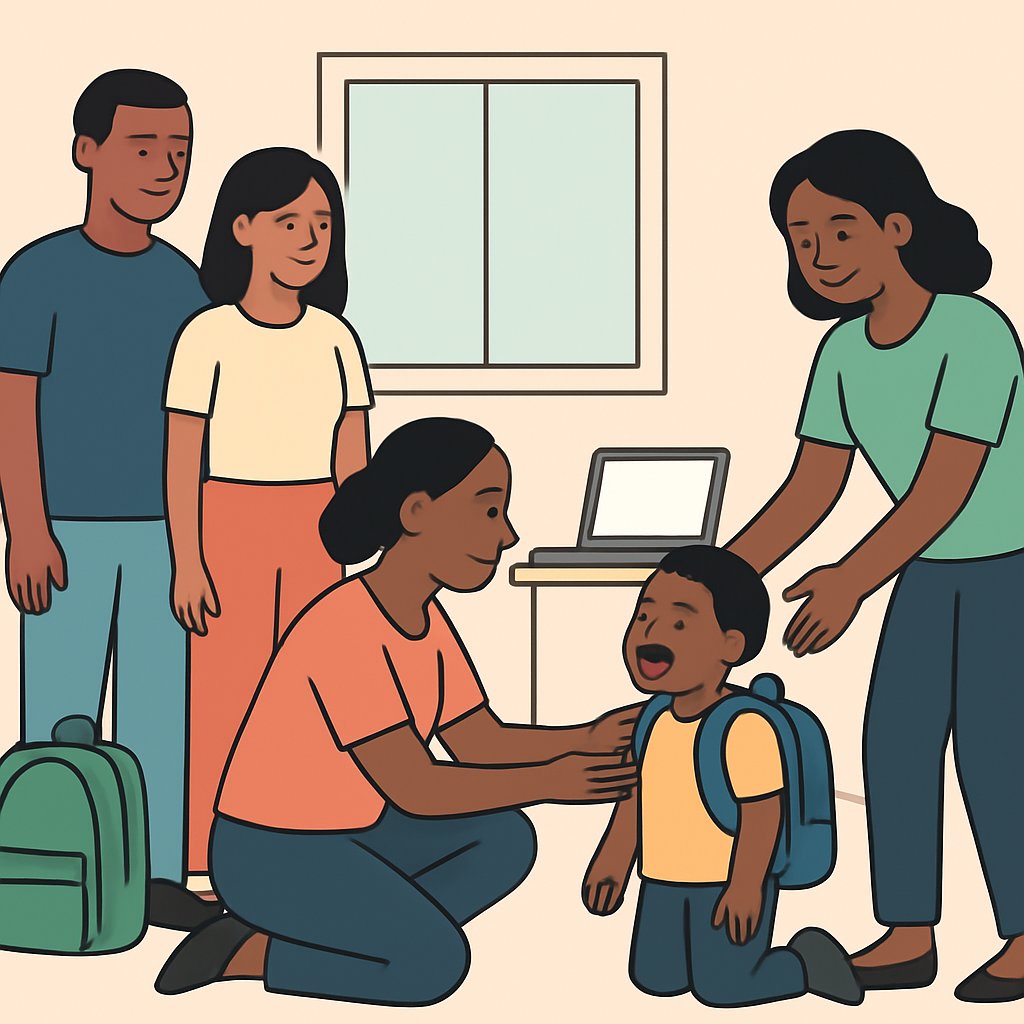
Practical Logistics to Reduce Stress
This section offers practical steps to reduce stress during morning logistics.
Focus areas include timing, transport choice, and routine preparation.
Implement simple changes to create more predictable daily arrivals.
Timing Arrivals
Arrive with extra buffer time to prevent last-minute rushing.
Build predictable travel windows into your morning plan.
Monitor typical commute variability and adjust departure times accordingly.
Avoid very late arrivals that create hectic handovers.
Managing Unpredictable Delays
Pack essentials with you to handle unexpected interruptions smoothly.
Keep a simple backup plan for common delays.
These measures let you manage interruptions with less stress.
- Choose a nearby waiting spot if you need a short pause.
- Identify an alternate route to avoid single-point travel failures.
Choosing Transport Options
Consider the predictability of each transport mode for daily consistency.
Weigh travel time against the child’s comfort and independence.
Evaluate how each option affects arrival timing and transition speed.
Transport Considerations
Driving gives control over timing and preserves personal space.
Walking or biking can provide gentle physical transitions before arrival.
Carpooling shares responsibility and requires clear coordination among families.
- Driving offers control over timing and personal space.
- Walking or biking can provide gentle physical transitions before arrival.
- Carpooling shares responsibility but requires clear coordination among families.
- Public transit may add variability that needs extra buffer time.
Creating a Calm Morning Routine
Design routines that reduce decision-making and sensory overload.
Simplify morning choices the night before to preserve calm time.
Then implement predictable sequences to support smooth movement toward the door.
Night-Before Preparation
Lay out clothing and shoes to eliminate morning searching.
Pack backpacks and place them by the door overnight.
Prepare easy breakfast items for quick assembly in the morning.
Morning Steps to Reduce Stress
Begin with a low-stimulation activity to ease into the day.
Maintain a steady pace rather than rushing through tasks.
Use brief transitional cues to signal upcoming departure moments.
- Offer one clear prompt before leaving the house.
- Keep a concise checklist near the exit for last-minute items.
- Allow a short, calm goodbye ritual that fits your schedule.
Practical Tools for Consistency
Use simple visual or written reminders to support routine adherence.
Place reminders where the family prepares to leave each morning.
Review and tweak logistical steps weekly to improve flow.
Uncover the Details: Why Positive Reinforcement Is Effective for Nigerian Families
Social Supports and Peer Strategies
Buddy systems pair children with a consistent peer for arrival routines.
Playdates allow children to build friendships outside of school hours.
Siblings can model independent behavior during morning routines and arrivals.
Why Social Supports Help
Social connections reduce anxiety and foster comfort during drop-off.
Also peers provide familiar faces that make transitions easier.
Furthermore trusted adults can offer continuity and reassurance at school.
Buddy Systems
First, choose peers who are reliable and calm around others.
Next, arrange brief shared activities to build familiarity before drop-off.
Moreover, keep pairings stable to strengthen predictable social bonds.
Playdates and Peer Time
Also short, frequent playdates work better than rare long gatherings.
Additionally plan simple cooperative games that mirror classroom routines.
Meanwhile use arrival playdates to create positive associations with school arrival.
Leveraging Siblings and Trusted Community Adults
Also trusted community adults can greet children and provide calm support.
Furthermore brief familiar interactions with these adults can ease separation moments.
However maintain boundaries so children do not replace school relationships entirely.
Coordinating with School and Monitoring Strategies
Coordinate informally with staff about peer pairings when necessary.
Also share general preferences with caregivers without restating detailed handover steps.
Observe how children respond and adjust support strategies accordingly.
Then try different peer combinations if one pairing does not help.
Finally keep communication open with families and community adults involved in supports.
Practical Tips
- Start with one buddy for short periods.
- Schedule regular short playdates before school starts.
- Introduce siblings to arrival routines gradually.
- Arrange brief trusted adult check-ins for reassurance.
- Review and adapt plans after several weeks.
Recognising When to Seek Extra Help
Watch for crying that continues despite comforting efforts.
Notice clinging that does not decrease over time.
Observe if the child resists activities they once enjoyed.
Signs of Prolonged Distress
Track changes in sleep linked to drop-off times.
Monitor changes in appetite around drop-off moments.
Watch for frequent physical complaints at drop-off.
Red Flags That Suggest Professional Support
Seek extra help if distress disrupts the child’s ability to engage at school.
Seek help if the problem affects daily family functioning consistently.
Consider professional assessment when normal strategies no longer reduce upset.
Options for Counselling and Assessment
Discuss concerns with a primary care clinician or pediatric provider.
Consider school or community counselling services for supportive conversations.
Child mental health specialists assess behaviour and emotional needs.
Family therapists can address caregiver-child interactions and routines.
Multidisciplinary assessments can clarify development and emotional concerns.
Approaching Professionals Effectively
Prepare clear observations about when and where the distress occurs.
Note what strategies you already tried at home and at drop-off.
Describe patterns in sleep, appetite, or physical complaints.
Ask professionals about next steps and assessment options.
What to Expect From Assessment
Assessments usually explore the child’s behaviour, routines, and social responses.
Professionals often gather input from caregivers and educators when relevant.
Assessment findings guide recommendations for support or therapy if needed.
Plan follow-up to track progress and adjust support as necessary.
Additional Resources
Bing search results for How To Reduce Crying And Clinging At School Drop-Off Behavior and Discipline


