




Why Sharing and Taking Turns Matter
Sharing and taking turns help children participate in positive social experiences.
These behaviors support emotional growth during everyday interactions.
They also shape how children participate with others.
Building Awareness of Others
Sharing encourages children to notice that other people have needs, wishes, and feelings.
Similarly, taking turns helps children recognize that everyone deserves an opportunity to participate.
As children practice these behaviors, they become more attentive to social situations.
Developing Patience and Self-Control
Waiting for a turn gives children opportunities to manage impatience.
Sharing also encourages children to pause before acting on immediate wishes.
Therefore, these experiences help children practice self-control during interactions.
Strengthening Communication
Children use words, gestures, and expressions to communicate during shared activities.
They can express preferences, request a turn, or respond to another person.
Consequently, sharing and taking turns create meaningful opportunities for communication.
Encouraging Cooperation
Sharing requires children to participate with others rather than act alone.
Meanwhile, taking turns helps children follow a shared pattern during activities.
Together, these behaviors support cooperation and shared participation.
Parenting Made Just for You
Get personalized Parenting Solutions tailored to your child’s needs. Transform your parenting journey with expert guidance in 1-3 days.
Get StartedSupporting Emotional Understanding
Children experience different emotions when they share, wait, or receive a turn.
These moments help children identify and express their feelings.
They also help children recognize emotional responses from other people.
With practice, children can connect social actions with emotional experiences.
Creating Positive Social Experiences
Sharing and taking turns help children participate more thoughtfully with others.
Additionally, these behaviors provide simple ways for children to contribute during social activities.
Moreover, they can help children approach interactions with greater awareness.
Understanding Different Ways to Share
Children can distinguish sharing, borrowing, giving, and taking turns.
Each action involves different choices about ownership, permission, use, and returning items.
Clear explanations help children identify the action they want to understand.
Sharing
Sharing means allowing someone else to use something while you still keep it.
The owner can decide what to share and when to stop sharing.
Therefore, sharing does not mean surrendering ownership.
Borrowing
Borrowing means using something that belongs to someone else temporarily.
Unveil the Perfect Name that Tells Your Family's Story
Let us help you find a name that embodies your family's values, traditions, and dreams. Our personalized consultation weaves cultural insights to create a name that's uniquely yours.
Get StartedThe borrower should ask before using the item.
Afterward, the borrower should return the item to its owner.
Thus, borrowing includes permission, temporary use, and returning.
Giving
Giving means transferring ownership of something to another person.
After giving an item, the original owner no longer controls its use.
Children can recognize that giving differs from sharing or borrowing.
However, children should not feel forced to give personal belongings.
Taking Turns
Taking turns means allowing people to use something at separate times.
Each person receives an opportunity without keeping the item permanently.
Unlike sharing, taking turns creates an order for using the item.
Unlike borrowing, taking turns may involve several people using one item.
Clarifying the Differences
These actions describe different arrangements for using and owning items.
The following statements separate their main features.
They also provide simple language for everyday situations.
- Sharing allows another person to use your item.
- Borrowing involves temporary use with permission and return.
- Giving transfers ownership to someone else.
- Taking turns organizes separate opportunities to use something.
Using Clear Language
Use simple words that identify the action your child needs to understand.
Short explanations can clarify expectations during everyday situations.
Specific wording also helps children distinguish ownership from temporary use.
You might say, “Sharing means using it together.”
You might say, “Borrowing means returning it afterward.”
You might say, “Giving means letting someone keep it.”
You might say, “Taking turns means waiting while someone else uses it.”
Clear language helps separate these actions during everyday situations.
Practising Choice and Permission
Ask your child whether they want to share, lend, give, or take turns.
Encourage your child to request permission before using another person’s belongings.
Also, help your child state what they intend to do.
For example, your child can say, “You may borrow this.”
Your child can also say, “I want a turn when you finish.”
These phrases distinguish temporary use, ownership, and waiting.
Show Generosity During Daily Interactions
Family members can model generosity through small, considerate actions.
Offer an item willingly when another person needs it.
Also, invite others to enjoy shared family activities.
Use polite words when offering help or sharing space.
Additionally, explain your actions briefly so your child can notice them.
Demonstrate Patience While Waiting
Show patience when another family member speaks, chooses, or finishes an activity.
Instead, wait calmly rather than interrupting or taking over.
Meanwhile, use respectful language while you wait.
For example, say that you will wait for your turn.
Then, remain patient until the other person finishes.
Include Your Child in Family Decisions
Give your child opportunities to practise generosity during everyday family choices.
Invite your child to consider what another person might need.
Next, ask your child to help create a fair arrangement.
However, guide the process without demanding a particular response.
This approach lets your child observe thoughtful decision-making.
Model Calm Responses
Respond calmly when waiting feels difficult.
Acknowledge the delay while respecting another person’s opportunity.
Use simple words to describe your patience.
For instance, explain that everyone deserves time to participate.
Likewise, show kindness when someone makes a mistake.
Recognise Thoughtful Behaviour
Notice your child’s generous or patient actions.
Describe what you observed without exaggerating the moment.
For example, mention that your child waited calmly.
Also, recognise considerate choices during ordinary family interactions.
Specific feedback connects behaviour with its effect on family life.
Keep Expectations Consistent
Use the same respectful approach across everyday family interactions.
Model patience during conversations, activities, and shared decisions.
Meanwhile, allow your child time to practise these behaviours.
Repeat the example calmly when your child needs further guidance.
Over time, consistent modelling gives your child a clear pattern to follow.
Gain More Insights: How To Reduce Crying And Clinging At School Drop-Off
Making Turn-Taking Easier to Understand
Use short phrases that clearly explain what happens next.
Keep the same words whenever similar situations occur.
Speak calmly, so your child can focus on the message.
Choosing Simple Words
Say, “Your turn,” when your child begins an activity.
Then say, “My turn,” when someone else begins.
Use “Wait, then turn” to connect waiting with the next opportunity.
Repeat these phrases during similar activities.
For example, say, “Your turn,” when your child starts.
Next, say, “My turn,” when another person begins.
Adding Visual Cues
Show a picture, symbol, or object that represents each person’s turn.
Place the cue where your child can easily see it.
Move or change the cue when the turn changes.
Point to the cue while saying the matching words.
Use one visual cue for “your turn” and another for “wait.”
Keep the visual cues consistent across activities.
Breaking Turn-Taking Into Small Steps
First, explain whose turn begins.
Next, show the visual cue.
Then, describe what the other person should do.
Say, “Watch and wait,” while someone else takes a turn.
Afterward, announce the change with the same short phrase.
Finally, give your child the cue for their turn.
Giving Consistent Reminders
Remind your child before an activity starts.
Repeat the same words when the turn changes.
Offer a brief reminder instead of several different explanations.
Point to the visual cue when your child forgets.
Use a calm voice when your child needs another reminder.
Continue the routine without adding unnecessary words.
Supporting Waiting
Tell your child what they can do while waiting.
Say, “Watch,” “Wait,” or “Stay nearby,” using simple language.
Use the visual cue to show when waiting ends.
Remind your child that the cue changes after the current turn.
Keep reminders steady when your child asks for another turn.
Continue using the same cue during each waiting period.
Practising During Everyday Activities
Choose ordinary activities that naturally include turns.
Introduce the same words and cues during each practice opportunity.
Keep the instructions short and clear.
Repeat the routine so your child hears and sees the pattern.
Adjust the reminder when your child needs more guidance.
Maintain the same sequence as your child continues practising.
Learn More: What To Do If Your Child Refuses School
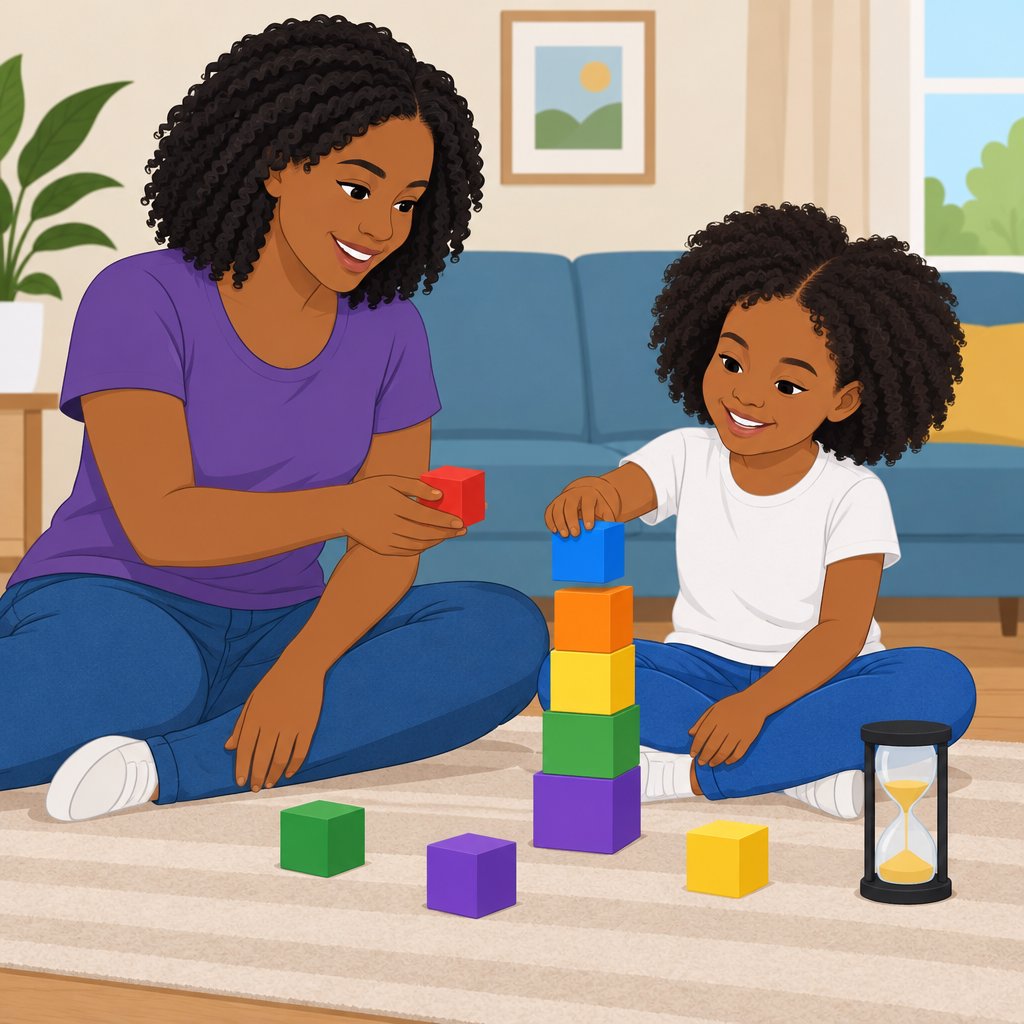
Practising Sharing Through Everyday Activities
Practise sharing during calm moments when your child can focus on the activity.
Choose activities that match your child’s age and current abilities.
Start with short activities, then gradually allow longer exchanges.
Taking Turns During Games
Choose simple games that require players to wait, act, and exchange turns.
Keep the rules easy to follow and explain each step before playing.
Use a clear signal when one turn ends and another begins.
Also, encourage your child to notice whose turn comes next.
Offer gentle reminders when waiting feels difficult.
Pause the game when emotions rise, then restart when everyone feels ready.
Sharing During Play
Provide play opportunities that involve using shared materials together.
Invite your child to offer one item while keeping another available.
Next, encourage children to decide how they will use shared materials.
Allow your child to practise asking before using another person’s item.
Support children as they exchange materials without forcing immediate participation.
Notice cooperative moments and describe each action briefly.
Building Practice Into Household Routines
Include turn-taking when family members choose activities together.
Invite your child to help distribute shared items during household routines.
Additionally, take turns choosing tasks, songs, stories, or other family activities.
Let your child practise waiting while another person completes a routine.
Share responsibility for putting away materials after play.
Keep routines predictable so your child can anticipate upcoming turns.
Supporting Flexible Practice
Vary the people, activities, and settings involved in sharing practice.
Practise with one other person before introducing a larger group.
Offer brief pauses when your child needs time to wait.
Use encouragement that focuses on the sharing action.
For example, describe how your child passed an item or waited patiently.
Finally, continue practising regularly while keeping activities positive and manageable.
Explore Further: How To Build Discipline Before School Begins
Helping Your Child Manage Difficult Feelings
Sharing and taking turns can bring strong feelings.
Therefore, help your child notice feelings.
Do this before expecting cooperation.
Supporting Your Child While Waiting
First, acknowledge that waiting feels difficult.
Use calm words that name the experience without judging your child.
Then, explain what your child can do while waiting.
Offer a quiet activity, a conversation, or another suitable focus.
Keep your guidance brief, especially when frustration increases.
Also, remind your child that waiting does not mean losing the opportunity.
Responding to Disappointment
Disappointment may appear when another child receives the desired item first.
Stay calm and allow your child to express feelings safely.
However, set clear limits around hurting others or grabbing objects.
Help your child use words instead of physical actions.
For example, encourage your child to say, “I feel disappointed.”
Next, guide your child toward the available choice.
Your child can wait, choose another item, or ask for help.
These choices give your child a clear response during difficult moments.
Handling Jealous Feelings
Jealousy can arise when another child receives attention or access first.
Acknowledge the feeling without comparing children.
Say that your child wants the same attention or opportunity.
Then, redirect attention toward respectful actions.
Encourage your child to speak clearly, wait nearby, or choose another activity.
Avoid shaming your child for experiencing jealousy.
Instead, separate the feeling from any unsafe behaviour.
Respecting Possessions
Children may want to keep possessions because those items feel important to them.
Ask your child to identify items that remain private.
Then, identify items your child feels ready to share.
Respecting this difference can make sharing feel more manageable.
Never pressure your child to surrender a treasured possession immediately.
Instead, discuss expectations before another child requests the item.
Use clear language about what belongs to your child and what others may use.
Building Recovery After Conflict
After a difficult moment, help your child revisit what happened.
Ask your child to describe the feeling and the chosen action.
Then, discuss a different action for a future situation.
Keep this conversation short and supportive.
Encourage your child to repair harm when necessary.
A simple apology or helpful action may support that repair.
Finally, recognise your child’s effort to manage feelings respectfully.
Gain More Insights: How To Handle First School Separation Anxiety
Respecting Personal Belongings While Building Cooperation
Children can cooperate without surrendering control over every personal belonging.
Adults should protect ownership.
They can create respectful opportunities for children to participate.
Making Ownership Clear
Use calm, direct language to identify who owns an item.
Ownership gives a child a voice in lending decisions.
However, ownership does not justify grabbing, hiding, or damaging another person’s belongings.
Encourage your child to ask before touching someone else’s belongings.
Likewise, teach others to request permission before using your child’s possessions.
Accepting A Respectful Refusal
Teach your child that a request may receive either agreement or refusal.
Your child can say, “I am not ready to lend it.”
Another option is, “You may use it after I finish.”
These phrases help your child communicate boundaries without rejecting cooperation entirely.
Similarly, your child should respect another person’s decision not to lend an item.
Adults can acknowledge disappointment without pressuring anyone to change their answer.
Offering Choices Within Boundaries
Choices can support cooperation while preserving a child’s control over personal possessions.
Invite your child to choose whether to lend, wait, or suggest another item.
For instance, ask, “Would you like to share this item or choose something else?”
Alternatively, ask, “Would you prefer to lend it briefly or keep it with you?”
Keep the choices clear, limited, and respectful.
Do not present a choice if your child cannot genuinely select an option.
Separating Personal And Shared Items
Clearly identify which belongings everyone may use.
Explain which belongings require permission.
Store shared items separately from personal possessions when possible.
Then, explain the difference using consistent language.
For example, say, “This belongs to everyone, while that belongs to you.”
Invite your child to help decide where shared belongings belong.
Consequently, your child can practise responsibility without losing personal boundaries.
Guiding Cooperative Negotiation
When disagreements arise, help each child state what they want.
Next, encourage them to identify an option that respects both people.
Possible options include waiting, exchanging items, or choosing separate activities.
Keep the discussion focused on permission, time, and care.
Avoid forcing immediate agreement when someone needs space.
Instead, pause the interaction and return to the discussion calmly.
Responding When Boundaries Are Ignored
Intervene promptly when someone grabs, takes, or damages a personal belonging.
First, stop the action and return control to the owner.
Then, state the boundary without shaming either child.
Say, “Ask before using someone else’s belongings.”
Afterward, guide the children toward repair, replacement, or another respectful response.
Focus on restoring trust rather than assigning labels.
Keeping Expectations Consistent
Apply the same permission rules to children and adults.
Explain exceptions clearly when safety or immediate needs require adult intervention.
Otherwise, respect each person’s belongings and decisions consistently.
Over time, predictable boundaries make cooperation easier to understand and practise.
Specific Praise Reinforces Cooperative Behaviour
Notice cooperative behaviour as soon as it happens.
Name the exact action your child completed.
For example, describe waiting, offering, returning, or listening.
Specific words help your child understand which behaviour you appreciate.
Keep your praise sincere, clear, and focused.
Also, acknowledge effort when sharing or turn-taking feels difficult.
Recognise small steps instead of expecting perfect behaviour.
For instance, mention when your child pauses before reacting.
Then, highlight any attempt to repair the interaction.
Consistent recognition reinforces the behaviours you want to encourage.
Helpful Praise Supports Reflection
Use calm words that describe your child’s behaviour.
Avoid comparing your child with another person.
Instead, focus attention on your child’s own actions.
Keep your response brief when your child needs continued play.
However, offer more detail when your child wants reassurance.
Ask your child to notice what helped the interaction.
This question encourages reflection without turning praise into a test.
Calm Responses Support Learning After Conflict
First, help everyone pause before discussing what happened.
Speak calmly and use simple, direct language.
Then, describe the problem without assigning hurtful labels.
Give each child space to share their perspective.
Listen carefully before guiding the next step.
Afterward, restate the expected behaviour clearly.
Explain what your child can try during a similar situation.
Repair and Reconnection Restore Cooperation
Encourage your child to consider how the conflict affected others.
Next, guide your child toward an appropriate repair.
Repair might involve returning an item or offering a sincere apology.
It might also involve trying the interaction again.
Allow your child to participate in choosing the repair.
Keep the focus on restoring cooperation rather than assigning shame.
After repair, help your child rejoin the activity respectfully.
Consistent Follow-Up Connects Conflict With Learning
Revisit the situation briefly when everyone feels calmer.
Ask what your child remembers about the disagreement.
Next, ask what your child could try differently.
Offer one clear suggestion if your child needs support.
Practise the suggested words or actions together.
Finally, notice later attempts to use the new response.
Over time, consistent guidance connects conflicts with learning and repair.
Additional Resources
Google search results for Preparing Your Child To Share And Take Turns Behavior and Discipline
Bing search results for Preparing Your Child To Share And Take Turns Behavior and Discipline


