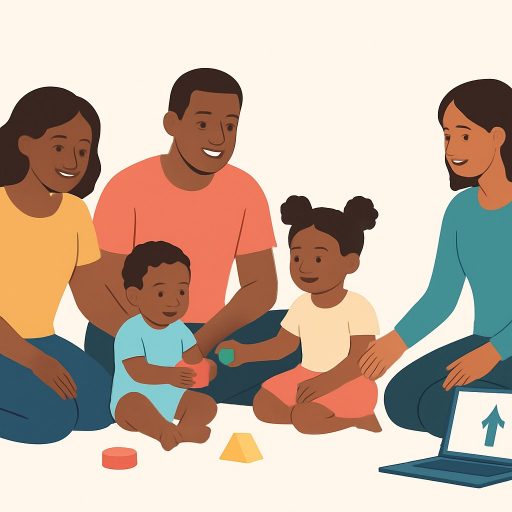




Early Development and School Readiness
Observe your child as they explore objects and patterns during play.
Notice problem solving through simple experiments and repeated trials.
Track memory for routines and the ability to imitate actions.
Cognitive Milestones to Observe
Check if your child manipulates toys using varied approaches.
Look for pretend play where toys represent other objects.
Additionally, observe curiosity shown by pointing or asking questions.
- Explores objects in different ways.
- Uses toys to represent other things during pretend play.
- Shows curiosity by asking questions or pointing.
Social Milestones to Observe
Watch how your child interacts with familiar adults and other children.
Notice sharing, taking turns, and responding to social cues.
Furthermore, observe following of simple rules during group play.
- Plays near or with other children.
- Shows affection and comfort toward caregivers.
- Starts to follow simple rules during group play.
Language Milestones to Observe
Listen for increasing use of words and short phrases.
Check understanding of simple instructions during routines.
Also, notice naming and combining words to express needs.
- Names familiar people and objects.
- Combines words to express needs or ideas.
- Uses gestures and vocalizations to communicate.
Monitoring Strategies for Parents
Observe your child in daily routines and during free play.
Keep simple notes about new skills and any concerns.
Also, share observations with caregivers and early childhood professionals.
Parenting Made Just for You
Get personalized Parenting Solutions tailored to your child’s needs. Transform your parenting journey with expert guidance in 1-3 days.
Get Started- Use play to test attention and problem solving.
- Encourage conversations and listening during daily routines.
- Arrange opportunities for supervised peer interactions.
Ways to Encourage Development at Home
Create short routines that build memory and predictability.
Read aloud and describe pictures during shared book time.
Sing songs and use simple rhymes to support language.
- Offer toys that invite stacking, sorting, and building.
- Play turn-taking games that reinforce social rules.
- Model simple problem solving during everyday tasks.
When to Seek Further Guidance
Trust your instincts if you notice persistent concerns.
Seek professional guidance when progress stalls or regresses.
Early conversations with professionals can clarify possible next steps.
Understanding the Nigerian Schooling Landscape
This section outlines public, private, and international schooling pathways.
It builds on earlier school readiness discussion.
Families should align choices with priorities and long term plans.
Overview of Pathways
Parents may choose public, private, or international options.
Each option follows a distinct curriculum and school structure.
Also, families often weigh priorities and future mobility when deciding.
Public Schools
Public schools align with the national curriculum framework.
They serve a broad cross section of the local community.
Unveil the Perfect Name that Tells Your Family's Story
Let us help you find a name that embodies your family's values, traditions, and dreams. Our personalized consultation weaves cultural insights to create a name that's uniquely yours.
Get StartedAlso, resource levels and classroom experiences can vary across public options.
Private Schools
Private schools operate independently of government management.
They often offer varied curricular emphases and teaching styles.
In addition, families may choose private options to match values and preferences.
International Curricula
International curricula use frameworks common across multiple countries.
They provide continuity for families planning mobility abroad.
Also, these curricula emphasize globally oriented content and assessment approaches.
How Pathways Shape Future Options
Pathway selection can influence academic alignment and higher education options.
Language of instruction may affect future study and career choices.
Moreover, curricular focus shapes skills and perspectives that learners develop.
Practical Considerations for Parents
Parents should consider affordability, location, and a child’s learning needs.
Also evaluate fit between curricular approaches and family goals.
Visit schools to observe classrooms and teaching styles when possible.
Seek clarity on transition options as children progress through grades.
Admissions Planning and Timelines
Admissions for early schooling unfold over distinct planning phases.
Families research options and note key dates.
Schools announce offers and families confirm placements.
Overview of Typical Admissions Phases
Families often map key steps and deadlines across the application period.
They prepare documents and complete required forms in advance.
Some families visit schools early to assess fit and routines.
Understanding Age Cut-Offs
Age cut-offs determine eligibility for entry in a given school year.
Parents should check cut-off rules well before applications open.
Schools may apply different cut-offs for various entry levels.
Preparing for the Preschool-to-Primary Transition
Plan the transition timeline at least several months ahead.
Adjust daily routines to align with primary school schedules.
Introduce basic classroom habits gradually and positively.
Common Entry Processes
Most schools request applications with basic family and child details.
Some schools hold informal meetings to learn about children.
Various schools use simple assessments or observations for placement decisions.
Practical Timeline Checklist
Use a practical checklist to organize application tasks.
Review each school’s timeline to prioritize actions and steps.
Set reminders to meet deadlines and avoid last minute rushes.
- Map application windows for target schools on a communal calendar.
- Note open days and visit deadlines for each school of interest.
- Prepare commonly requested documents well in advance of deadlines.
- Set reminders to complete forms and payment steps on time.
Documentation and Visits
Gather identification and any standard enrollment forms promptly.
Keep copies of documents organized and accessible for quick reference.
Schedule school visits early to observe routines and ask questions.
Preparing Children for Entry Interactions
Introduce short practice conversations about school and teachers.
Roleplay simple arrival and goodbye routines with children.
Use brief visits to reduce unfamiliarity and separation anxiety.
Managing Offers and Waiting Lists
Respond to placement offers within the timeframe set by each school.
Keep alternative options active until you confirm a placement.
Join waiting lists where appropriate to preserve future chances.
Communication and Follow-Up
Maintain clear, polite communication with admissions offices throughout the process.
Ask about next steps, orientation, and important start dates.
Confirm any health or administrative requirements before enrollment begins.
Track all confirmations and receipts in a single folder or file.
Learn More: Early Social Skills That Help Babies Thrive In School
Financial Planning for Education
Start by listing expected expenses for each school year.
Additionally, review the list every few months for accuracy.
Include both recurring and one-off items when you estimate costs.
Preparing a Practical Budget
Create a monthly line item for each school expense.
Review spending monthly and adjust allocations as necessary.
Save small amounts consistently to build a useful buffer.
Typical Expense Categories to Include
Tuition and regular school fees form the core of costs.
Uniforms, books, and school supplies require seasonal planning.
Transport and daily logistics can add steady monthly expenses.
- Tuition and recurring school fees.
- Uniforms, textbooks, and classroom supplies.
- Daily transport and occasional travel costs.
- Extracurricular activities and examination fees.
- Health, uniform repair, and emergency expenses.
Budgeting for Tuition and Fee Changes
Request fee schedules and payment deadlines from schools early.
Also, allocate a buffer for annual fee increases.
Furthermore, consider payment plans to spread large payments across months.
Managing Uniforms, Supplies and Seasonal Purchases
Buy essentials before peak demand to avoid premium prices.
Additionally, consider durable items to reduce frequent replacements.
Meanwhile, keep spare uniforms for unexpected wear or spills.
Transport and Daily Logistics
Compare transport options by cost, safety, and convenience.
Moreover, explore cost sharing with other families where practical.
Also, track fuel or ticket costs to refine your budget estimates.
Hidden and Occasional Costs to Watch
Anticipate school trips, uniform repairs, and exam registration fees.
Additionally, plan for technology replacements and special event contributions.
Remember, small regular items can accumulate into a large total.
Saving Strategies and Goal Setting
Set clear savings goals for short and long term needs.
Then, automate transfers to a dedicated education savings account.
Also, maintain a modest emergency fund for unexpected school expenses.
Practical Monthly and Annual Steps
- Create a monthly line item for each school expense.
- Review spending monthly and adjust allocations as necessary.
- Save small amounts consistently to build a useful buffer.
- Finally, revisit annual budgets before new school years start.
You Might Also Like: The Importance of Breastfeeding for Nigerian Babies’ Health
Choosing the Right School Fit
Start by clarifying your family’s educational priorities and expectations.
Visit to observe daily routines and interactions.
Ask about the school’s approach to discipline and inclusion.
Assess School Values and Culture
Moreover check how the school communicates with families about values and goals.
- What values guide classroom expectations and assessments?
- In what ways does the school support diverse backgrounds and learning styles?
- How often does leadership review curriculum and culture practices?
Evaluate Safety and Wellbeing Measures
Prioritize visible safety practices during visits.
Also observe arrival and dismissal procedures for smoothness and security.
Additionally inquire about emergency planning and health policies.
- What security measures exist on campus and at entrances?
- Who supervises children during free play and transitions?
- How does the school handle illnesses and medical incidents?
Gauge Teacher Quality and Approach
Observe how teachers interact with children during learning times.
Also ask about teacher qualifications and professional development routines.
Furthermore look for clear feedback loops between teachers and families.
- Do teachers encourage curiosity and respectful communication?
- How does the school assess individual progress and adapt instruction?
- What supports exist for children with emerging learning needs?
Consider Class Size and Grouping
Think about how class size affects adult attention and peer dynamics.
Also consider mixed-age versus single-age grouping preferences.
Moreover explore how teachers manage transitions and differentiated activities.
- Does the classroom offer small group learning and one-on-one time?
- How stable are class compositions throughout the year?
- Are grouping strategies responsive to individual development?
Weigh Location and Daily Logistics
Map commute times and realistic daily routines for your family.
Also evaluate transportation options and aftercare availability.
Furthermore consider neighborhood safety and community resources nearby.
- How consistent will travel be during weather and traffic changes?
- Is pickup and drop-off convenient and secure for caregivers?
- What local opportunities support learning beyond school hours?
Making the Choice
Visit several schools to compare observations and impressions.
Involve your partner or trusted caregivers in visits and discussions.
Trust your informed instincts when deciding on the best fit.
Discover More: Understanding Baby Cues and What They Mean for New Parents
Home Preparation Strategies
This section covers home preparation strategies for early learning.
It highlights routines and play-based approaches.
Families can use simple materials at home to support development.
Play-Based Learning at Home
Use play to support natural learning and curiosity.
Create a safe, inviting play area with accessible items.
Rotate simple toys to maintain interest and exploration.
Offer open-ended materials that spark imagination.
- Provide sensory play using safe household objects.
- Encourage movement and motor play during daily routines.
- Offer pretend play opportunities with simple props and ideas.
Early Literacy Routines
Read aloud during quiet or playful moments each day.
Also point to pictures and name familiar objects.
Sing songs and repeat rhymes to build rhythm and words.
Additionally label common items to boost word awareness.
- Create short reading moments that match attention spans.
- Use tactile books and picture boards for engagement.
- Encourage babbling and simple vocal play in turn-taking.
Early Numeracy Routines
Count orally during routines like feeding or dressing.
Highlight simple patterns and repeated sequences at play.
Sort toys by color, size, or shape during tidy-up times.
- Play simple games that compare quantities and sizes.
- Use everyday moments to name numbers and positions.
- Encourage counting fingers, steps, or pieces during activities.
Daily Routines and Learning Environment
Design routines that include short, frequent learning moments.
Keep materials within reach to encourage independent exploration.
Arrange a small cozy reading corner with comfortable seating.
Use labels and visible cues to support recognition.
Consistency and Parental Role
Model curiosity by exploring and narrating everyday activities.
Follow the child’s lead during play and learning times.
Keep sessions brief and joyful to sustain interest and engagement.
Observe responses and adapt routines to each child.
See Related Content: The Role of Routine in Your Baby’s Early Development
Health, Nutrition and Special Needs Considerations
This section covers health, nutrition and special needs considerations for school participation.
It emphasizes daily habits, collaboration, and proactive planning to support learning readiness.
Families and educators should coordinate to create consistent supports across environments.
Physical Health and School Participation
Physical health strongly influences a child’s ability to attend and engage in school.
Additionally, routine health checks help identify issues that can affect learning.
Also monitor vision, hearing, sleep and motor development to address concerns early.
Nutrition and Learning Readiness
Nutrition provides the energy children need for concentration and behavior.
Therefore, regular meals and balanced snacks support classroom participation each day.
Moreover, consistent feeding routines create predictable daily structure for children.
Special Needs Identification and Support
Early identification of special needs enables timely accommodations at school.
Furthermore, seek assessments from qualified professionals when concerns persist or emerge.
Then develop individualized support plans together with caregivers and educators.
Managing Chronic Health Conditions
Manage chronic conditions proactively to reduce classroom disruption for the child.
Also create clear medication plans and emergency instructions for school staff.
Moreover, keep medical documentation and consent forms updated and accessible at school.
Collaborating with Schools and Health Providers
Open communication between families and schools supports consistent care for the child.
Therefore share relevant health information with appropriate permissions and documentation.
Also schedule regular meetings to review progress and adjust supports as needed.
Practical Daily Strategies
Use daily habits to reinforce health and learning readiness for each school day.
Maintain consistent routines to help children arrive prepared and focused for class.
Plan appointments carefully to minimize disruption to learning and daily routines.
- Maintain consistent sleep schedules for predictable energy levels.
- Provide varied meals with fruits, vegetables and whole grains.
- Encourage regular physical activity to support motor skills and focus.
- Adapt routines to reduce sensory overload when necessary.
- Plan for medical or therapy appointments without disrupting learning routines.
Planning for Transitions and Long-Term Learning
Prepare transition plans for school entry and later changes that affect the child.
Moreover, review supports periodically as the child grows and needs evolve over time.
Finally, involve caregivers in planning to ensure consistency across home and school.
Developing 21st-century Skills
Parents should focus on adaptable skills.
These skills support learning.
They transfer across different contexts.
Why These Skills Matter
These skills complement formal academic knowledge.
They support later schooling and careers.
They help learners apply knowledge in new settings.
Technology and Digital Literacy
Technology skills include understanding tools and solving problems with digital resources.
Parents can encourage safe exploration and curiosity about how things work.
Balance device use to avoid excessive passive screen time.
Guided activities promote problem solving instead of passive consumption.
Extracurricular Activities and Soft Skills
Extracurricular activities help children practice teamwork and time management.
They build resilience through manageable challenges and timely feedback.
Parents should seek activities that match their child’s interests.
Offering variety helps children discover strengths and remain engaged.
Language Learning and Communication Skills
Early exposure to multiple languages supports flexible thinking and communication.
Daily conversation and storytelling strengthen expressive and receptive skills.
Parents can integrate language play into routines and shared activities.
Creativity and Critical Thinking
Creativity grows through open-ended play and chances to experiment.
Critical thinking develops when children explain choices and reflect on outcomes.
Parents should encourage questions and allow productive mistakes during learning.
Integrating Skills for Academic and Career Success
Skills reinforce each other when parents provide varied meaningful experiences.
Reflection helps children connect activities to goals and personal growth.
Simple routines create consistent practice without overwhelming families.
Parents should communicate expectations and celebrate progress to maintain motivation.
Ongoing curiosity and support prepare children for changing demands.
Practical Ways Parents Can Support
Parents can provide play materials that spark problem solving and imagination.
Encouraging participation in diverse activities supports broad skill practice.
Model curiosity and offer chances to lead small projects at home.
- Offer play materials that spark problem solving and imagination.
- Encourage participation in diverse activities outside school hours.
- Create regular times for shared reading and conversation.
- Model curiosity and a positive attitude toward learning new things.
- Provide chances for children to lead small projects at home.
Additional Resources
Google search results for What Baby Parents Should Know About Future Schooling Babies
Bing search results for What Baby Parents Should Know About Future Schooling Babies