




Preparing a Safe, Stimulating Home Learning Environment
Choose materials that match your child’s developmental stage.
Prefer items that feel sturdy and resist quick wear.
Rotate materials regularly to maintain interest and novelty.
Choosing Safe and Engaging Materials
Also, select items that invite exploration and hands-on play.
Additionally, include open-ended materials that spark creativity.
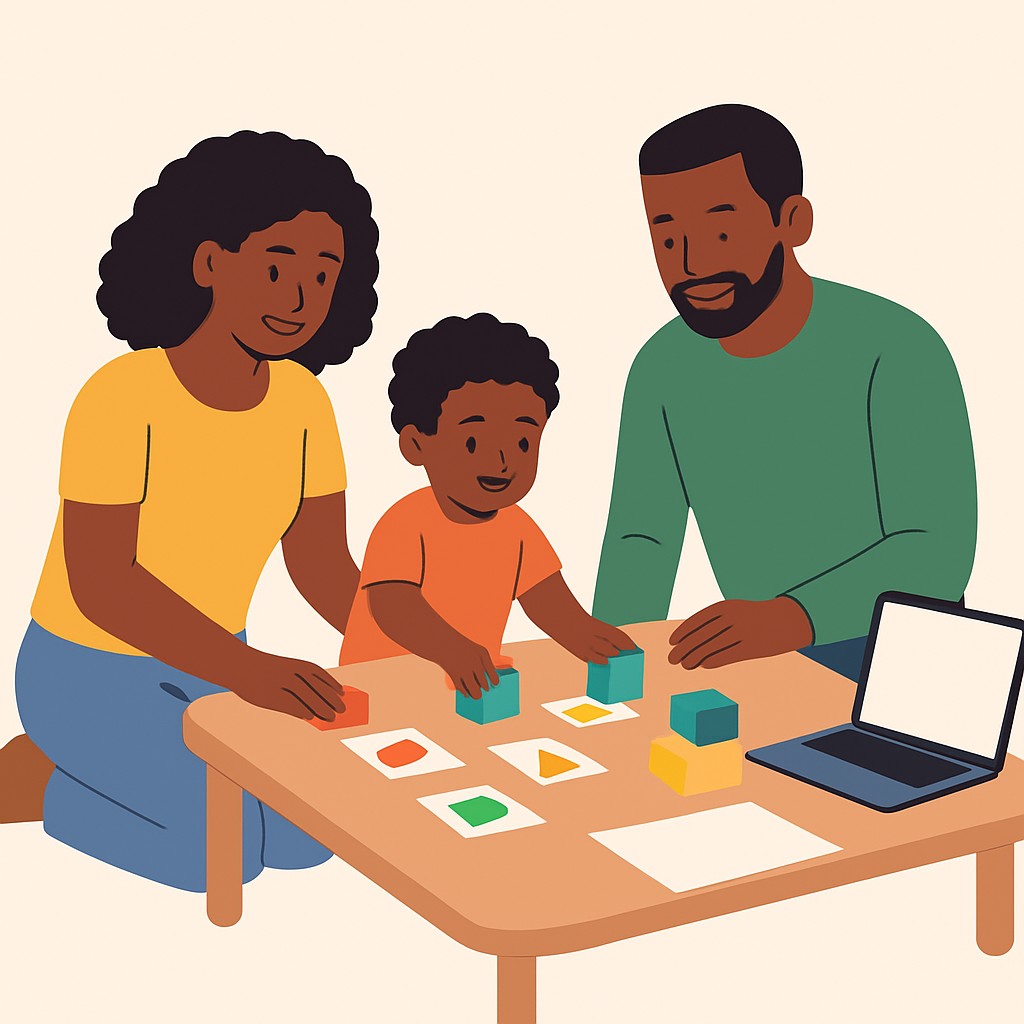
Offer simple building pieces for spatial thinking.
- Provide books for shared reading and visual exploration.
- Offer simple building pieces for spatial thinking.
- Include basic art supplies for mark making and creativity.
- Supply sensory items for tactile discovery and calm play.
Designing a Flexible Learning Space
Designate a specific area for daily learning activities.
Allow the space to adapt to short or longer activities.
Use clear floor space for movement and gross motor exploration.
- Choose low tables and chairs for independence.
- Select washable surfaces to simplify cleanup after activities.
Creating Daily Learning Corners
Create small learning corners that focus on a single activity type.
Also, limit the number of items in each corner for clarity.
Rotate corners through the week to introduce new challenges gently.
- Design a reading corner with cushions and accessible books.
- Set up an art corner with paper and safe drawing tools.
- Create a sensory corner with varied textures and containers.
- Arrange a building corner with open-ended construction materials.
Maintaining Safety and Organization
Establish simple routines for setting up and tidying learning spaces.
Check materials regularly for loose parts or damage.
Store small items out of reach when unsupervised for safety.
Parenting Made Just for You
Get personalized Parenting Solutions tailored to your child’s needs. Transform your parenting journey with expert guidance in 1-3 days.
Get StartedLabel bins with words or pictures to aid independent cleanup.
Involve your child in quick tidy routines to build responsibility.
Daily Routines and Transitions
Create predictable times for exploring each learning corner daily.
Keep activities brief to match early attention spans.
Use simple verbal cues to signal transitions between activities and rest.
Involving Your Child
Invite your child to help choose which materials to display.
Offer two simple options to encourage decision making.
Observe your child’s play to adapt corners and materials over time.
Choosing and Evaluating Early Learning Settings
Start by listing what matters most for your family.
Consider safety, staff, curriculum, and family communication when comparing programs.
Plan visits and note impressions and practical logistics.
Clarify Your Priorities
Use this section to guide your evaluation of preschools, caregivers, and classrooms.
This choice complements home learning efforts.
Decide what matters most for your child’s daily experience.
Unveil the Perfect Name that Tells Your Family's Story
Let us help you find a name that embodies your family's values, traditions, and dreams. Our personalized consultation weaves cultural insights to create a name that's uniquely yours.
Get StartedNote your child’s temperament, routines, and social preferences.
List practical needs such as schedule flexibility and commute time.
Evaluating Preschools and Programs
Consider multiple program elements when evaluating preschools and programs.
Focus on environment, curriculum, staff, and family communication.
Compare options against your priorities and practical needs.
Environment and Safety
Observe arrival and departure routines for consistency and calmness.
Check that indoor and outdoor spaces look clean and inviting.
Ask staff about secure entry procedures and emergency plans.
Curriculum and Learning Approach
Ask how the program supports exploration and emerging skills.
Look for a balance of child choice and adult guidance.
Inquire about routines, transitions, and how teachers scaffold learning.
Staff Qualifications and Ratios
Talk with staff about their training and early childhood experience.
Ask about staff turnover and continuity of care during the year.
Prefer programs that maintain small groups and attentive adults.
Communication and Family Involvement
Check how teachers share observations and progress with families.
Learn about parent-teacher meetings and volunteer opportunities.
Choose programs that welcome family input and collaboration.
Observation and Visit Tips
Visit during regular hours to observe authentic routines and interactions.
Watch how adults respond to children’s needs and emotions.
Talk with other families to hear varied perspectives.
Key Qualities to Look For
Look for warm, responsive adults who observe and support learning.
Expect clear routines that give children security and predictability.
Seek varied learning experiences that encourage curiosity and problem solving.
- Warm, responsive adults who observe and support learning.
- Clear routines that give children security and predictability.
- Varied learning experiences that encourage curiosity and problem solving.
- Open communication channels between staff and families.
Making the Final Choice
Compare programs against your priorities and visit impressions.
Consider short trial periods to test fit before committing long term.
Schedule regular check-ins with caregivers after enrollment to ensure fit.
Managing the Emotional Transition
Children often feel worry when they separate from familiar caregivers.
Respond promptly to your child’s cues to build trust.
With patience and consistency, children gain confidence during early transitions.
Easing Separation Anxiety
Initially, establish consistent short goodbye rituals that reassure your child.
- Hold brief, confident goodbyes to set a calm tone.
- Additionally, offer a transitional object that carries comfort between settings.
- Practice short separations and gradually increase time away.
- Validate feelings by naming emotions and acknowledging their experience.
Building Secure Attachment
Maintain physical closeness and gentle touch during times of stress.
Use calm, predictable reactions to provide emotional safety.
Encourage play and eye contact to strengthen emotional bonds.
- Listen actively and reflect your child’s feelings back clearly.
- Keep caregiving responses consistent across routines and caregivers.
- Provide warmth and engagement during everyday interactions.
Practical Daily Routines to Support Transition
Start mornings with a short, positive ritual to signal readiness.
Include predictable cues before each separation to reduce surprise.
Plan comforting reunions that emphasize connection after time apart.
- Use a special goodbye phrase or hug sequence each day.
- Share a brief preview of the day using calm, simple words.
- End the day with a consistent hello and brief debrief moment.
Working With Caregivers and Teachers
Communicate openly about your child’s typical reactions and calming strategies.
Agree on consistent approaches to arrivals and departures across settings.
Share observations and adjust plans collaboratively when needed.
- Provide notes about soothing routines that help your child settle.
- Ask caregivers to use familiar transitional cues during handoffs.
Supporting Emotional Expression
Encourage your child to name feelings using simple words.
Model calm breathing and coping phrases during upset moments.
Offer choices to restore a sense of control when appropriate.
You Might Also Like: How To Prepare Your Child For Classroom Learning
Promoting Language and Cultural Development
Begin by using the family’s primary language regularly with your child.
Introduce a second language through consistent, natural interactions.
Sing simple melodies with repetitive words and phrases.
Supporting the Mother Tongue
Additionally, label familiar objects in that language to reinforce vocabulary.
Also, read simple stories aloud in the mother tongue every day.
Furthermore, encourage relatives and community members to speak the mother tongue around the child.
Fostering Bilingualism
Use routines to create predictable bilingual exposure.
Respond to your child’s attempts in each language with warmth.
Alternate speakers and settings to help the child distinguish languages.
Songs and Music to Build Language
Use rhythm and movement to support word recall.
Repeat songs across days to strengthen memory and pronunciation.
Invite the child to add gestures or actions during songs.
Storytelling and Oral Traditions
Tell short, engaging stories using expressive language and gestures.
Pause to allow the child to predict or repeat phrases.
Incorporate cultural tales and family memories when appropriate.
Practical Activities to Try
- Sing simple songs during daily routines like bath time or mealtime.
- Read and dramatize short stories using puppets or toys.
- Label objects with words in both languages for visual reinforcement.
- Arrange informal language playdates with familiar peers or relatives.
- Create a simple songbook of family songs and rhymes together.
Tips for Caregivers and Educators
- Be patient and celebrate small language milestones.
- Model clear pronunciation without correcting every mistake.
- Stay consistent and flexible with language routines.
- Observe the child’s interest and follow their lead during activities.
See Related Content: Why Parental Involvement Matters in Early Childhood Education
Play-Based Learning Through Daily Routines
This section complements guidance on home learning spaces by focusing on routines.
It connects everyday actions to learning goals.
Caregivers can use these ideas at home.
Principles of Play-Based Learning
Play motivates curiosity and sustained attention.
It allows children to experiment with ideas safely.
Caregivers should follow the child’s interests during playful activities.
Adults should observe and ask open questions while playing.
Turning Chores Into Learning Moments
Chores offer natural chances to develop practical skills.
They also support early thinking and planning.
Moreover, chores help children understand sequence and cause and effect.
Simple Chore Activities
Simple chore activities teach practical skills and reasoning.
They also build observation and early math skills.
Offer short tasks that match the child’s abilities.
- Sorting laundry by color teaches categorization and matching.
- Setting the table builds counting skills and spatial awareness.
- Watering plants introduces basic care routines and observation skills.
- Putting away groceries encourages classification and memory recall.
Learning at Markets and Errands
Markets provide rich sensory experiences and real world problem solving.
For example, choosing items encourages decision making and valuing choices.
Comparing sizes and prices supports early math thinking.
Ideas for Market Learning
Use markets to prompt observation and counting during errands.
- Ask children to find one item with a specific color or shape.
- Invite them to estimate quantities and then count together.
- Encourage descriptive words about smells, textures, and tastes.
- Use simple role play to practice polite conversation with vendors.
Structured Play and Imaginative Games
Imaginative play lets children rehearse social roles and problem solving.
Also, props turn simple scenes into complex learning situations.
Adults can create gentle challenges to extend thinking during play.
Prompts to Extend Play
Small prompts encourage deeper play without taking control.
- Ask ‘What happens next?’ to encourage planning and sequencing.
- Offer a small constraint to spark creative problem solving.
- Introduce new vocabulary tied to the play scenario sparingly.
Practical Tips for Caregivers
Keep activities short and follow the child’s lead to maintain engagement.
Model actions clearly before asking children to try tasks.
Use simple questions to prompt thinking without interrupting play flow.
Celebrate effort to build motivation and positive learning associations.
Observing and Extending Learning
Observe behaviors to identify emerging interests and new skill levels.
Then offer slightly harder tasks to support gradual skill growth.
Record simple notes to remember successful activities for future play.
Gain More Insights: The Role of Parents in Supporting Academic Success in Nigeria
Parent-Teacher Partnership
Open communication starts with mutual respect.
Share updates using simple methods.
Use clear, respectful language in all messages.
Building Trust and Regular Communication
Additionally, share your child’s typical routines and preferences.
Also, ask the teacher how they prefer to communicate.
Agree on regular check-in times that work for both parties.
Sharing Progress and Observations
Share observations about skills and behavior from home.
Meanwhile, invite the teacher to describe classroom progress and goals.
Moreover, use simple notes or brief messages to document changes.
Together, identify a few clear learning goals to track.
Finally, respect privacy and share sensitive information privately.
- Short written notes after school.
- Brief emails that highlight progress.
- Scheduled face-to-face conversations when needed.
- Photographs or samples of work with brief captions.
Reinforcing School Learning at Home
Align expectations with the teacher to reinforce classroom learning.
However, keep home activities short and focused to support attention.
Also, ask the teacher for key skills to practice at home.
Then, celebrate small steps to motivate continued effort.
Additionally, maintain consistency between home and classroom expectations.
Practical Communication Habits
Furthermore, summarize important points after meetings for shared clarity.
Also, agree on preferred methods and response times for communication.
Meanwhile, keep notes of progress and questions for future discussions.
Likewise, involve your child in simple updates when appropriate.
Collaborative Problem Solving
Approach challenges as a shared problem to solve together.
First, describe what you observe without assigning blame.
Next, ask the teacher for their perspective on possible causes.
Then, plan small steps to test and adjust strategies collaboratively.
Finally, schedule follow-ups to review progress and adjust plans.
Uncover the Details: How to Identify and Support Children with Learning Challenges
Establishing Routines and Positive Behavioural Strategies
Routines help children feel secure and ready to learn.
Predictable patterns support self-regulation and attention.
These patterns also make transitions easier for young children.
Overview
Care routines offer clear expectations throughout the day.
They promote steady behavior and predictable responses.
Use routines to strengthen attention and emotional control.
Sleep Routines
Consistent sleep routines support more restful nights.
Calming activities before bed signal that sleep time is near.
Watch cues and keep bedtimes similar on most days.
Set a Consistent Bedtime
Choose a bedtime and maintain it on most days.
Offer calming activities before sleep such as quiet reading or a bath.
Provide gentle, predictable cues each night to signal wind-down.
Create a Sleep-Friendly Environment
Keep the bedroom dim to reduce stimulation.
Remove distractions and keep the space calm.
Maintain a comfortable temperature and soft bedding for comfort.
Support Nap and Wake Transitions
Watch for sleep cues and respond consistently.
Adjust nap and wake times gradually when routines change.
Prepare children with brief transition warnings before naps or mornings.
Mealtime Routines
Regular mealtimes help children learn hunger and fullness cues.
Offer meals and snacks at similar times each day.
Calm routines make eating and social time more predictable.
Establish Regular Meal and Snack Times
Offer meals and snacks at consistent times each day.
Children then learn internal hunger and fullness signals more easily.
Keep timing similar across weekdays and weekends when possible.
Promote Calm and Focused Eating
Eat together when possible to model mealtime behavior.
Minimize distractions so children can focus on food.
Share brief conversation during meals to encourage attention.
Encourage Self-Feeding and Independence
Provide child-sized utensils to support self-feeding.
Allow safe exploration of foods without pressure.
Offer simple choices to build decision-making skills.
Screen Limits and Use
Set clear screen limits to protect routines and attention.
Plan screen-free periods to support sleep and active play.
Balance screen activities with hands-on tasks each day.
Define Clear Boundaries
Set daily screen time limits you will follow consistently.
Explain rules calmly and give reminders before device time ends.
Enforce limits with predictable responses when rules are broken.
Choose Quality Content and Co-Use
Select age-appropriate content that supports learning.
Use screens together to discuss what appears on screen.
Favor interactive content that encourages caregiver-child discussion.
Balance Screens with Active Time
Alternate screen activities with active play and hands-on tasks.
Plan active breaks after screen use to refresh attention.
Include outdoor or physical play within daily routines.
Gentle Discipline Strategies
Use gentle and consistent approaches to guide behavior.
Teach skills rather than relying on punishment.
Model calm responses to help children learn alternatives.
Use Positive Reinforcement
Praise specific behaviors to encourage repetition.
Celebrate small steps to build confidence and motivation.
Name the action and explain why you praise it.
Teach and Model Expectations
Explain the behaviors you expect and demonstrate them clearly.
Role-play situations so children can practice alternative responses.
Show expectations through consistent caregiver actions each day.
Set Predictable and Proportionate Consequences
Apply brief and consistent consequences that fit the behavior.
Follow through calmly and explain the reason for consequences.
Keep consequences proportionate and easy to understand.
Implementing and Maintaining Routines
Apply routines consistently while allowing gentle adjustments.
Involve caregivers in planning to create shared expectations.
Be prepared to adapt small details when needed.
Be Consistent and Flexible
Consistently apply routines most days for stability.
Allow small changes when circumstances require flexibility.
Coordinate with other caregivers to maintain shared expectations.
Introduce Changes Gradually
Make small changes over days to help children adapt.
Provide brief practice opportunities to ease transitions.
Increase changes slowly to reduce resistance.
Troubleshoot Common Challenges
Address common challenges with calm problem solving.
Review timing and environment when routines do not work.
Offer appealing alternatives to replace broken rules gently.
- If resistance occurs, stay calm and repeat routines patiently.
- If sleep or meals vary, review timing and environmental cues carefully.
- If screen rules break down, reestablish boundaries and offer alternatives.
Leveraging Low-Cost Resources and Community Support
Community resources expand learning without large financial outlays.
Additionally, they reinforce everyday curiosity through shared experiences.
For example, families can share time and practical skills.
Family Networks
Family members often share time and practical skills to support learning.
To vary a child’s interactions, coordinate simple visits or exchanges.
Also, ask relatives to demonstrate familiar tasks to make learning relatable.
Local Groups and Community Gatherings
Local groups provide social learning opportunities at low cost.
Moreover, they enable families to pool materials and ideas.
Join or organize neighborhood meetups to exchange activities and encouragement.
Libraries and Lending Resources
Libraries offer free materials and quiet spaces for exploration.
Furthermore, many libraries circulate books and lending kits to households.
Check community calendars for open hours and drop-in sessions.
DIY Learning Materials and Low-Cost Supplies
DIY materials allow tailoring activities to a child’s current interests.
Use recycled paper and basic art supplies to foster creativity.
However, always supervise materials and remove small hazards for younger children.
- Repurpose safe household items into simple manipulatives and props.
- Use recycled paper and basic art supplies to foster creativity.
- Create sensory containers from everyday washable items for tactile play.
- Label storage and materials to keep supplies organized and accessible.
Coordinating Community Support
Coordinate with neighbors to share toys and rotate learning materials regularly.
Next, set up simple communication channels to plan swaps and meetups.
Also, acknowledge contributions to sustain interest and participation.
Additional Resources
Google search results for How To Support Your Child’s First Learning Experience Education
Bing search results for How To Support Your Child’s First Learning Experience Education


