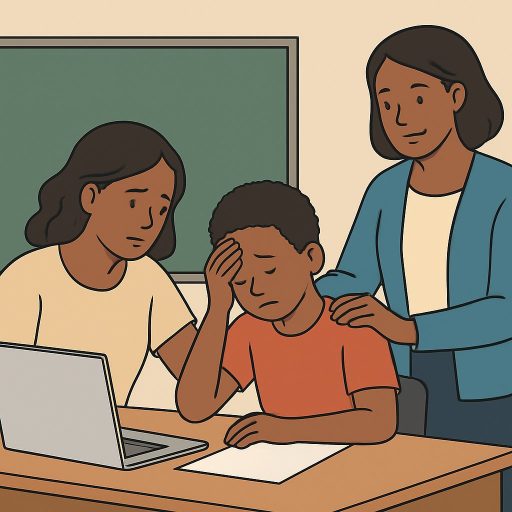




Listening Without Panic
When your child complains about school, pause before responding.
Give your child your full attention before offering advice or deciding what happened.
Listen without interrupting.
Create Space for Sharing
Set aside distractions while your child explains the concern.
Allow pauses because your child may need time to organize thoughts.
Notice the words your child chooses and the feelings behind them.
Then, reflect the main concern using calm, simple language.
Acknowledge Feelings
Recognize your child’s feelings without immediately judging the situation.
You can acknowledge distress even when you need more information.
Use responses that show you heard the emotional impact.
Avoid telling your child to stop feeling upset.
Also, avoid suggesting that their concern does not matter.
Validation helps your child feel heard while you gather clearer details.
Ask Calm, Open-Ended Questions
After listening, ask questions that invite your child to explain further.
Use a calm tone so your questions do not feel like an interrogation.
Parenting Made Just for You
Get personalized Parenting Solutions tailored to your child’s needs. Transform your parenting journey with expert guidance in 1-3 days.
Get StartedAsk what happened, how your child responded, and what happened afterward.
Encourage your child to describe the concern in their own words.
Ask one question at a time to keep the conversation manageable.
Allow your child to finish before asking another question.
Keep your questions neutral rather than suggesting an answer.
Keep the Response Proportionate
Take your child’s concern seriously without assuming the worst immediately.
Avoid dismissing the complaint as unimportant or temporary.
Likewise, avoid exaggerating the situation before understanding it fully.
Separate what your child experienced from what you still need to learn.
Stay curious instead of reacting with anger, fear, or blame.
Support Continued Conversation
Thank your child for sharing the complaint with you.
Reassure your child that you will listen carefully.
Explain that you want to understand before deciding what to do.
Invite your child to add anything they have not mentioned.
Unveil the Perfect Name that Tells Your Family's Story
Let us help you find a name that embodies your family's values, traditions, and dreams. Our personalized consultation weaves cultural insights to create a name that's uniquely yours.
Get StartedFinally, check that your child feels heard before ending the conversation.
Separating Facts from Assumptions
After your child shares a complaint, separate confirmed details from interpretations.
This process clarifies what happened without adding details your child did not provide.
It also keeps assumptions separate from the reported account.
Recording the Initial Account
First, write down your child’s account using their own words.
Keep the original description separate from your interpretation of the situation.
Also, avoid changing unclear statements into definite facts.
Preserve uncertainty whenever your child does not provide enough detail.
Clarifying What Happened
Next, identify the specific event your child described.
Ask which action, words, or situation created the complaint.
Then, distinguish between something your child observed and something they inferred.
Use the following questions to organize the available information.
- What does your child know directly?
- What remains unclear?
- Which details come from someone else?
Identifying Everyone Involved
Determine who participated in the event.
Separate people your child mentioned from people they assumed participated.
Record each person’s role only when your child clearly described it.
If your child cannot identify someone, mark that detail as unknown.
Establishing When It Occurred
Next, clarify when the event happened.
Identify the day, time, or school period if your child knows it.
If your child cannot remember, record that uncertainty instead of guessing.
Also, distinguish one event from repeated events.
Confirming Direct Experience
Determine whether your child experienced the event personally.
Then, establish whether your child witnessed it happening to someone else.
Finally, identify whether your child heard about it from another person.
Direct experience means the event involved your child.
Direct observation means your child witnessed the event.
Secondhand information came from someone else.
Separating Facts from Assumptions
Create two distinct groups for confirmed details and uncertain interpretations.
Place only directly described information in the confirmed group.
Place guesses, conclusions, and missing details in the assumptions group.
For example, record “your child saw the event” only when they stated that clearly.
Otherwise, describe the information as something your child heard or inferred.
Reviewing the Account Carefully
Read the account again after separating its details.
Check whether each statement identifies what happened, who participated, and when.
Also, check whether each detail reflects direct experience, observation, or secondhand information.
Keep unanswered questions visible for later clarification.
This method preserves accuracy while keeping assumptions from becoming established facts.
Recognising Urgent Complaints
Some complaints require prompt adult intervention because they may affect your child’s safety or wellbeing.
Take concerns seriously when they involve safety, bullying, harassment, discrimination, emotional distress, or repeated mistreatment.
These concerns can require support even when your child feels unsure about reporting them.
Concerns Involving Safety
Act promptly when your child describes a situation that threatens physical or emotional safety.
Safety concerns require adult involvement even when your child feels uncertain about reporting them.
Tell a trusted adult when your child cannot remain safe without support.
Bullying and Repeated Mistreatment
Repeated mistreatment deserves attention because ongoing behaviour can continue affecting your child.
Bullying concerns may require intervention when your child describes repeated harmful treatment.
Respond promptly when your child reports continuing problems involving the same person or situation.
Do not wait for repeated mistreatment to resolve without adult support.
Harassment and Discrimination
Harassment complaints require prompt attention because they can undermine your child’s dignity and sense of safety.
Discrimination concerns need adult intervention when your child believes unfair treatment relates to their identity.
When either concern appears, involve an appropriate adult rather than leaving your child to manage it alone.
Signs of Emotional Distress
Emotional distress can make an ordinary complaint more urgent.
Pay attention when your child communicates significant fear, upset, or difficulty coping with the situation.
Take their distress seriously, even when the complaint seems unclear.
Prompt support can help adults recognise the seriousness of your child’s experience.
When to Seek Immediate Support
Seek immediate adult help when your child describes immediate danger or cannot stay safe.
Act quickly when the complaint involves serious emotional distress, harassment, discrimination, or ongoing mistreatment.
Also respond promptly when your child says the problem continues despite previous adult involvement.
Choose a trusted adult who can address the concern appropriately.
Explaining the Urgency
Tell your child that urgent complaints deserve adult attention.
Explain that seeking help does not mean your child caused the problem.
Reassure them that adults must respond when safety or wellbeing may be affected.
Use clear language so your child understands why you need another adult’s involvement.
Prioritising the Next Step
First, identify whether your child faces immediate danger or serious distress.
Next, contact a trusted adult who can respond to the concern.
Then, explain that the complaint involves an urgent issue requiring attention.
Finally, continue supporting your child while appropriate adults address the concern.
See Related Content: How To Manage Pressure From Other School Parents
Preparing for a Constructive Conversation with the School
A thoughtful conversation helps everyone understand the concern and consider practical solutions.
Before contacting the school, organise the information you want to discuss.
Clear preparation can help you explain your child’s needs and identify immediate priorities.
Gather Relevant Information
Write down your child’s main concern using clear, neutral language.
Record the details your child shared without adding interpretations or assumptions.
Also, note any questions your child wants you to raise.
Gather relevant messages, written communication, or other available information.
Identify what your child needs from the conversation.
For example, your child may want clarification, support, reassurance, or a change.
Finally, decide which information requires immediate attention during the discussion.
Describe the Concern Respectfully
Begin by explaining that your goal involves understanding the situation and supporting your child.
Use specific, calm language when describing the concern.
Share what your child reported without presenting unconfirmed details as established facts.
Use phrases such as “My child explained” or “I would like to understand.”
Avoid accusing individuals or assigning blame before hearing the school’s perspective.
Keep the focus on the concern rather than personal criticism.
Explain how the situation affects your child when that information remains relevant.
Remain respectful, even when the concern feels upsetting or serious.
Questions That Clarify the Response
Open questions can help the school explain its understanding of the situation.
Ask what the school knows about the concern.
Find out how the school usually handles concerns of this nature.
Ask which support might help your child right now.
Clarify what information the school needs from you.
Confirm who will communicate with you about the concern.
Explore which possible steps the school can consider.
Ask how everyone can judge whether those steps address the concern.
Finally, ask whether additional information would help clarify the situation.
Keeping the Discussion Solution-Focused
After sharing the concern, invite the school to consider practical ways forward.
Discuss actions that support your child rather than punish or embarrass others.
Consider what each person can do to address the concern constructively.
Encourage the school to explain available options and their possible purposes.
Stay open to solutions that differ from your initial expectations.
However, continue asking questions when a proposed solution remains unclear.
Focus on what your child needs rather than proving who deserves blame.
Use collaborative language, such as “How can we support my child?”
Clarifying the Agreed Next Steps
Before ending the conversation, summarise what everyone discussed.
Confirm the actions each person agreed to take.
Clarify how the school will communicate further information.
Ask what you should do if the concern continues or changes.
Check that everyone shares the same understanding of the next steps.
Thank the school for discussing the concern, even when further work remains necessary.
Afterward, explain the agreed information to your child in a calm, age-appropriate way.
Discover More: Helping Your Child Settle Into A New School Environment

Helping Your Child Respond Appropriately
Support your child in choosing a response that matches their age, situation, and comfort level.
First, consider which response feels manageable for your child.
Then, help them choose respectful communication, personal boundaries, or support.
Practising Age-Appropriate Communication
First, help your child describe their concern using clear and respectful words.
Encourage younger children to explain what they need in simple language.
Older children can share more detail while maintaining a calm and respectful tone.
Practise short statements that explain the problem without insults or accusations.
For example, your child might say they feel uncomfortable when someone crosses a boundary.
They can also explain what response they would prefer.
However, avoid requiring words beyond your child’s communication abilities.
Instead, adapt practice conversations to their age and individual needs.
Building Confidence Through Practice
Role-play possible conversations so your child can practise speaking clearly.
Take turns speaking, listening, and responding without interrupting.
Then, encourage your child to try again using different words.
Keep practice brief, supportive, and focused on one communication skill.
Allow your child to pause when they need time to think.
Similarly, remind them that they can stop when they feel overwhelmed.
Setting Personal Boundaries
Teach your child that they can communicate boundaries respectfully.
They can say no when someone’s words or actions make them uncomfortable.
They can also move away when doing so feels possible and appropriate.
Encourage your child to state their boundary clearly rather than argue repeatedly.
For instance, they might say they do not want someone to continue.
However, your child does not need to manage every situation alone.
They should seek help when another person ignores their boundary.
They should also seek help when speaking directly feels unsafe or too difficult.
Choosing Constructive Conflict Resolution
When appropriate, guide your child toward resolving smaller conflicts calmly.
Encourage them to explain their perspective without blaming or threatening anyone.
They can describe what happened, explain its effect, and request a change.
Next, they can listen to the other person’s response.
Then, they can consider whether both people can agree on a respectful next step.
Remind your child that resolving conflict does not require accepting unfair treatment.
Likewise, they do not need to apologise for expressing a reasonable boundary.
If the conversation becomes hostile, your child can end it and seek support.
Knowing When to Involve a Trusted Adult
Help your child identify trusted adults they can approach when problems continue.
These adults may include people your child already trusts at home or school.
Encourage your child to ask for help whenever they feel unable to respond alone.
They should also involve an adult when someone ignores their request for space.
Additionally, they should seek support when a conflict keeps returning.
Explain that asking for help shows good judgment rather than weakness.
When your child approaches an adult, encourage them to describe their needed support.
They might request help starting a conversation, setting a boundary, or addressing continued conflict.
Supporting Follow-Through
After your child chooses a response, help them consider what they will do next.
They can decide whether to speak directly, step away, or contact a trusted adult.
Encourage them to notice whether the situation improves after their response.
If the concern continues, support your child in seeking further adult help.
Throughout the process, reinforce calm communication, personal boundaries, and appropriate support-seeking.
Gain More Insights: How To Support A Child Who Misses Home In School
Knowing When to Advocate More Firmly
A respectful approach can still require persistence when your child’s concern remains unresolved.
Therefore, notice whether the school has acknowledged the concern, addressed it, or left it unanswered.
Persistence can help clarify what support your child still needs.
Recognise When Follow-Up Becomes Necessary
Follow up when someone dismisses the concern without addressing its main points.
Also follow up when the response does not explain what happens next.
Repeated complaints may show that the current response has not resolved the underlying concern.
Additionally, your child may continue feeling affected after adults discuss the issue.
In that situation, ask the school to review the concern again.
State the Concern Clearly
Begin by identifying the concern and explaining why you are contacting the school again.
Refer to the previous discussion without assigning blame.
For example, explain that the concern remains unresolved from your child’s perspective.
Then describe the response you need from the school.
Ask for clarification, further action, or a review of what has already occurred.
Keep your wording calm, specific, and focused on your child’s wellbeing.
Ask Direct, Constructive Questions
Clear questions can move a conversation beyond general reassurance.
Ask what the school understands about the concern.
Next, ask which steps the school has taken so far.
Also ask what further steps it will consider.
Ask how the school will communicate future updates.
Finally, ask when you should contact the school again if the concern continues.
These questions encourage a practical response without demanding immediate conclusions.
Request a Clear Way Forward
When a concern remains open, request a clear next step.
The next step might involve another conversation or a review by someone else.
It might also involve checking whether the school addressed the concern.
Ask the school to explain who will handle the next stage.
Also ask how the school will keep the discussion focused on your child’s needs.
A clear process can reduce confusion and support consistent communication.
Escalate Respectfully When Needed
If the first response does not resolve the concern, contact the appropriate person higher within the school.
Explain that you are escalating because the concern remains unresolved.
Keep the explanation factual, concise, and connected to your child’s wellbeing.
Avoid presenting escalation as a threat or personal criticism.
Instead, state that you want support in reaching a suitable way forward.
Respectful escalation shows persistence while maintaining a productive relationship.
Keep Communication Focused
During follow-up discussions, return to the central concern when the conversation moves away from it.
Separate the unresolved issue from unrelated disagreements.
Use clear language rather than emotionally charged descriptions.
Pause before responding if the conversation becomes difficult.
Then restate what you want the school to understand.
Focused communication helps adults address the concern rather than debate intentions.
Include Your Child Appropriately
Tell your child that you are continuing to seek help.
However, avoid making your child responsible for resolving the adult discussion.
Ask what support would help your child feel heard and supported.
Share relevant preferences with the school when appropriate.
Continue checking whether your child feels the situation has changed.
If the concern repeats, inform the school that the issue remains active.
Review the Response
After the school responds, consider whether it addresses the original concern.
Check whether the response provides a clear next step.
Notice whether your child receives appropriate support during the process.
If the response remains unclear, ask a focused follow-up question.
If the concern remains unresolved, continue using the school’s available communication process.
Throughout the process, remain firm about your child’s need for attention and support.
You Might Also Like: What To Do When School Starts Feeling Overwhelming
Documenting School Complaints and Follow-Up
A clear record helps you track concerns responsibly.
It also supports focused communication with the school.
Keep each record factual, organised, and connected to one specific concern.
Start a Simple Complaint Record
Create one record for each concern your child raises.
Use a consistent format so you can review information easily.
Record the date when your child shared the concern.
Record the date of every related conversation as well.
Include the details your child provided without adding assumptions.
Note who raised the concern and who received the information.
Keep descriptions factual, clear, and connected to the specific complaint.
Capture Important Details
Write down what happened according to the available information.
Record where the reported event occurred whenever that information exists.
Note the people involved without assigning blame.
Include relevant words or phrases when they clarify the concern.
Separate your child’s account from your own interpretation.
Mark details that remain unclear or require clarification.
Track Communication
Record each communication with the school about the concern.
Include the communication date and the people involved.
Note whether the communication occurred verbally or in writing.
Summarise the main points discussed.
Record any information the school provided.
Keep copies of written messages connected to the concern.
After verbal conversations, write a brief summary for your records.
Then check that your summary reflects the discussion accurately.
Record Agreed Actions
Write down every action that participants agree to take.
Identify who will carry out each action.
Record any expected review point without creating an unagreed deadline.
Note questions that still need answers.
Keep agreed actions separate from suggestions or possible next steps.
This distinction helps you identify what participants have actually arranged.
Monitor Outcomes
Record what happened after each agreed action.
Note whether the action addressed the concern.
Include continuing, changing, or newly reported concerns.
Record your child’s description after follow-up.
Compare later information with the original record.
This comparison can show whether the concern remains unresolved.
Review the Record Carefully
Review your notes before contacting the school again.
Check that the dates, details, and communication summaries remain accurate.
Remove unclear wording that could create confusion.
Keep the record focused on the concern and its progress.
Update the record whenever new information becomes available.
A complete record supports calm, consistent, and responsible follow-up.
Building a Supportive Home-School Partnership
A supportive partnership helps children recognise that adults share responsibility for their wellbeing.
It also creates a dependable path for raising concerns before they become harder to manage.
Together, these practices help families and schools support children consistently.
Regular Communication Between Home and School
Regular communication keeps families and schools connected beyond moments of difficulty.
Use appropriate opportunities to share relevant updates about your child’s school experience.
Keep conversations focused, respectful, and centred on supporting your child.
Additionally, invite the school to share observations that may clarify your child’s needs.
Consistent contact can make future communication feel familiar rather than unusual.
Trust Through Consistent Support
Children often speak more openly when adults respond consistently to their concerns.
Show your child that you take their words seriously without creating unnecessary alarm.
Explain that adults may need to communicate when a concern affects their wellbeing.
Then, describe how you will involve your child in appropriate decisions whenever possible.
Keep promises about communication, updates, and support whenever circumstances allow.
Moreover, acknowledge uncertainty honestly when you do not yet know what will happen.
Emotional Check-Ins at Home
Short emotional check-ins can help children notice changes in their school experience.
Ask how school feels at different times, rather than waiting for a serious complaint.
Encourage your child to share positive, difficult, and confusing experiences.
Use calm, simple language that matches your child’s age and communication style.
Give your child time to answer without demanding immediate details.
However, respect privacy while remaining attentive to signs that your child needs support.
Shared Expectations for Communication
Families and schools can discuss shared expectations for communication, respect, and support.
Clarify how adults should communicate when concerns arise.
Discuss which information your child should share with a trusted adult.
Also, explain that speaking up helps adults understand situations and provide appropriate support.
Keep expectations realistic, clear, and consistent across home and school settings.
Making Reports Feel Possible
Tell your child that they can raise concerns even when they feel uncertain.
Explain that they do not need perfect words before asking for help.
Reassure them that adults can listen, clarify, and decide what support may be appropriate.
Encourage your child to identify trusted adults at home and school.
Practise simple ways to begin a conversation without rehearsing every possible situation.
For example, your child can say that something feels wrong or difficult.
Finally, remind your child that returning to the conversation remains acceptable.
This ongoing connection can help children report problems earlier and seek support sooner.
Additional Resources
Google search results for How To Handle School Complaints From Your Child Parenting Challenges
Bing search results for How To Handle School Complaints From Your Child Parenting Challenges