




School return after displacement in Nigeria can involve several practical decisions beyond receiving a school bag or exercise books. A family may still need a school contact, confirmation of learning placement and workable daily arrangements. This checklist helps caregivers organise those questions with the child, school and appropriate support services.
The timely starting point is an African Union campaign report updated on 28 October 2026. Its two assistance counts describe materials delivered during a mission. They do not establish successful enrolment, regular attendance or improved learning. Our blank planning tools keep those evidence limits visible.
What did the campaign report establish?
The AU Learning Beyond Conflict report describes a mission in Abuja and Maiduguri from 19 to 24 October 2026. It reports school and hygiene packs and sports materials for 1,000 children at Bulumkutu Interim Care Centre. Separately, more than 500 girls at Muhammadu Buhari Mega School received menstrual-hygiene supplies and training.
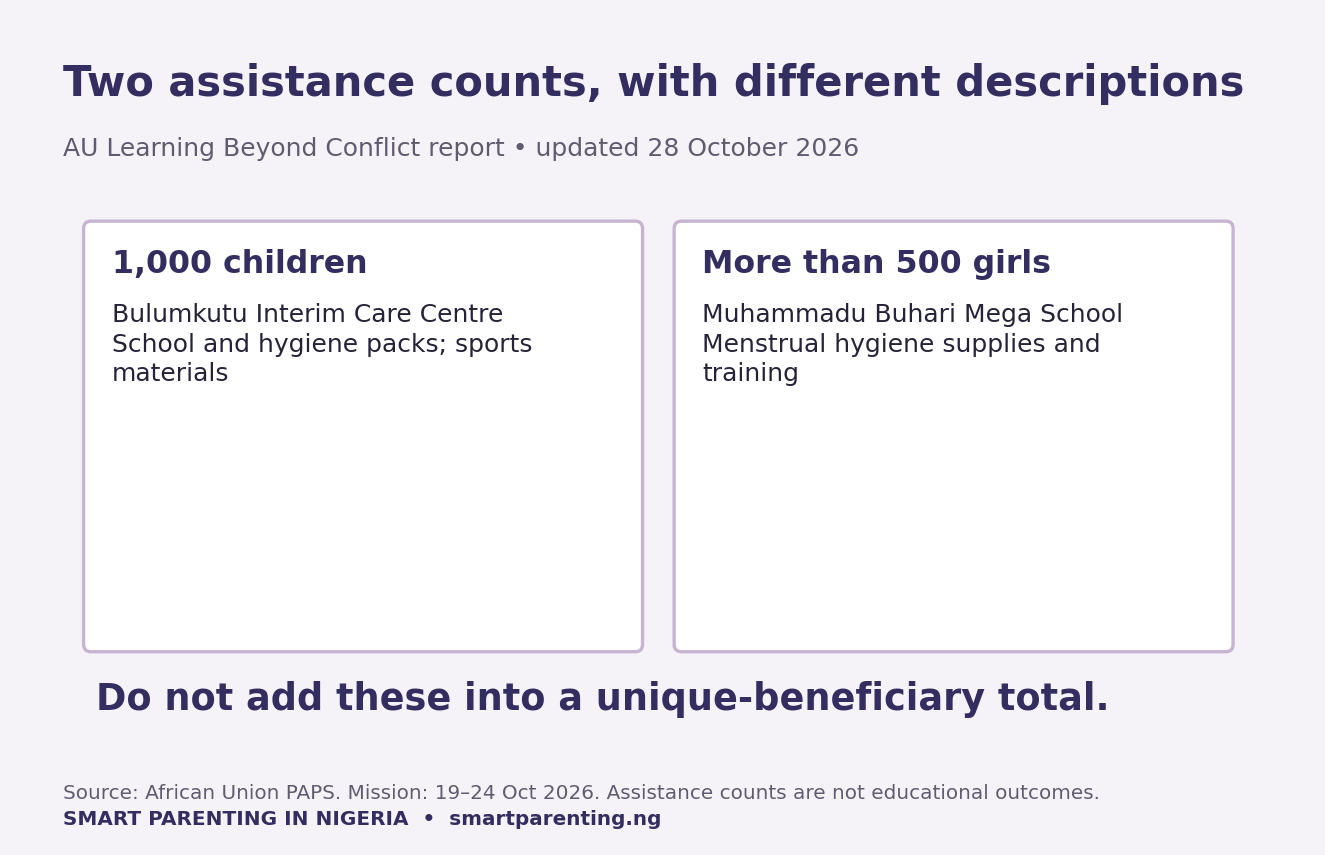
The AU department’s dated news feed also lists the report on 28 October. That publication date differs from the mission period. Neither date establishes an ongoing distribution offer, a place to claim supplies or universal eligibility for support.
Separate delivered assistance from educational outcomes
A delivered pack records a form of assistance. It does not tell us whether the recipient enrolled, attended regularly or received suitable learning support. Those questions require different records and follow-up. The campaign report does not supply an attendance comparison, a learning assessment or an estimate of the assistance’s effect.
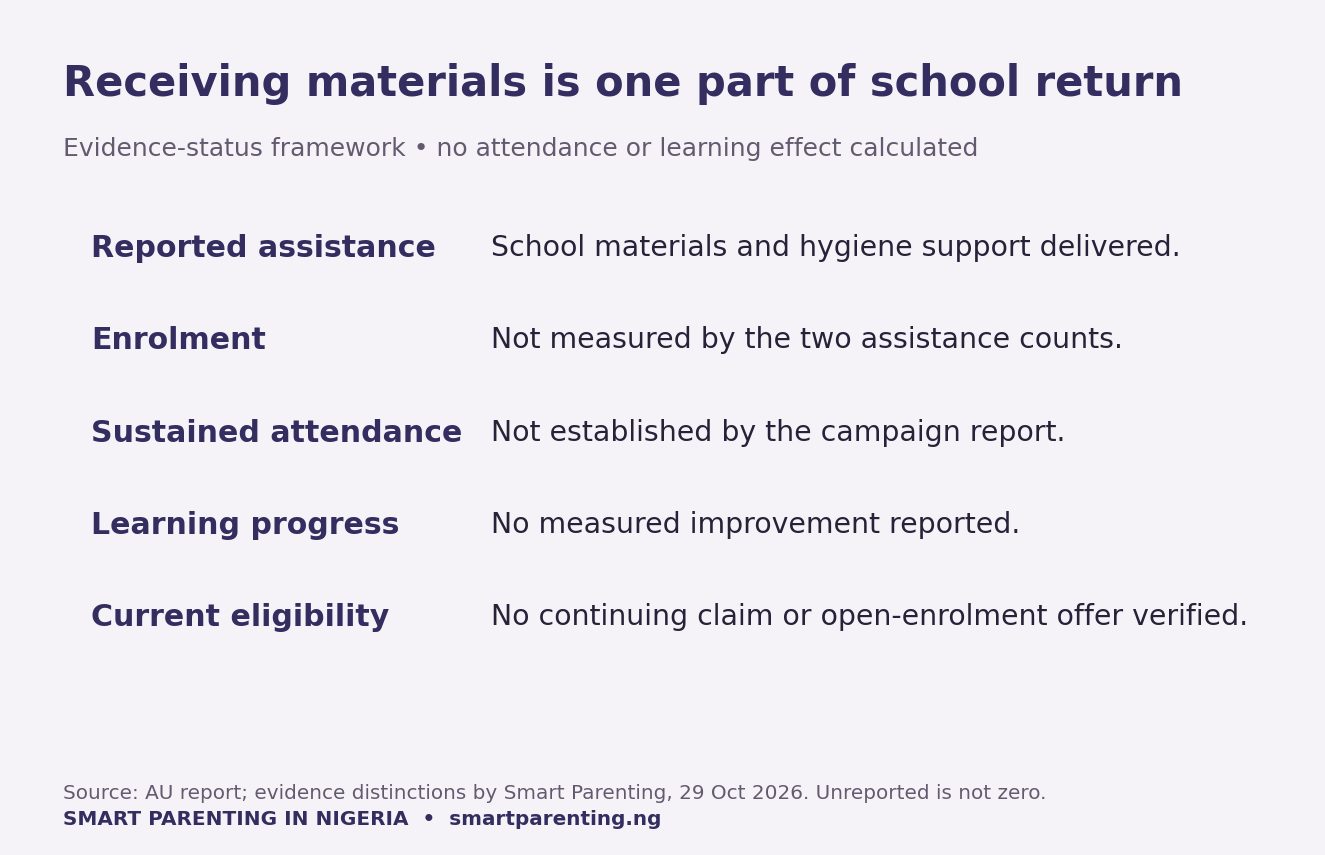
For that reason, our downloadable ledger contains two assistance rows with their locations, qualifiers and source. It contains no combined beneficiary estimate or percentage improvement. The remaining figures are explicitly labelled editorial planning frameworks. They are not findings from a household survey or a trial of this checklist.
Start a school return after displacement conversation
Ask the intended school or a recognised education-support organisation who can discuss the next steps. Record the answer and a date for checking anything unresolved. Confirm what local enrolment or learning-placement process applies, which materials are needed and what arrangements the school can explain. A question left unanswered remains unconfirmed.
The support matrix has six areas: a school contact, learning placement, materials, journey arrangements, access and hygiene, and an appropriate support contact. For each, there is room to record what is confirmed, what is still needed, who will follow up and the next check date. It does not rank schools or establish eligibility for any programme.
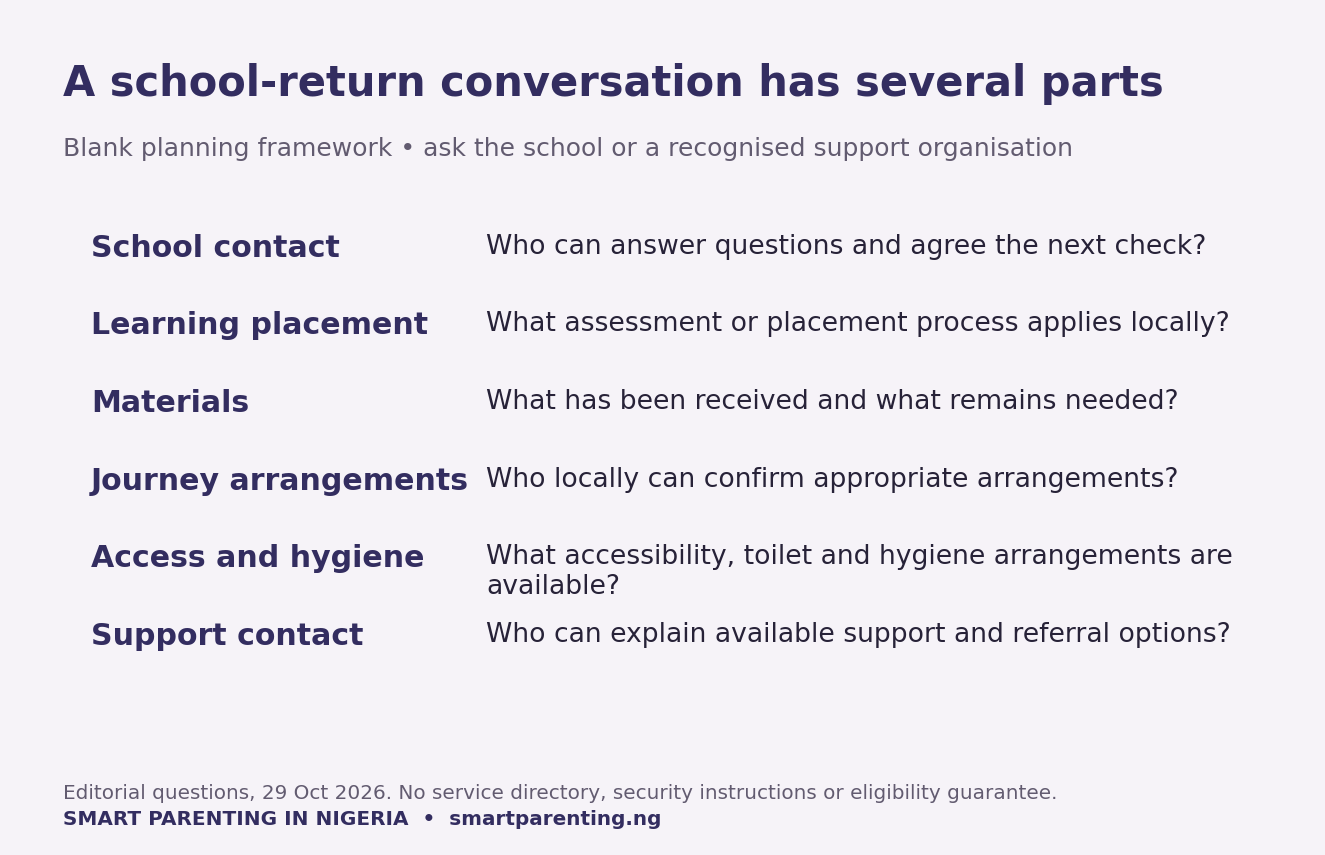
Discuss appropriate journey arrangements with the school and responsible local services. This article cannot assess local security or recommend a route. Likewise, ask about accessibility and hygiene arrangements directly rather than assuming that receiving supplies resolves every barrier. Do not put a child’s route or identifying details into a public example.
Make room for the child’s preferences
Give the child space to express practical preferences and questions in a way that feels comfortable. Adults can explain what is confirmed and what still needs checking. The planning sheet does not require a child to describe traumatic experiences, explain their displacement publicly or provide a personal story for publication.
A school-return checklist cannot replace appropriate professional psychosocial or child-protection support. Ask the school or a recognised support organisation to explain available referral options when specialist help is needed. No referral number, named provider or current service availability has been verified for this report.
Use a private attendance-and-barrier log
The blank log records a planned school day, attendance as recorded, an optional practical barrier and an agreed next step. It is a memory aid for the family and school. A missed day does not identify its cause, and a completed row does not diagnose a child or measure recovery.
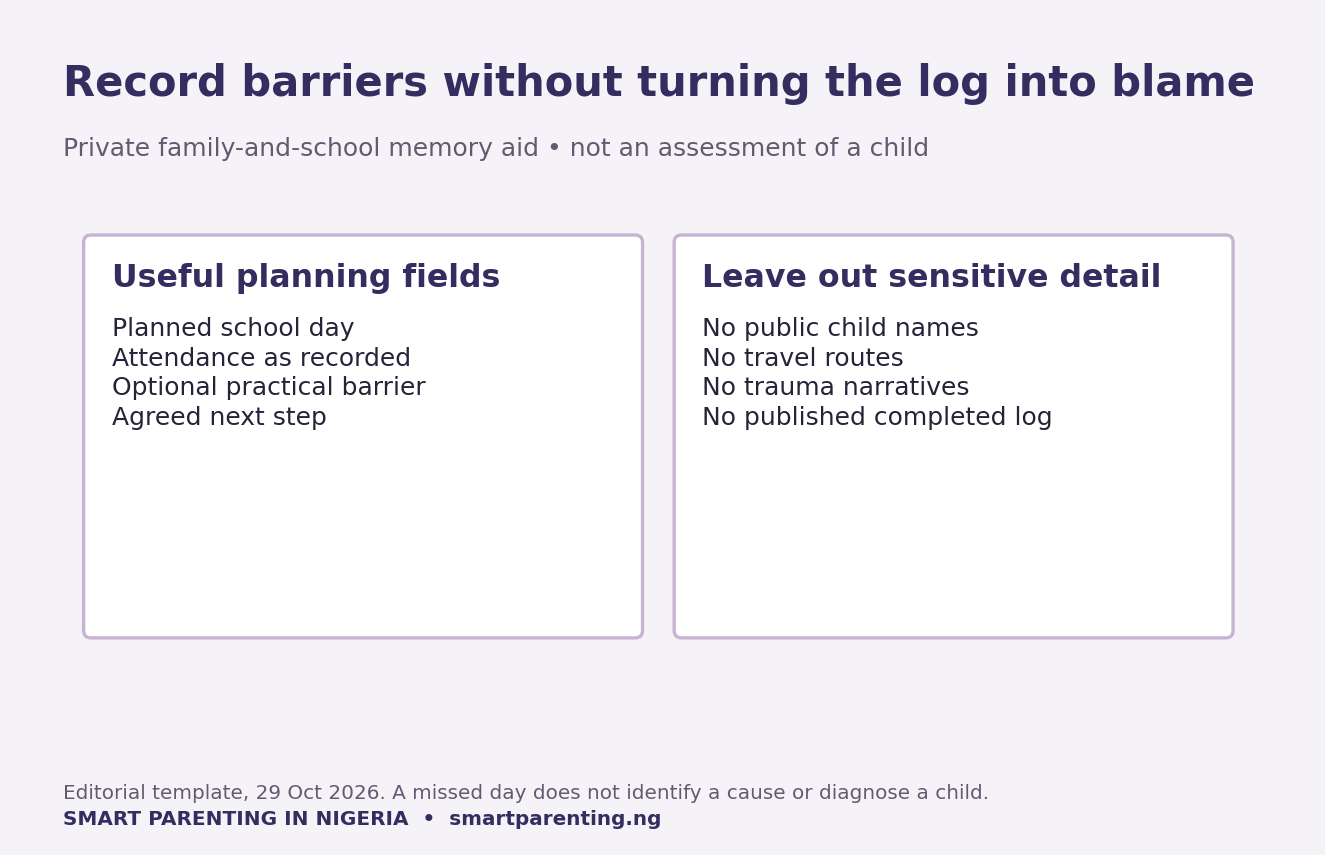
Keep any completed log private and share only what is appropriate with the people supporting the plan. Leave sensitive notes out of the template. If the arrangement is not working, discuss the practical barrier and a suitable next step instead of turning the record into a score of the child’s effort.
Review the plan at an agreed interval
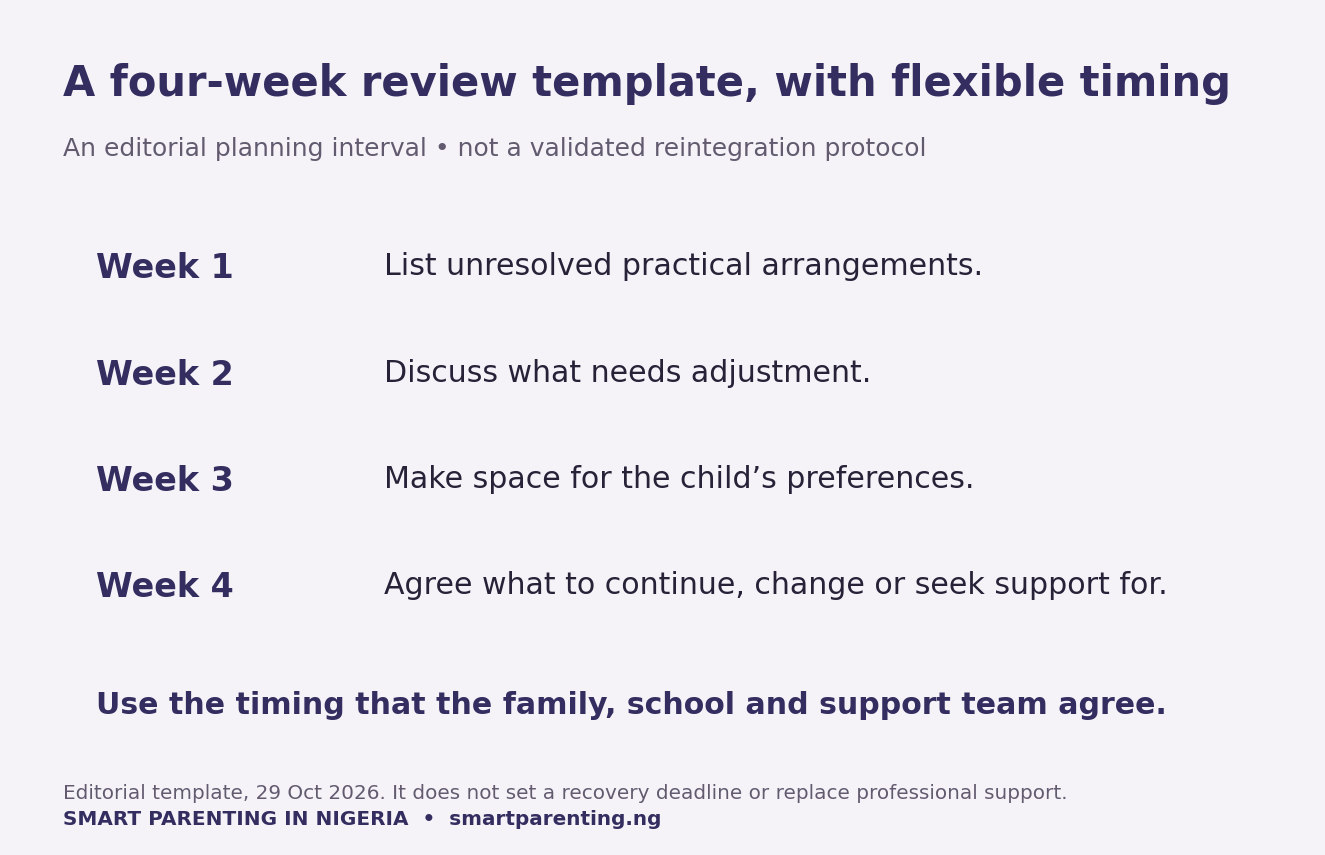
Our four-week template offers optional prompts for checking unresolved arrangements, adjustments, the child’s preferences and further support. Four weeks is an editorial planning interval, not a validated reintegration protocol. Families and professionals should agree a suitable timing rather than treating it as a deadline for recovery or successful school return.
For related everyday preparation, see our school-preparation guide and guide to discussing school concerns. These general articles do not replace displacement-specific assessment or locally verified support.
Parenting Made Just for You
Get personalized Parenting Solutions tailored to your child’s needs. Transform your parenting journey with expert guidance in 1-3 days.
Get StartedDownload the source ledger and blank planning tools
- Reported assistance and evidence limits (CSV): two source-linked rows.
- Blank school-return support matrix (CSV): six conversation areas.
- Private attendance-and-barrier log (CSV): ten blank entries.
- Optional four-week review template (CSV): four discussion prompts.
Methods, limits and suggested citation
Smart Parenting reviewed the linked AU report and dated feed on 29 October 2026. We retained the locations, exact count qualifiers and mission period. We did not infer unique combined beneficiaries, programme effects or continuing availability. No families, schools or service providers were contacted for this article.
The blank tools are editorial resources rather than validated assessments. They offer no security guidance, clinical advice or verified service directory. Suggested citation: Smart Parenting In Nigeria (29 October 2026), School Return After Displacement in Nigeria: Family Checklist, with source ledger and blank planning tools. Cite the AU directly when reusing its assistance counts.


