




Create an Early School Budget
Start planning early by listing every expected back-to-school expense.
This approach helps you organize costs before purchasing required items.
Next, separate essential expenses from items that can wait.
List Required Expenses
Write each expense category clearly to create a complete planning checklist.
A detailed list helps you identify every expected school expense.
Review each category before you begin purchasing required items.
- Include school fees and other required payments.
- Include uniforms and any related clothing requirements.
- Include books, stationery, and other learning materials.
- Include transport costs for the school period.
- Include meals and other required daily expenses.
- Include additional supplies requested for school activities.
Separate Essential and Flexible Costs
Mark each expense as essential, flexible, or dependent on school requirements.
Prioritize fees, uniforms, books, stationery, transport, meals, and required supplies.
Then, review flexible items after covering the essential categories.
This separation gives your budget a clear spending order.
Organize Costs by Category
Group similar expenses together so you can review them efficiently.
Use separate budget lines for fees, uniforms, books, stationery, transport, meals, and supplies.
Record the expected cost beside each line.
Then, add the categories together to view the planned total.
Plan for School Fees
Record every school fee that requires payment before the school period begins.
Parenting Made Just for You
Get personalized Parenting Solutions tailored to your child’s needs. Transform your parenting journey with expert guidance in 1-3 days.
Get StartedNote whether each fee requires a single payment or separate payments.
Keep fee planning separate from supply purchases.
This method helps you protect money needed for required payments.
Budget for Uniforms
List each uniform requirement before making clothing purchases.
Separate uniform costs from other clothing expenses.
Check your list before purchasing additional items.
Prioritize required uniform pieces within the available budget.
Cover Books and Stationery
Create separate lines for books, stationery, and other learning materials.
Record required items before considering optional additions.
Review the list carefully to avoid overlooking small supplies.
Update the budget when the school provides further requirements.
Include Daily School Costs
Consider recurring expenses alongside one-time purchases.
Transport and meals may require regular budget planning.
Record these categories separately from fees and supplies.
Unveil the Perfect Name that Tells Your Family's Story
Let us help you find a name that embodies your family's values, traditions, and dreams. Our personalized consultation weaves cultural insights to create a name that's uniquely yours.
Get StartedThen, include them in the total back-to-school budget.
Plan Transport Costs
Estimate the transport amount needed for the school period.
Keep transport funds separate from purchasing money.
Review the amount whenever transport requirements change.
Plan Meal Costs
Include meals as a distinct category within the budget.
Record the expected meal amount for the school period.
Review meal planning alongside transport and other recurring expenses.
Review and Adjust the Budget
Compare the expected total with the amount available for school expenses.
When the total exceeds available funds, review flexible categories first.
Protect essential fees, uniforms, books, stationery, transport, meals, and required supplies.
Adjust each category carefully instead of removing important requirements.
Finally, review the budget before making purchases or payments.
Calculate the Overall Amount
Start by combining expected costs for fees, uniforms, and supplies.
Then, review the total and identify each expense requiring payment.
This calculation shows how much preparation the complete school cost requires.
Divide the Total Into Smaller Goals
Next, divide the total cost into manageable savings targets.
You can assign separate targets to fees, uniforms, and supplies.
Alternatively, create one combined target for all school expenses.
Choose the approach that makes your progress easiest to track.
Afterward, record each target and update it whenever you save money.
Create a Payment Timeline
Set payment dates before school expenses become urgent.
Then, match each savings target with its necessary payment date.
Give earlier attention to expenses that require earlier payment.
Meanwhile, schedule later targets around the remaining payment dates.
A clear timeline connects saving progress with upcoming responsibilities.
Review Progress Regularly
Check your savings progress regularly before each payment date.
If progress falls behind, adjust the remaining targets promptly.
You can also redistribute savings across categories when priorities change.
However, keep every required expense visible during adjustments.
Keep the Plan Practical
Set targets that fit your available resources and payment timeline.
Small, consistent savings amounts can make the total feel more manageable.
Therefore, begin planning before urgency limits your available choices.
Finally, keep the timeline and targets together for easier reference.
Verification of School Requirements Before Purchasing
Start by confirming the school’s current fee structure.
Review each listed charge carefully before making payments.
Also, confirm whether the school has updated any fees recently.
Payment Deadline Confirmation
Record every payment deadline in one accessible place.
Then, compare each deadline with your existing payment plans.
Confirm the required payment method before submitting any fees.
Ask the school to clarify any unclear payment instructions.
Uniform Requirement Confirmation
Review the school’s current uniform requirements before buying clothing.
Check which uniform items the school expects students to wear.
Confirm any specifications for colors, styles, or required pieces.
Also, verify whether the school permits alternatives for particular items.
Approved Learning Materials
Confirm which learning materials the school approves before purchasing supplies.
Review the required materials carefully to avoid unnecessary purchases.
Check whether the school has provided a current materials list.
Use the latest requirements instead of relying on older information.
Organization of Confirmation Notes
Keep confirmed fees, deadlines, uniform requirements, and materials together.
Mark each requirement after receiving clear confirmation.
Finally, review your notes before buying anything.
Gain More Insights: How To Compare School Fees Without Losing Quality
Build a Uniform Plan
Begin by reviewing every uniform item currently available.
Then, separate each item into reuse, repair, alteration, or replacement categories.
This approach creates a practical plan for managing uniform needs.
Reuse Suitable Items
Reuse items that remain suitable for continued wear.
Check each item’s condition before including it in the uniform plan.
Also, keep usable pieces available when planning future uniform needs.
Repair Items That Need Attention
Identify items that require repairs before regular use.
Repairing suitable pieces may keep them within the uniform plan.
However, remove items that no longer support proper wear.
Consider Alterations Carefully
Review whether alterations could improve an item’s fit.
Allow enough room for comfortable movement after making adjustments.
Additionally, reassess altered items as the wearer continues to grow.
Replace Items When Necessary
Replace items that cannot provide a suitable fit or reliable use.
Prioritize replacement when repairs or alterations cannot address the issue.
Next, compare each replacement need with the available uniform plan.
Allow Room for Growth
Choose a fit that supports present needs without restricting expected growth.
Nevertheless, avoid selecting oversized items that do not fit properly.
Check each item’s fit before deciding whether to reuse, alter, or replace it.
Furthermore, leave room to reassess the uniform as growth changes the fit.
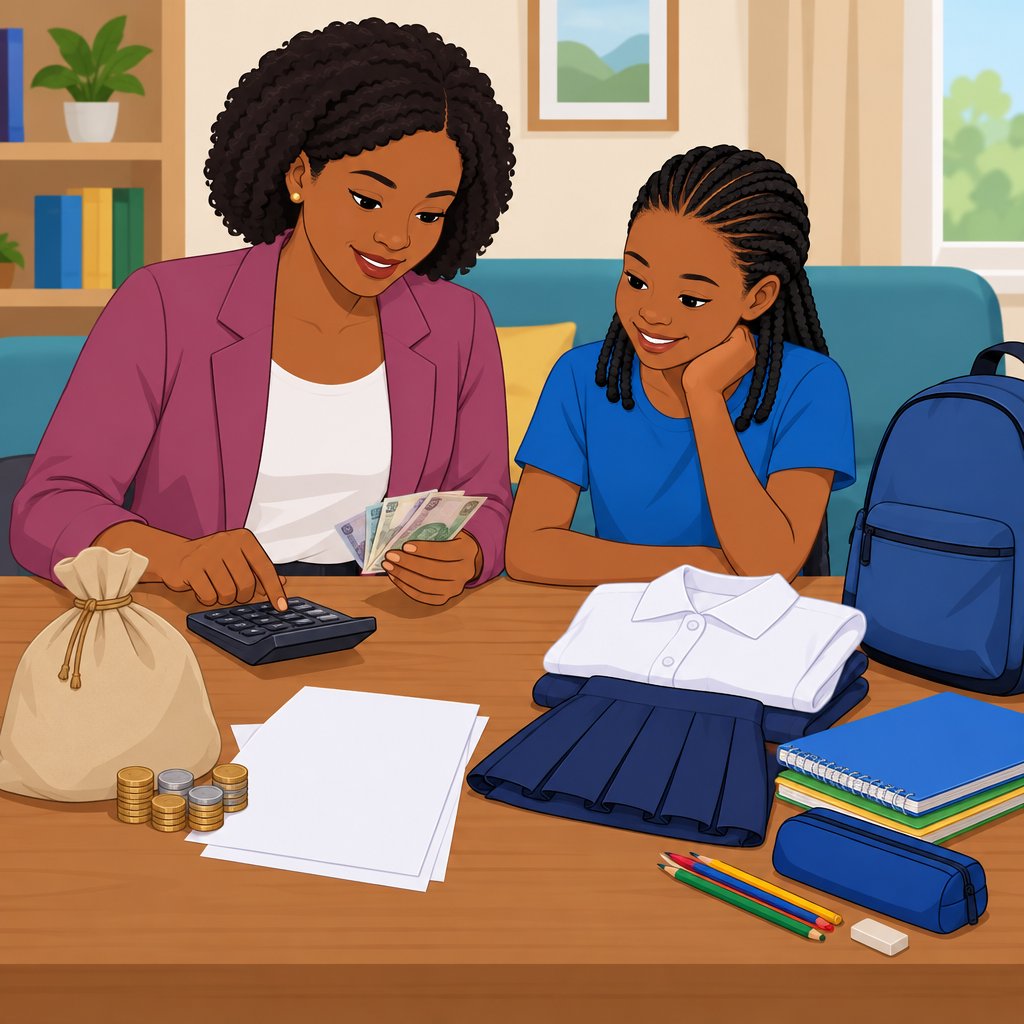
Organize the Uniform Decisions
Create a clear record of each item’s planned action.
Mark whether each piece needs reuse, repair, alteration, or replacement.
Then, review the plan to identify unresolved uniform needs.
This process keeps uniform decisions organized while supporting proper fit and growth.
Gain More Insights: Smart Money Planning Before Your Child Starts School
Complete Supplies Checklist
Create one central checklist for every expected purchase.
Group entries under fees, uniforms, and general supplies.
Record each required quantity and mark items needing confirmation.
- Fees: record every fee requiring payment. Quantity: confirm the required payment amount. Confirmation: required.
- Uniform items: record every item requiring attention. Quantity: record each required amount. Confirmation: required when details remain unclear.
- General supplies: identify every required supply. Quantity: record the amount needed. Confirmation: required when details remain unclear.
- Essential items: mark each required purchase with one consistent checklist symbol.
Existing Supplies and Available Items
Inspect current belongings and available supplies before buying anything.
Compare every item with the central checklist.
Mark usable items as available and separate them from items needing replacement.
Update quantities whenever you find another usable item.
Essential Purchases
Place every required item in the essential category.
Use clear labels so essential purchases remain easy to identify.
Review essential items before considering any optional purchase.
Optional Purchases
Create a separate section for items that provide added convenience.
Keep optional purchases apart from required supplies.
Postpone optional items until essential needs receive attention.
Remove optional items that duplicate something already available.
Duplicate Purchase Prevention
Search every relevant storage area before adding items to the shopping list.
Record usable items immediately after finding them.
Compare similar items instead of checking only identical items.
Review the checklist again before completing each purchase.
Cross off purchased items to maintain an accurate record.
Checklist Maintenance
Keep one updated checklist instead of several separate versions.
Record purchases promptly after making them.
Adjust quantities whenever needs change.
Remove items that no longer apply.
Review the list before each additional purchase.
This process keeps the checklist useful throughout preparation.
Explore Further: Hidden School Costs Nigerian Parents Should Prepare For
Compare Prices Without Sacrificing Value
Compare prices before purchasing uniforms and supplies.
However, choose products that meet school requirements and support practical use.
A careful comparison helps you spend money on suitable products.
Compare Equivalent Items
Review similar items together before deciding which option offers better value.
Check each item’s size, materials, features, and included components.
A lower price may not provide the same quality or usefulness.
Therefore, compare equivalent products rather than comparing prices alone.
This method shows which option offers practical value.
Prioritise Quality and Durability
Prioritise items that can withstand regular use throughout the school period.
Inspect stitching, fastenings, fabric, construction, and overall finish where possible.
Choose supplies that support the required schoolwork without unnecessary extras.
Additionally, consider how easily each item can receive care or maintenance.
Durable choices may provide stronger value when they remain useful for longer.
Use Requirements as Your Buying Filter
Keep the school’s requirements beside you while comparing available options.
Remove any product that fails to meet the required specifications.
Next, compare the remaining choices by price, quality, and practical value.
This approach prevents attractive prices from influencing unsuitable purchases.
It also keeps spending focused on items that serve a clear purpose.
Review the Total Purchase Cost
Look beyond the listed price when assessing each purchase.
Include every required component when comparing complete uniform or supply options.
Check whether a lower-priced option still includes everything needed.
Otherwise, additional purchases may increase the final cost.
For clarity, record each option’s total cost before making a decision.
Choose Value Over Unnecessary Features
Identify the features that directly support school requirements or regular use.
Then avoid paying more for features that provide no practical benefit.
Compare essential quality with optional extras before choosing an item.
This helps direct money toward dependable uniforms and necessary supplies.
Finally, select the option that balances compliance, quality, usefulness, and price.
Learn More: Why Insurance Is Essential for Nigerian Families
Building Shared Responsibility
Children can help organise their uniforms and school supplies.
Careful handling can reduce loss and unnecessary replacement costs.
Regular organisation helps children manage their personal belongings responsibly.
Involve Children Early
Invite children to help organise their uniforms and school supplies.
Explain that careful handling can reduce loss and unnecessary replacement costs.
Give each child responsibility for keeping personal items together.
Also, encourage questions when children feel unsure about organising belongings.
Create Simple Organisation Habits
Choose a consistent place for uniforms and supplies.
Ask children to return each item after use.
Keep similar supplies together so children can find items easily.
Review the arrangement together when it no longer works well.
Therefore, children can practise responsibility through regular organisation.
Label Personal Belongings
Label uniforms and supplies so children can identify their belongings easily.
Involve children when preparing labels for their personal items.
Show them where labels belong and explain their purpose.
Additionally, check labels regularly to ensure they remain clear and attached.
Replace unclear labels before items become difficult to identify.
Teach Careful Handling
Show children how to handle uniforms and supplies carefully.
Encourage them to check items after use.
Ask children to report damage, missing items, or needed repairs promptly.
Address small care needs before they create larger replacement needs.
Furthermore, remind children to keep belongings together during daily activities.
Review Responsibilities Together
Set aside time to review how children manage their belongings.
Discuss which habits help prevent loss and unnecessary replacement.
Recognise consistent care and organisation.
Adjust responsibilities as children become more confident.
Consequently, children can develop lasting habits for managing uniforms and supplies.
Allowing for Unexpected Expenses
Set aside a small contingency amount for unexpected school-related expenses.
This reserve can support necessary costs that arise after your main preparation.
Keep the contingency amount separate from funds assigned to planned expenses.
Additionally, record any reserve use to maintain a clear view of available funds.
Protecting the Contingency Amount
Use the reserve only when an unexpected school-related need appears.
Before spending it, check whether the cost requires immediate attention.
Then, update your preparation plan to reflect any remaining amount.
If you do not use the reserve, retain it for later school-related needs.
Reviewing the Preparation Plan
Review the full preparation plan before the term begins.
First, check whether each planned task remains relevant and complete.
Next, confirm that your available funds still match the plan.
Also, identify unresolved costs that could affect your preparations.
Making Final Adjustments
Adjust the plan when circumstances change before the term starts.
Prioritise necessary actions while protecting the contingency amount.
Finally, keep the updated plan accessible until preparations finish.
- Review planned expenses.
- Check the contingency amount.
- Identify unresolved preparation tasks.
- Update the plan when necessary.
Additional Resources
Google search results for How To Prepare For Fees, Uniforms, And Supplies Family Finance
Bing search results for How To Prepare For Fees, Uniforms, And Supplies Family Finance


