




Independent Self-Care
This section outlines core self-care skills for early school days.
It focuses on toileting, dressing, and basic clothing management.
Practice helps build confidence and routine.
Toileting
Children should be able to use the toilet independently.
They should ask for help when needed.
Additionally, they should manage simple hygiene tasks after toileting.
Dressing Skills
Children should handle common fastenings like zips and buttons.
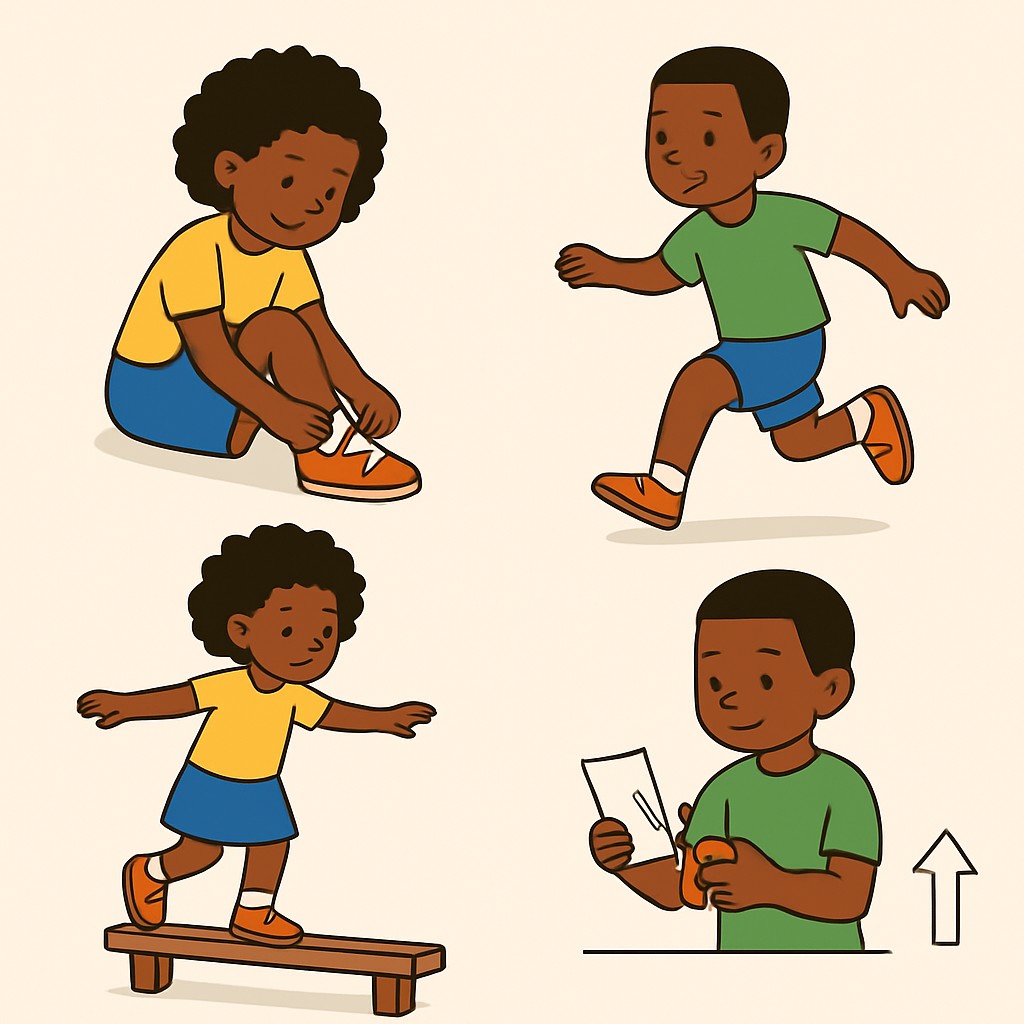
They should put on and remove shoes independently.
Additionally, they should manage socks and simple layers.
- Open and close zips smoothly.
- Fasten and unfasten buttons one at a time.
- Pull clothes up and down without help.
- Use simple shoe fastenings independently.
Managing Basic Clothing Needs
Children should manage socks, hats, and outer layers.
Additionally, they should recognise left and right when dressing shoes.
Furthermore, they should identify clothing that needs washing.
Next, they should handle simple changes at school.
Practice Strategies
Create short daily routines for dressing and toileting practice.
Also, use consistent language when describing fastenings and steps.
Parenting Made Just for You
Get personalized Parenting Solutions tailored to your child’s needs. Transform your parenting journey with expert guidance in 1-3 days.
Get StartedFurthermore, allow repeated, supervised practice in simple tasks.
Additionally, encourage independence while offering help only when necessary.
- Lay out clothes the night before.
- Practice independent toileting before leaving home.
- Keep spare clothes accessible at school.
- Label garments with clear identifiers if helpful.
Fine Motor Readiness for Classroom Tasks
This section outlines fine motor skills useful for classroom activities.
It focuses on pencil grip, colouring, cutting, and small object manipulation.
Teachers and caregivers can observe and support these emerging abilities.
Pencil Grip
A reliable pencil hold supports control during writing tasks.
Furthermore, children need finger and wrist coordination for steady marks.
Encourage relaxed pressure and comfortable positioning during mark-making.
Also, short frequent practice helps develop endurance and consistency.
Colouring and Mark-Making
Colouring develops control over strokes and pressure.
It also builds attention to boundaries and sustained focus.
Offer varied materials and surfaces to encourage exploration and confidence.
Cutting with Scissors
Scissor skills require hand strength and bilateral coordination.
Additionally, children must guide scissors along visual lines.
Unveil the Perfect Name that Tells Your Family's Story
Let us help you find a name that embodies your family's values, traditions, and dreams. Our personalized consultation weaves cultural insights to create a name that's uniquely yours.
Get StartedTeach safe handling and switching hands when tasks demand support.
Manipulating Small Objects
Manipulating small items refines fingertip precision and dexterity.
Also, it supports tasks that involve sorting and assembling.
Introduce varied sizes and textures in gradual steps.
Practice Activities
Regular playful practice helps children apply fine motor skills.
- Tracing shapes with drawing tools on plain paper.
- Colouring inside larger areas to practice controlled movements.
- Cutting paper along straight and curved lines carefully.
- Threading or stringing small objects onto a cord gently.
- Picking up and placing small pieces to build precision.
Next, practice these activities in short, focused sessions.
Classroom Task Alignment
Teachers can adapt fine motor activities into daily classroom routines.
Also, observing children during tasks helps identify areas needing support.
Finally, integrate brief supports so children feel successful and engaged.
Gross Motor Competence and Playground Skills
Gross motor skills help children move confidently during play.
They support participation in group activities.
They complement self-care and fine motor abilities.
Why These Skills Matter
Children need skill to approach and leave play equipment safely.
Teach them to look for stable handholds and footholds.
Encourage waiting turns to prevent accidents and promote social rules.
Running
Running requires coordination between arms and legs.
Encourage short bursts of movement in safe spaces.
Supervise to reduce collision and tripping risks.
Jumping
Jumping builds leg strength and timing.
Practice jumping from low steps or marked spots.
Remind children to land on both feet to distribute impact.
Climbing Stairs
Climbing stairs develops alternating leg movement and balance.
Teach children to hold rails for control.
Practice one step at a time until children feel steady.
Maintaining Balance
Balance supports safe play on beams and uneven ground.
Use simple activities that promote weight shifting and steadiness.
Provide gradual challenges to avoid frustration.
Playground Navigation and Equipment Use
How Adults Can Support
Adults set up safe spaces for practice and exploration.
They model movements and give clear demonstrations.
Provide positive feedback to build confidence and persistence.
Uncover the Details: Signs Your Child May Be Ready For School In Nigeria
Hand-Eye Coordination for Practical Activities
Hand-eye coordination supports practical classroom tasks.
It helps children complete many small tasks more smoothly.
Additionally, coordination builds confidence in new classroom routines.
Why Hand-Eye Coordination Matters
Teachers observe smoother task completion when children use coordinated hand and eye movements.
Moreover, children can follow visual instructions more reliably during classroom activities.
As a result, learners gain confidence adapting to new classroom routines.
Key Skill Areas
This section highlights practical skills that support classroom tasks.
Included skills are catching, threading, pasting, and cutting on lines.
Teachers can observe these skills during routine activities and play.
Catching
Catching requires the eyes to guide the hands to an object.
Also, catching improves timing and spatial awareness during group play.
Children improve timing and spatial awareness through catching practice.
Threading
Threading needs steady visual tracking and precise finger placement.
It also develops coordination for tasks with sequences of hand movements.
Children practice visual tracking as they place threads or beads.
Pasting
Pasting asks children to align items and apply adhesive accurately.
Additionally, it connects planning with precise hand placement and control.
Children learn to judge placement while handling glue or tape.
Cutting on Lines
Earlier sections mentioned basic scissor use.
Cutting on lines requires aligning scissors to a drawn path.
It also demands continuous visual guidance and small hand corrections.
Regular practice encourages smooth, controlled movement along visual targets.
Practice Ideas
Try simple activities to develop hand-eye coordination.
Start with easy tasks and increase challenge gradually.
Below are practical ideas for catching, threading, pasting, and cutting.
- Toss a soft item gently for the child to catch.
- Use large beads or shapes for tracking and placement.
- Provide cut pieces to place within marked areas.
- Offer wide bold lines to begin cutting on lines.
Tips for Adults
Offer clear visual cues and demonstrate one step at a time.
Next, adjust speed and distance to match the child’s needs.
Also, celebrate small improvements to encourage continued practice.
Observing Progress
Watch for smoother hand movements and improved timing.
Then introduce slightly harder tasks when readiness appears.
Look for improved control during activities before increasing difficulty.
Learn More: Understanding Cognitive Growth in Nigerian Toddlers
Stamina, Posture, and Sitting Tolerance
This section discusses stamina, posture, and sitting tolerance.
It explains why these skills matter for classroom participation.
It suggests strategies and classroom supports for teachers.
Signs a Child May Struggle
A child may shift frequently during group activities.
They may stand or leave the carpet early.
Teachers may notice slumped posture or restless legs.
Strategies to Build Stamina and Posture
Begin with short seated periods and increase duration gradually.
Teach simple posture cues and model them regularly.
Allow brief movement breaks and flexible seating when needed.
- Use visual timers to show expected sitting lengths.
- Offer brief movement breaks between tasks.
- Provide seating options like cushions or supportive chairs.
- Encourage core-strengthening play outside of lessons.
Classroom Supports During Group Time
Prepare clear routines for group activities.
Set short, focused tasks to maintain attention.
Use seating arrangements that reduce distractions.
- Set short, focused tasks to maintain attention.
- Use seating arrangements that reduce distractions.
- Offer discreet cues to remind children about posture.
- Allow a quiet spot for children who need regrouping.
Practice Activities to Increase Sitting Tolerance
Practice increases confidence during lessons.
Try short listening stories and gradually lengthen them.
Introduce paired tasks with clear turn-taking rules.
- Try short listening stories and gradually lengthen them.
- Play focused games that require sitting and attention.
- Introduce paired tasks with clear turn-taking rules.
- Use simple breathing exercises to calm and reset posture.
Explore Further: Tips for Supporting Your Child’s Transition Into Adolescence
Managing Personal Belongings and Routines
This section covers personal belongings and daily routines for school.
Caregivers and teachers will guide children through practical skills.
Practice and consistent routines help children gain independence.
Preparing and Packing the Bag
Teach children which items to include in their bag.
Place heavier items close to the bag back panel for balance.
Use pockets and compartments to organise supplies and snacks.
Encourage children to practise packing independently at home.
Carrying and Handling a Bag
Start with lightweight loads to build carrying confidence.
Ask children to use both straps when possible for balance.
Teach safe ways to lift the bag from floor or hooks.
Show where to set the bag down during class time.
Opening Lunchboxes and Water Bottles
Practise opening and closing lunchbox latches or clips together.
Teach two handed techniques to twist and lift bottle lids.
Model checking seals before placing items back into the bag.
Encourage children to practise these skills at home before school.
Organising Items Inside the Bag
Organise items inside the bag to reduce spills and damage.
Use separate pockets to keep items sorted and reachable.
Check compartments regularly to maintain organisation.
- Keep food containers in a waterproof bag or separate pocket.
- Store drinks upright to prevent spills.
- Place books and folders flat to avoid damage.
- Keep small personal items in a clear pouch for easy access.
Routines for Mornings and End of Day
Create a simple checklist for packing and leaving home.
Practise the routine with short daily sessions.
Involve children in checking their own bag each morning.
Establish a consistent spot at home to place the bag.
Practice Strategies for Caregivers and Children
Begin with brief, focused practice sessions at home.
Role play school drop off and pick up routines together.
Gradually increase the child’s responsibility for their belongings.
Provide clear, positive feedback when children act independently.
Uncover the Details: How to Spot Early Signs of Delayed Physical Development
Hygiene-Related Physical Skills
This section outlines basic hygiene skills for young children.
It focuses on handwashing, nose care, and simple self-cleaning routines.
Teachers and caregivers should model and supervise these skills regularly.
Handwashing Technique
Teach children to approach the sink with purpose.
Then have them wet their hands under running water.
Next encourage them to apply soap to their palms.
Also show how to rub all hand surfaces thoroughly.
Furthermore remind children to rinse soap fully under water.
Finally have them dry hands using a towel or hand dryer.
- Focus on covering palms, backs of hands, between fingers, and under nails.
- Also practice turning taps off using a towel when possible.
Using Tissues and Nose Care
Explain how to take a tissue before touching the face.
Then show gentle nose blowing into a tissue.
Next coach children to fold or wrap used tissues neatly.
Afterward instruct them to dispose of tissues in a bin.
Meanwhile remind them to wash or sanitize hands after disposal.
- Also teach covering mouth and nose with a tissue when coughing.
- Alternatively teach covering with an inner elbow if no tissue is available.
Basic Self-Cleaning Routines
Encourage wiping faces and hands after meals or messy activities.
Also prompt children to check and clean sticky fingers before handling shared items.
Furthermore teach simple nose checks and discreet nose wiping when needed.
Additionally show how to use a small handkerchief or tissue pack responsibly.
Then reinforce washing hands after any self-cleaning task.
Practical Practice Strategies
Model each skill slowly while children watch closely.
Next let children practice each step with supervision.
Also use short reminders and visual cues near sinks and bins.
Furthermore create simple routines to repeat daily at school start.
Finally praise attempts to build confidence and independence.
Home Practice Strategies for Parents
Use daily play and chores to strengthen school-ready physical abilities.
Additionally, keep activities short and consistent for better learning.
Furthermore, involve children in tasks they can enjoy and complete.
Daily Routines to Repeat
Create small, predictable routines that occur every day.
For example, include a short movement break between tasks.
Moreover, add a tidy-up routine after playtime to build responsibility.
- Design a morning step sequence that the child follows each day.
- Establish a simple snack preparation routine to encourage independence.
- Introduce a consistent bedtime wind-down that includes gentle stretching.
Simple Games to Try
Choose games that blend fun with small physical challenges.
Therefore, vary activities to keep engagement high.
- Play a follow-the-leader movement game around the living room.
- Set up a tape line for balance walks and playful turns.
- Sing finger play songs to strengthen hand coordination gently.
- Organize a tidy-up relay that rewards quick, careful sorting.
Chores That Build Physical Confidence
Assign simple chores that match the child’s current abilities.
Meanwhile, offer help when tasks become frustrating or difficult.
- Invite the child to water low houseplants with a small cup.
- Ask them to fold washcloths or small towels neatly.
- Let them sweep crumbs into a small dustpan after snacks.
- Encourage them to carry a lightweight laundry bag across the room.
Creating a Supportive Home Space
Prepare a safe area with clear floor space for active practice.
Additionally, keep commonly used items within easy reach for children.
Moreover, provide simple, low-risk materials for practice and play.
Tips for Motivation and Consistency
Offer specific praise for effort and small successes frequently.
Also, model tasks slowly so children can copy actions easily.
Rotate activities to sustain interest and target different skills.
Finally, schedule brief daily practice sessions and maintain a flexible routine.
Additional Resources
Bing search results for Physical Skills Children Need For First School Days Developmental Milestones


