




Reframing Parental Anxiety
Parental anxiety often directs attention toward worst case scenarios.
Reframing redirects that energy toward practical, actionable steps.
A calmer mindset also models coping strategies for children.
Why Shifting Perspective Helps
Perspective shifts can reduce attention on frightening possibilities.
They help parents identify manageable actions during uncertain moments.
As a result, children can observe calm responses to challenges.
Mindset Shifts to Try
Several mindset shifts can make transitions feel more manageable.
Preparation, flexibility, and progress provide useful alternatives to constant control.
These approaches support steady action without demanding perfect outcomes.
Preparation Over Perfection
Shift expectations from perfect outcomes toward steady preparation.
Then, divide larger tasks into small, manageable steps.
This approach keeps attention on useful preparation instead of flawless results.
Acceptance of Small Uncertainties
Some variables will remain unpredictable.
Flexible plans allow families to adapt when circumstances change.
Accepting limited uncertainty can reduce pressure during transitions.
Parenting Made Just for You
Get personalized Parenting Solutions tailored to your child’s needs. Transform your parenting journey with expert guidance in 1-3 days.
Get StartedProgress Over Control
Notice incremental growth instead of enforcing strict control.
Celebrate small wins to reinforce positive momentum.
This focus recognizes movement forward, even when progress remains gradual.
Simple Calming Mantras
Short mantras can provide steady reminders during stressful moments.
Choose words that encourage patience, flexibility, and confidence.
Repeat one message whenever worry begins to dominate attention.
- I can handle what today brings.
- We will take things one step at a time.
- My calm supports my child more than my worry.
- Preparation and flexibility carry us through transitions.
Using Mantras During Daily Breaks
Repeat a mantra during a brief breathing break each morning.
Saying the words aloud can reinforce their calming message.
Pair each phrase with slow exhalations for greater calming impact.
Rituals for a Confident Start
Create a short pre-school routine that emphasizes calm and readiness.
Include one mantra and one practical task within the ritual.
Adjust the routine gently as the term progresses.
Practical Routines for Smooth School Days
Simple routines help families manage school mornings with less rushing.
Consistent preparation gives each household member clear expectations.
Unveil the Perfect Name that Tells Your Family's Story
Let us help you find a name that embodies your family's values, traditions, and dreams. Our personalized consultation weaves cultural insights to create a name that's uniquely yours.
Get StartedSmall evening and morning steps can improve the daily flow.
Evening Routine Foundations
Use a short, consistent evening checklist to reduce morning chaos.
First, gather backpacks and necessary supplies in one place.
Next, lay out clothing choices for each child the following day.
Then, prepare simple lunches or snack components for quick packing.
Also, plug in devices that need power overnight.
Finally, review the next day’s schedule together before lights out.
- Backpacks hold books, completed work, and required items.
- Clothing stays ready and matches the expected weather.
- Lunch components remain assembled or planned for quick packing.
- Devices charge while cables stay organized in one spot.
- Shoes and outerwear wait near the exit for easy access.
Morning Routine Flow
Begin with a calm, predictable wake-up routine for everyone.
First, check the evening checklist near the door.
Next, dress and handle personal grooming using prepared clothing.
Then, offer a simple breakfast that supports schoolday energy.
Afterward, check backpacks and permission slips before leaving.
Finally, leave with a small buffer for unexpected delays.
- Reviewing the checklist prevents forgotten items.
- Consistent breakfast options simplify nutritional decisions.
- A final sweep catches misplaced items quickly.
Shared Tasks and Quick Wins
Assign clear roles to each family member during both routines.
Additionally, create one landing spot for keys, bags, and paperwork.
Also, prepare a spare kit with essential emergency items.
Moreover, practice the routine briefly before school starts.
Troubleshooting Common Hiccups
If items go missing, check the landing spot first.
When mornings run late, communicate quickly about pickup or arrival changes.
If a child resists, offer one small choice to encourage cooperation.
Finally, review the routines weekly and adjust them for practicality.
Phased Back-to-School Checklist
This checklist organizes school preparations into clear phases.
It covers uniforms, supplies, and paperwork.
Each phase supports steady progress before school begins.
Early Preparation Planning
Initially, create a master list for uniforms, supplies, and paperwork.
Next, review what you already own for each category.
Then, set flexible timelines for completing each category.
Uniform Planning
First, inventory current uniforms and identify missing items.
Next, consider sizes and fit needs for the coming term.
Finally, plan purchasing options and select backup items.
- Inventory current uniforms and note needed items.
- Decide on sizes and fit needs for the coming term.
- Plan purchasing options and backup items.
Supply Planning
Begin by listing required supplies according to type and classroom needs.
Then, check existing supplies and identify usable items.
Afterward, create a shopping list for outstanding supplies.
- List required supplies by type and classroom needs.
- Check existing supplies for usable items.
- Create a shopping list for outstanding supplies.
Paperwork Planning
Collect forms and record required signatures and dates.
Next, prepare contact and medical information for each child.
Finally, organize documents inside a designated folder.
- Collect forms and note required signatures and dates.
- Prepare contact and medical information for each child.
- Organize documents in a designated folder.
Mid Preparation Activities
Next, begin purchasing and assembling items from your lists.
Additionally, schedule time to handle forms and permissions.
Meanwhile, keep your lists updated as tasks progress.
Uniform Assembly
First, purchase or reserve uniforms identified during inventory.
Then, try on uniforms and adjust sizes as needed.
Finally, label or mark uniforms for easy identification.
- Purchase or reserve uniforms identified in the inventory.
- Try on uniforms and adjust sizes as needed.
- Label or mark uniforms for easy identification.
Supply Assembly
Begin by buying remaining supplies and replacing depleted items.
Next, organize supplies into school-ready kits.
Then, store kits where children can access them easily.
- Buy remaining supplies and replace depleted items.
- Organize supplies into school-ready kits.
- Store kits where children can access them easily.
Paperwork Completion
Complete, sign, and photocopy every required document.
Afterward, submit forms according to school instructions.
Also, scan or photograph paperwork for digital backup.
- Complete, sign, and photocopy required documents.
- Submit forms according to school instructions.
- Scan or photograph paperwork for digital backup.
Final Readiness Checks
Finally, perform a full review before the first school day.
Also, make last-minute adjustments based on your review.
Confirm each category before completing your preparations.
Uniform Readiness
First, confirm that all uniforms are clean and ready to wear.
Next, prepare spare uniform items for emergencies.
Finally, place ready uniforms where they remain easy to find.
- Confirm all uniforms are clean and ready to wear.
- Pack spare uniform items for emergencies.
Supply Readiness
Verify that each kit contains every listed supply.
Then, replace missing or broken items immediately.
Keep each completed kit ready for school use.
- Verify each kit contains all listed supplies.
- Replace any missing or broken items immediately.
Paperwork Readiness
Ensure that all essential forms are signed and submitted.
Next, keep a copy of paperwork in backpacks and at home.
Review document storage before the first school day.
- Ensure all essential forms are signed and submitted.
- Keep a copy of paperwork in backpacks and at home.
Ongoing Preparation Maintenance
Also, schedule brief weekly checks to maintain readiness.
Moreover, update lists when supplies run low or change.
Finally, celebrate small completions to reduce stress levels.
Delve into the Subject: How To Prepare Your Family For A Child Starting School
Practical Budgeting Tips for School Expenses
School expense planning becomes easier when families organize costs before purchasing.
A clear budget helps households balance essential needs with available finances.
Meanwhile, regular reviews help families respond calmly when expenses change.
Assess Needs and Create a Realistic Budget
First, list anticipated expense categories for the upcoming school period.
Next, estimate costs conservatively to reduce the risk of underbudgeting later.
Then, set an overall budget that reflects the household’s available finances.
Prioritise Spending to Reduce Stress
Begin by defining essentials that support daily schooling and personal wellbeing.
Afterward, identify flexible expenses that the household can postpone when necessary.
This approach keeps spending focused while reducing pressure during preparation.
Criteria for Prioritisation
Start with safety and functionality when deciding which expenses come first.
Next, choose items that last longer or serve multiple purposes.
Finally, review each choice against the budget before committing funds.
Practical Ways to Save While Preparing
Several purchasing strategies can help families manage school expenses carefully.
Additionally, thoughtful timing can spread costs across available pay periods.
Comparing options also helps households preserve funds for essential needs.
- Consider buying gently used items when they meet household needs.
- Also, borrow or share suitable items within your community or family.
- Additionally, delay nonessential purchases until the budget allows them.
- Moreover, compare prices across sellers to find better value.
- Furthermore, plan purchases across pay periods to spread costs.
Track Spending and Adjust the Plan
First, record purchases and compare them with the budget regularly.
Then, review spending weekly to identify overspending before it grows.
Next, reallocate funds when unexpected costs arise to maintain financial calm.
Communicate and Share Financial Decisions
First, involve household members in budgeting conversations to share responsibility.
Additionally, set spending priorities together to avoid last-minute disagreements.
Finally, celebrate small budgeting wins to reinforce calm planning habits.
Learn More: Balancing Cultural Expectations With Individual Parenting Styles
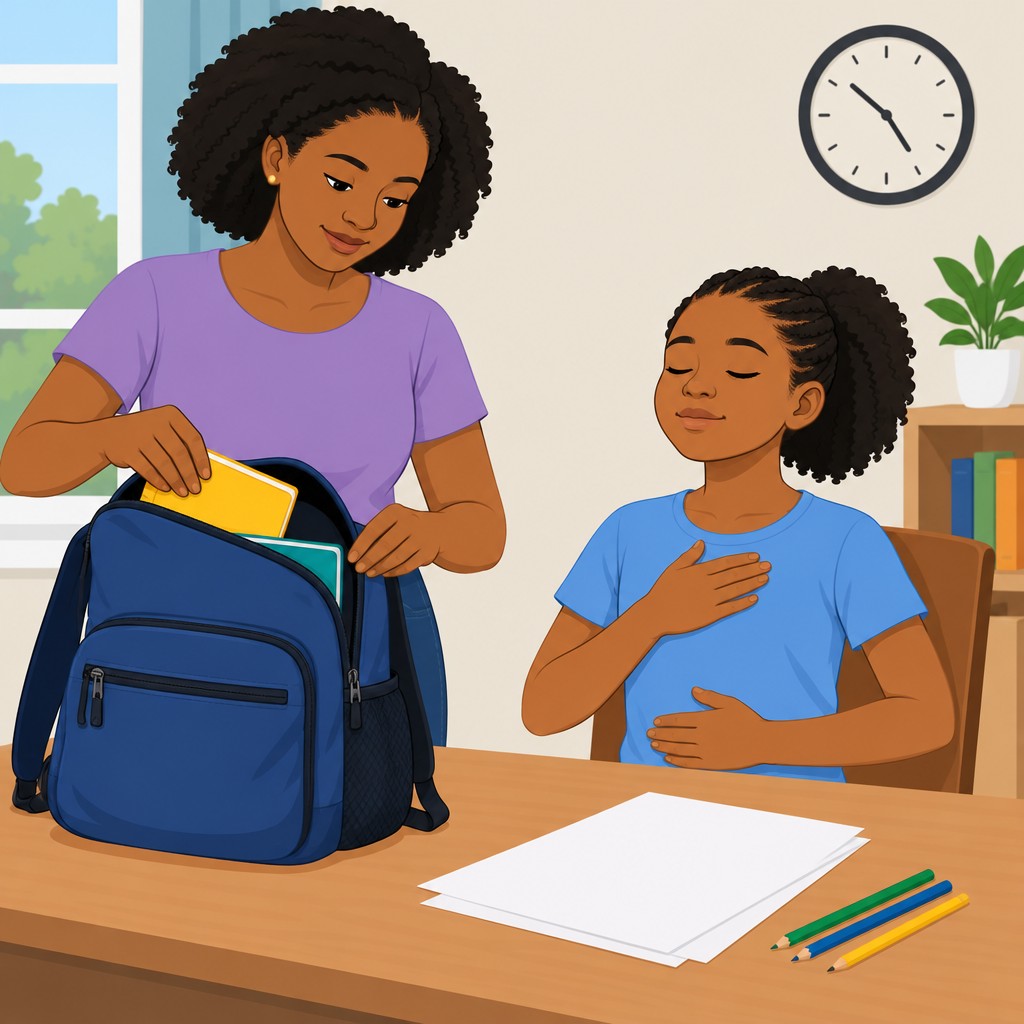
Prepare Your Child Emotionally
Why Early Emotional Preparation Helps
Start conversations early to normalize school feelings.
Additionally, keep messages simple and reassuring.
Use short, clear language that matches your child’s understanding.
Then, invite questions and respond honestly.
Encourage expression through words, drawings, or play.
Tailoring Conversations by Age
Children need different kinds of emotional support as they grow.
Therefore, match explanations and reassurance to each child’s development.
Also, adjust your approach when your child’s questions or worries change.
Younger Children
Younger children benefit from concrete explanations.
Furthermore, show pictures or use simple stories.
Offer a reassuring goodbye routine that feels predictable.
School-Age Children
School-age children need chances to describe specific worries.
Additionally, ask about school topics and listen without judgment.
Invite them to suggest small solutions and try them together.
Preteens and Teens
Preteens often appreciate respect for their growing independence.
Also, validate mixed feelings and acknowledge social concerns.
Offer practical strategies while still showing emotional support.
Role-Play to Rehearse School Moments
Role-play lets children practice transitions in a safe environment.
Start with short, manageable scenarios that focus on clear goals.
Use toys or props to make practice engaging and concrete.
Act out saying goodbye, entering a classroom, or finding a trusted adult.
After each rehearsal, praise effort and name strengths.
- Set a clear goal for the practice.
- Model the behavior first so children see expectations.
- Switch roles so children experience different perspectives.
- Repeat until confidence increases without pressure.
Practical Coping Tools for Separation
Introduce calming techniques that children can use independently.
Examples include deep breaths, counting, or gentle movements.
Offer a small transitional object that provides comfort.
Also, establish a short, predictable goodbye ritual at drop-off.
Teach a simple phrase the child can say when anxious.
- A small comfort object can ease separation.
- Short breathing exercises can reduce physical tension.
- A picture or note can remind children of home.
- Agree on a simple phrase that signals reassurance.
Working with Caregivers and Teachers
Coordinate with other caregivers to keep messages consistent.
Furthermore, share the child’s preferred calming tools and routines.
Ask teachers how they support new students during drop-off.
Plan brief check-ins with caregivers during the early weeks.
Supporting Ongoing Adjustment
Monitor reactions and adjust strategies as needed.
Furthermore, celebrate small successes to build confidence.
Remain patient while children learn new social routines.
Lastly, revisit conversations when questions or worries resurface.
See Related Content: How to Foster a Strong Sense of Identity in Nigerian Children
Health and Readiness Checklist
This checklist supports healthy preparation before the school term begins.
It covers sleep, meals, medical needs, and resilience-building activities.
Families can use these steps to encourage steady readiness and confidence.
Sleep Preparation
Establish a consistent bedtime routine.
Also, shift sleep times gradually before term begins.
Create calming rituals that signal rest.
Meanwhile, reduce stimulating activities near bedtime.
Additionally, limit evening screen exposure.
Ensure the sleep environment feels comfortable and dark.
Meal Planning
Plan simple breakfast options to fuel morning focus.
Also, prepare easy lunch choices ahead of time.
Include a variety of foods for balanced nutrition.
Meanwhile, keep healthy snacks available between classes.
Additionally, encourage regular hydration throughout the day.
- Make a short weekday menu for quick decisions.
- Shop for staples on a consistent day each week.
- Pack nonperishable backup snacks for unexpected delays.
Medical and Health Checks
Review health appointments before the term begins.
Also, check medication supplies and refill prescriptions when needed.
Update emergency contact information for the school.
Furthermore, confirm that required medical forms are ready.
Meanwhile, note seasonal health considerations to monitor.
- Schedule general health visits as appropriate.
- Address vision concerns with a screening if needed.
- Inform caregivers about allergies or special health needs.
Boosting Resilience Before Term Begins
Focus on small skills that build confidence.
Also, practice simple stress management techniques together.
Teach brief breathing or grounding practices for quick calm.
Additionally, encourage problem solving through gentle challenges.
Meanwhile, support social connection with peers before term begins.
Furthermore, praise effort rather than perfect outcomes.
- Practice short decision making activities to foster autonomy.
- Try quick relaxation exercises during brief breaks at home.
- Set achievable goals for the first weeks of term.
Learn More: The Impact of Extended Family on Parenting Practices in Nigeria
Plan Logistics and Contingencies
Clear logistics help families manage school travel and handoffs.
Careful planning also prepares everyone for unexpected changes.
A written plan gives caregivers practical steps to follow.
Transport Options and Route Planning
First, assess your usual travel options and available alternatives.
Next, map a main route to the school and an alternate route.
Then, estimate typical travel times and add buffer time for delays.
Additionally, consider public transport, driving, walking, and shared rides.
Finally, review travel safety features for your chosen options.
Organizing Drop-Off and Pick-Up Arrangements
Clarify drop-off and pick-up times with the school or caregivers.
Then, agree on a consistent location for handoffs each day.
Also, create a short written plan for household drivers or helpers.
Moreover, note school rules that affect arrival or departure procedures.
- Designate primary and backup adults for daily pickups.
- Specify who may collect the child when plans change.
- Establish a clear plan for late pickups or unforeseen delays.
Safety Planning and Onsite Procedures
Identify safe meeting spots near the school for emergencies.
Next, agree on simple rules for crossing streets and parking safely.
Additionally, review procedures for school entry and supervised zones.
Also, plan steps to reunite if you and your child separate on arrival.
Communication Protocols
Set preferred methods for communication between caregivers and the school.
Next, prepare a concise message template for common updates or delays.
Moreover, ensure authorized contacts and permissions remain clearly documented.
Finally, confirm how the school will notify families during unexpected changes.
Contingency Scenarios and Backup Plans
Anticipate common disruptions such as traffic, weather, and caregiver unavailability.
Then, create simple fallback actions that you can enact quickly.
Additionally, agree on who will step in when primary plans fail.
Also, prepare basic supplies or instructions your child can follow alone.
- Plan a trusted neighbor or nearby caregiver as an emergency backup.
- Keep a short list of alternate transport options ready at hand.
- Design a quick checklist your child can use when routines change.
Practice and Review
Run brief rehearsals of the chosen routes and handoff routines.
Then, debrief after practice and adjust plans for clarity and simplicity.
Finally, schedule periodic reviews to update contacts and contingency steps.
Tap Community Supports to Share Responsibility and Calm
Community support can reduce pressure during the school term.
Shared responsibilities also help families manage changing demands.
Clear communication allows each helper to understand their role.
Available Support and Teacher Communication
Begin by listing people who can help during the term.
Include teachers, other parents, house-help, and the PTA.
Contact teachers early to share your availability and concerns.
Ask which communication channels they prefer.
Also ask when teachers usually respond to messages.
Respect teachers’ boundaries whenever possible.
Parent and House-Help Coordination
Reach out to other parents about shared rides and information.
Furthermore, propose simple systems for swapping tasks and alerts.
Keep arrangements flexible as schedules change.
Clarify house-help responsibilities before the term begins.
Outline backup plans if someone becomes unavailable.
Provide clear instructions and necessary supplies in advance.
PTA Participation and Shared Tasks
Attend PTA meetings to voice practical needs and ideas.
Additionally, suggest small volunteer efforts that reduce individual workloads.
Offer to coordinate simple initiatives when you can.
- Create a shared contact list for quick updates.
- Set up a rotating drop-off schedule among willing parents.
- Organize a rotating snack schedule among participating families.
- Assign specific chores to house-help with clear timelines.
- Form small groups for event planning and transport help.
Shared Expectations and Ongoing Check-Ins
Define what you can reasonably commit to with others.
Furthermore, agree on emergency procedures beforehand.
Respect privacy by sharing only relevant information.
Schedule brief check-ins with helpers and parents.
Use these conversations to celebrate small wins.
Adjust plans when circumstances change.
Sharing tasks reduces pressure and supports collective problem solving.
Ultimately, community support can create a calmer term transition.
Additional Resources
Google search results for How To Choose Calm Over Panic Before School Starts General
Bing search results for How To Choose Calm Over Panic Before School Starts General


