




Children food advertising on social media can arrive as more than an obvious paid placement. A branded post, a creator’s content and an advertisement can all raise useful questions about persuasion. For Nigerian families, a clearer conversation starts by asking who benefits from a message, rather than assuming an ad blocker covers every route.
This guide explains a new US study without treating its figures as Nigerian prevalence. Four charts keep the study’s measures separate. A discussion-map infographic and four CSV tools support private family conversations; none requires collecting a child’s screenshots or browsing history.
What the children food advertising study measured
The JAMA Pediatrics study, published 9 November 2026, included 1,011 US participants aged 8–17. Data collection ran from November 2024 to October 2025. Screen capture and reported device use supported an estimated annual median of 3,883 exposures; the researchers did not observe every child continuously for a year.
An exposure is not a purchase or a meal. Keep those steps separate when reading a headline. The article does not establish that one post caused an individual child to eat a product, nor does it supply an individual exposure prediction for a Nigerian family.
Food advertising includes different media routes
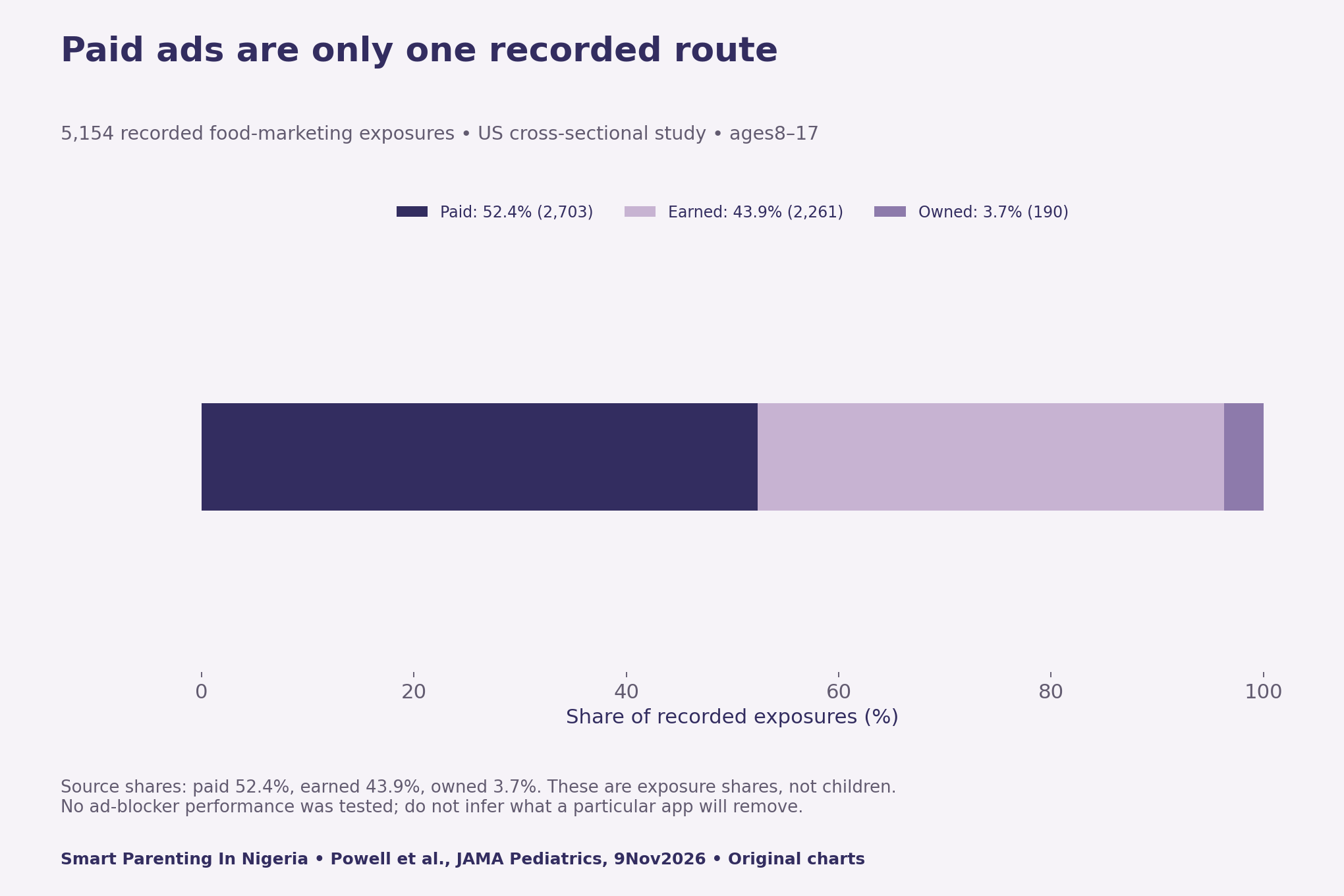
Ask what you can actually tell from the message. A disclosed paid placement gives different information from an ordinary creator or friend mentioning food. A brand’s own account is another context. Do not accuse a person of a secret sponsorship merely because the post includes a product.
An ad blocker may be a tool a family already uses, but this study did not test one. Its figures cannot tell you whether a particular blocker works, which settings it needs or how many messages it removes. That product question requires separate evidence. The practical aim here is recognising questions that a simple advertising label leaves unanswered.
Keep platform shares separate from screen time
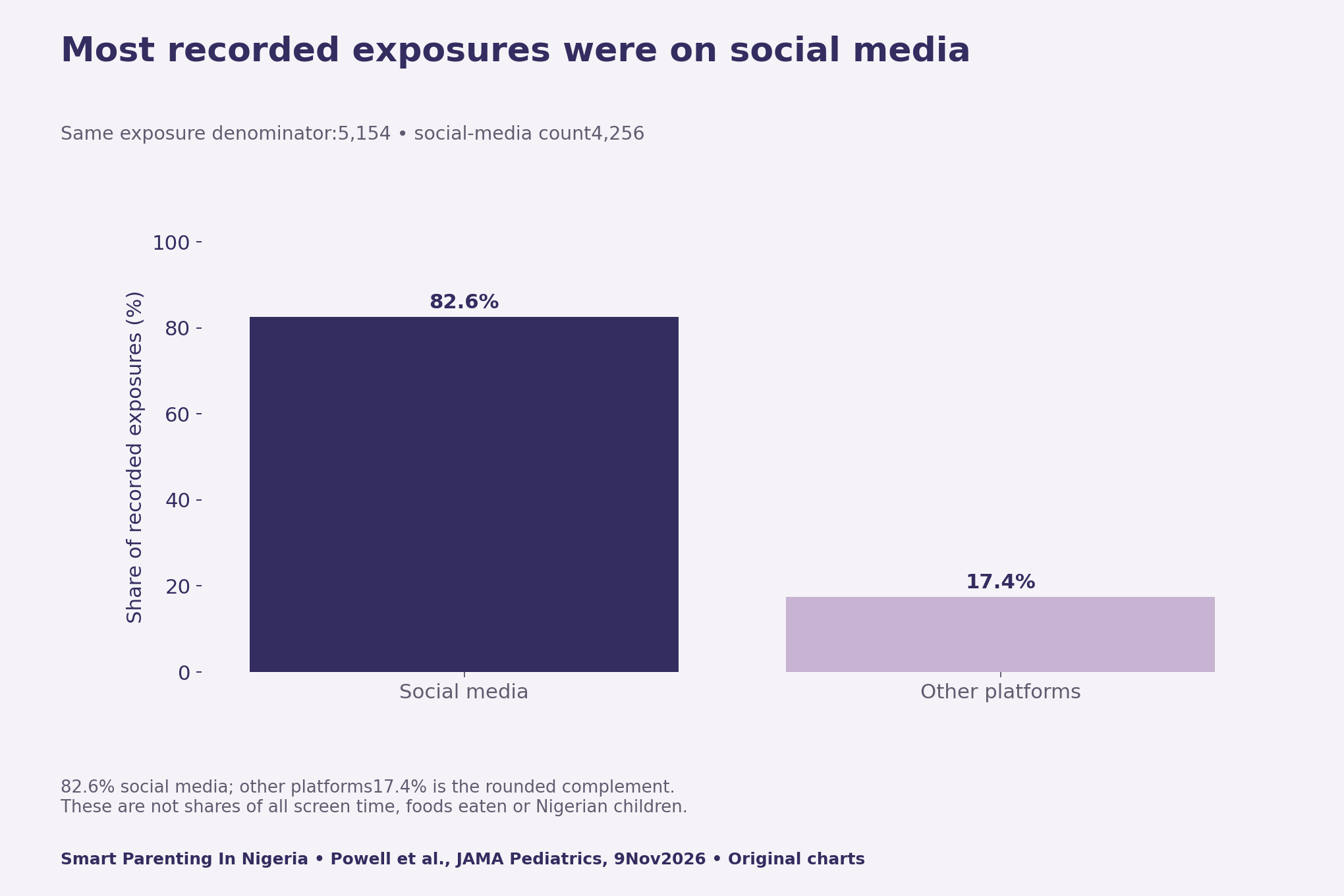
A platform share does not describe how a child spent the whole day. Equally, seeing a food image on a platform does not by itself establish the commercial arrangement behind it. If that arrangement is unclear, unknown is an honest answer. A family discussion does not need to resolve every business relationship to notice persuasion.
Read estimated annual medians with their limits
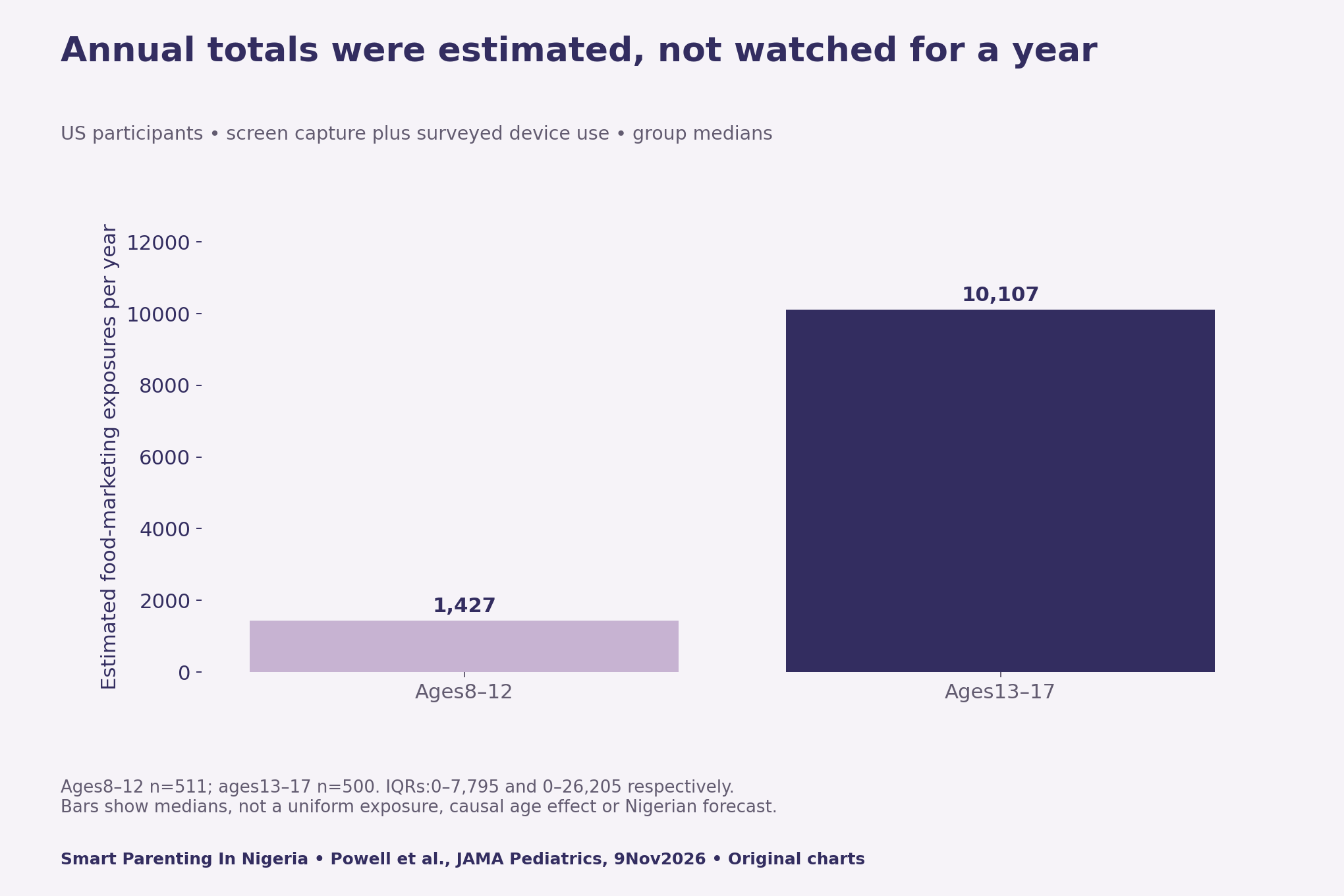
A median is not a quota that every child experiences. The wide reported ranges also matter. Do not multiply a group median into an individual family forecast or read an age difference as proof that age caused the exposure. We do not infer the effect of a Nigerian child changing platforms or device habits from these bars.
The nutrition assessment counted items, not children
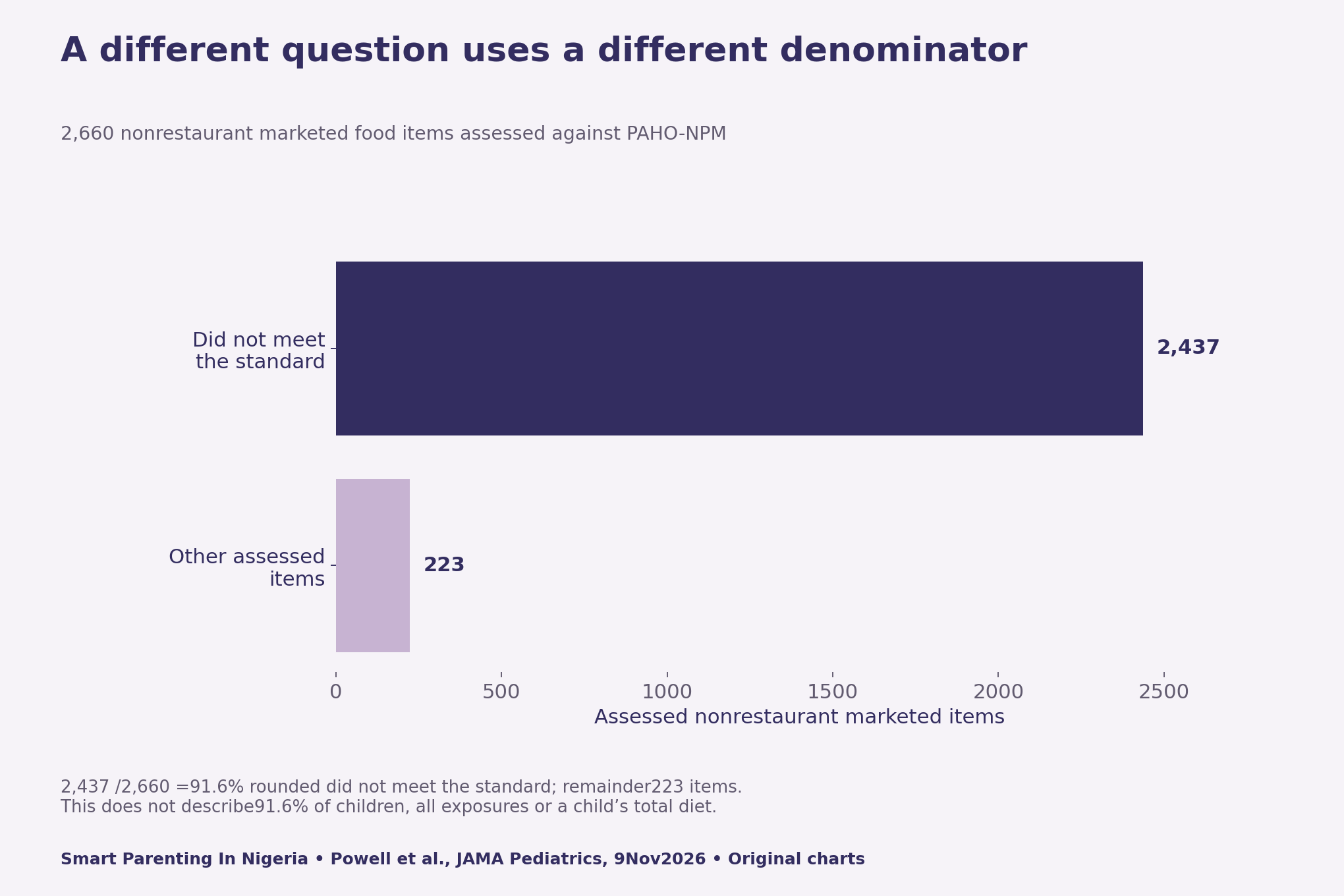
Keep the question attached to the number. A nutrient-profile classification of marketed items does not describe an entire child’s diet. It does not supply a diagnosis, treatment plan or reason to shame a child for liking a product. Decisions about an individual child’s nutritional needs belong in the appropriate family and professional context.
Use a conversation map for children food advertising
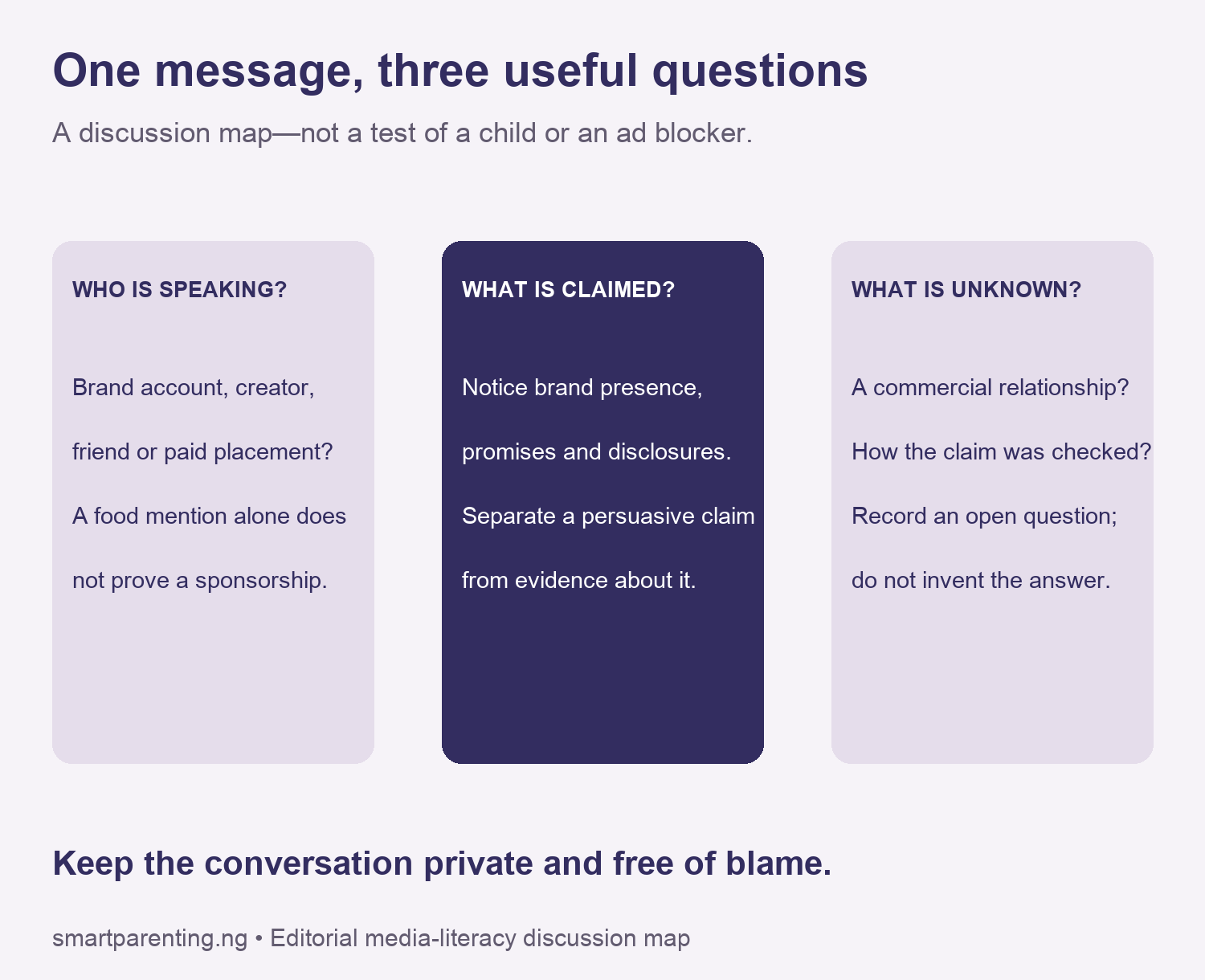
Choose an invented or general example together. Ask what draws attention, where a brand appears and whether any sponsorship is disclosed. Then separate the message’s promise from what you know about the product. A child can enjoy a story or image while still asking a thoughtful question about it.
For example, imagine a fictional creator showing an unbranded drink beside a prize. Record that the prize may make the message appealing. Record sponsorship as unknown unless the example includes a disclosure. Do not turn that invented scene into a claim about a real creator, a real company or an observed Nigerian feed.
The worksheet does not require surveillance. Leave out usernames, screenshots, browsing histories, school details and identifiable health information. Keep completed notes privately. If a conversation becomes uncomfortable, it can pause; this is a shared enquiry, not an interrogation or a score.
Download the four media-literacy tools
- Exposure source and platform denominator table (CSV)
- Annual estimate and item-assessment register (CSV)
- Blank private family food-message discussion sheet (CSV)
- Denominator and privacy checklist (CSV)
Our nursery programme evidence guide applies a related claim-checking habit to a different buying decision. Its educational review does not supply food-marketing or nutritional results. Here, the transferable habit is to record the claim, its evidence and its unresolved limits separately.
Method, commercial context and limits
We used the accessible primary abstract, not a complete independent reanalysis. Original charts reproduce selected reported measures and clearly labelled complements. Four charts address distinct questions without manufacturing an effectiveness chart. This cross-sectional US evidence does not establish Nigerian prevalence, Nigerian advertising law, consumption effects or ad-blocker performance.
This publication carries advertising and product or bookstore links. An advertisement is not evidence supporting a research conclusion. Any sponsored editorial relationship should remain distinguishable from the source analysis. No branded food, nutrition product or blocker is recommended by this report.
Parenting Made Just for You
Get personalized Parenting Solutions tailored to your child’s needs. Transform your parenting journey with expert guidance in 1-3 days.
Get StartedSuggested citation: Smart Parenting In Nigeria (13 November 2026), “Children’s Food Advertising: What a Blocker Can Miss”, selected-source analysis, original charts and private discussion tools. Retain the US setting, denominators, estimation method and limitations with reused figures.


