




A malaria vaccine in Nigeria appointment still needs local confirmation after an international price announcement. The October 2026 agreement concerns a future procurement price for RTS,S/AS01. It does not establish what a Nigerian family will pay or which vaccine a nearby service has in stock.
This report separates products, dates and measures before turning the news into practical appointment questions. It includes five figures, a source ledger and two blank CSV tools. We have not contacted clinics, surveyed charges or produced a service directory. A qualified vaccination professional must confirm a child’s eligibility and next steps.
Which price is changing, and when?
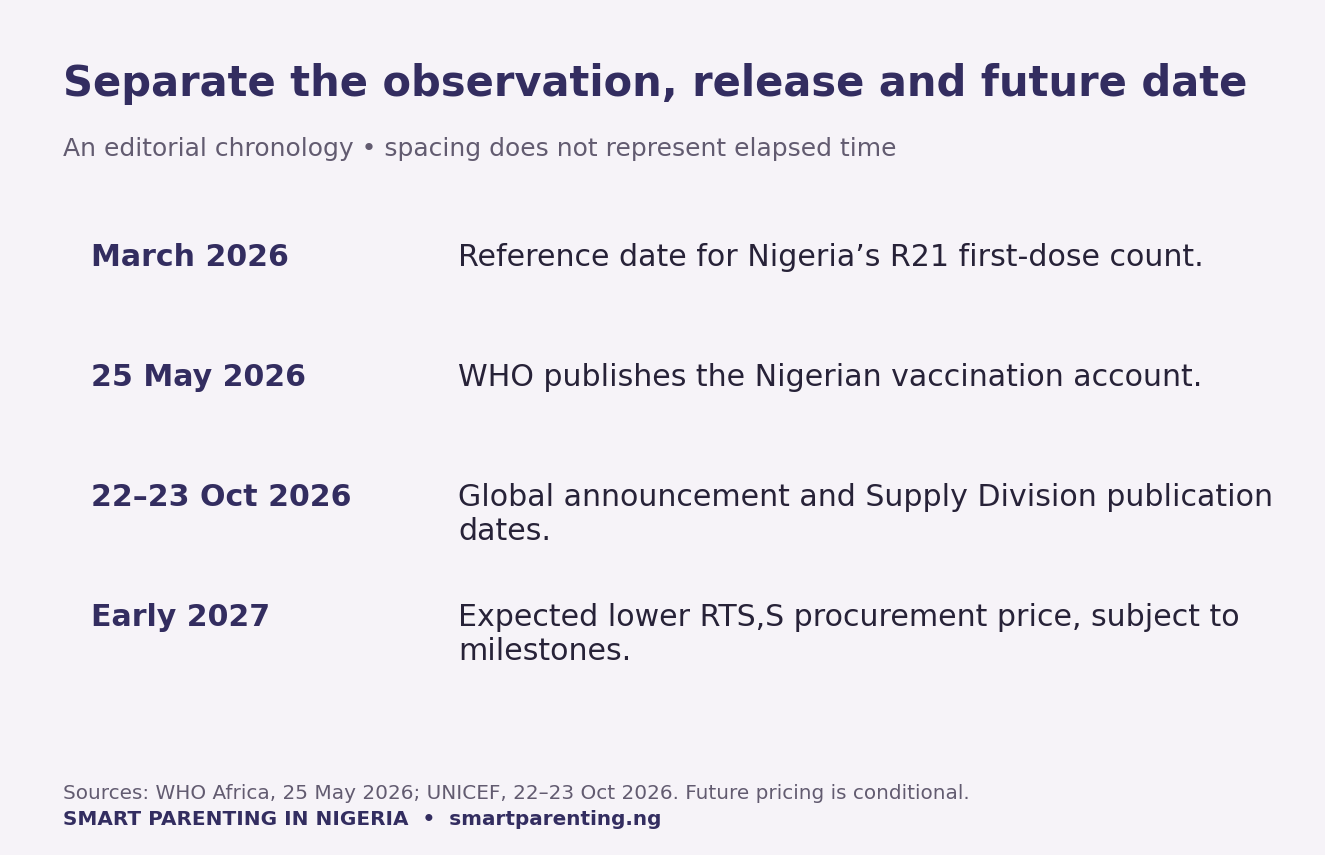
The UNICEF Supply Division announcement displays 23 October 2026, with a 22 October dateline. The global UNICEF version is dated 22 October. Both describe the same RTS,S/AS01 procurement agreement.
The announced price is €5.50 per dose, approximately 40% below the price described in the release. It is expected from early 2027. Regulatory and manufacturing milestones must be met before procurement begins, including WHO prequalification of a new manufacturing facility.
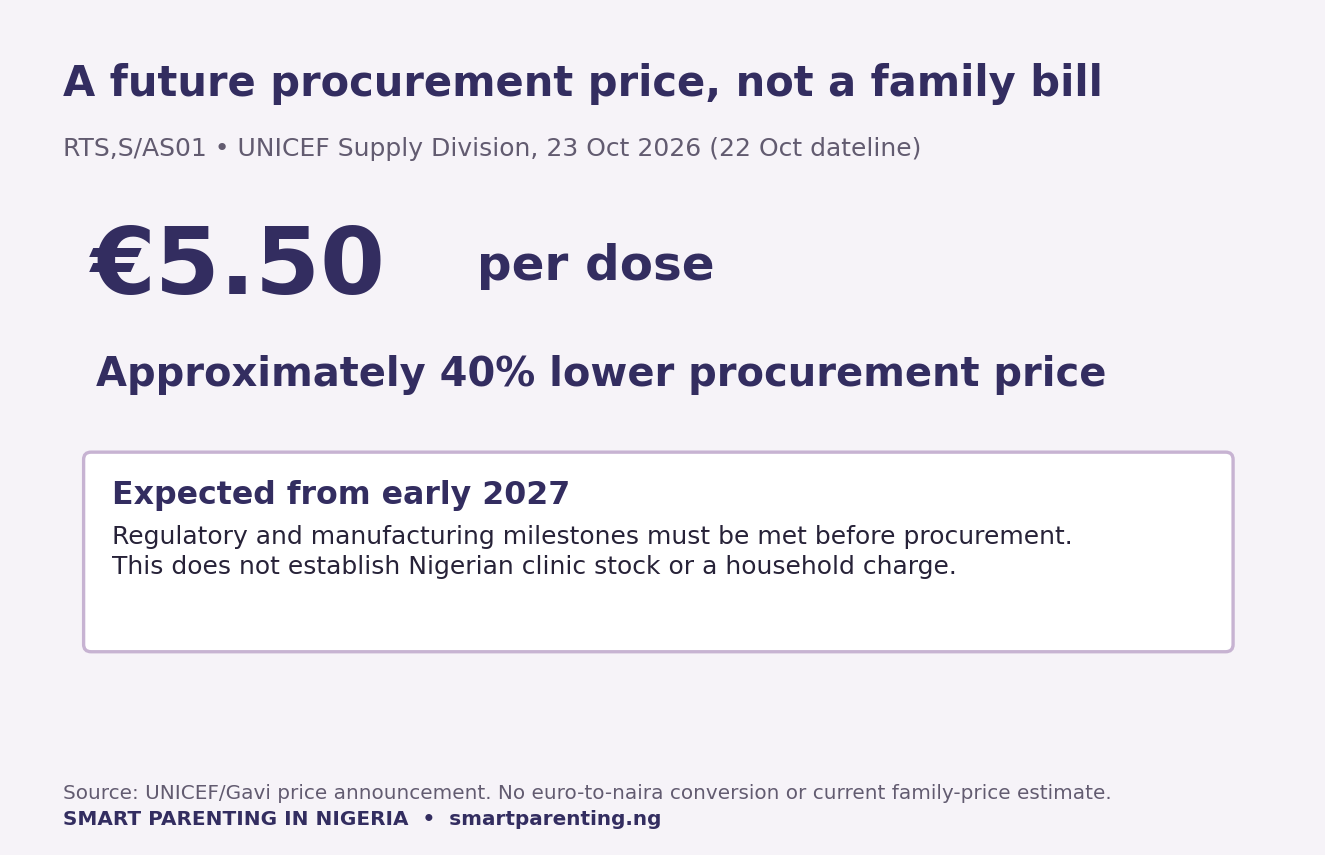
The release also estimates about US$50 million in procurement savings during 2027–2029. These are expected programme savings, rather than cash already saved by Nigerian families. We do not convert the euro figure into a supposed naira clinic bill or reconstruct an exact earlier price from the approximate percentage reduction.
Keep the products and Nigerian rollout figures separate
A WHO Nigeria account published on 25 May 2026 concerns R21, a different malaria-vaccine product. It reports that almost 569,000 children had received a first dose by March 2026. That figure does not count completed courses or establish national vaccination coverage.
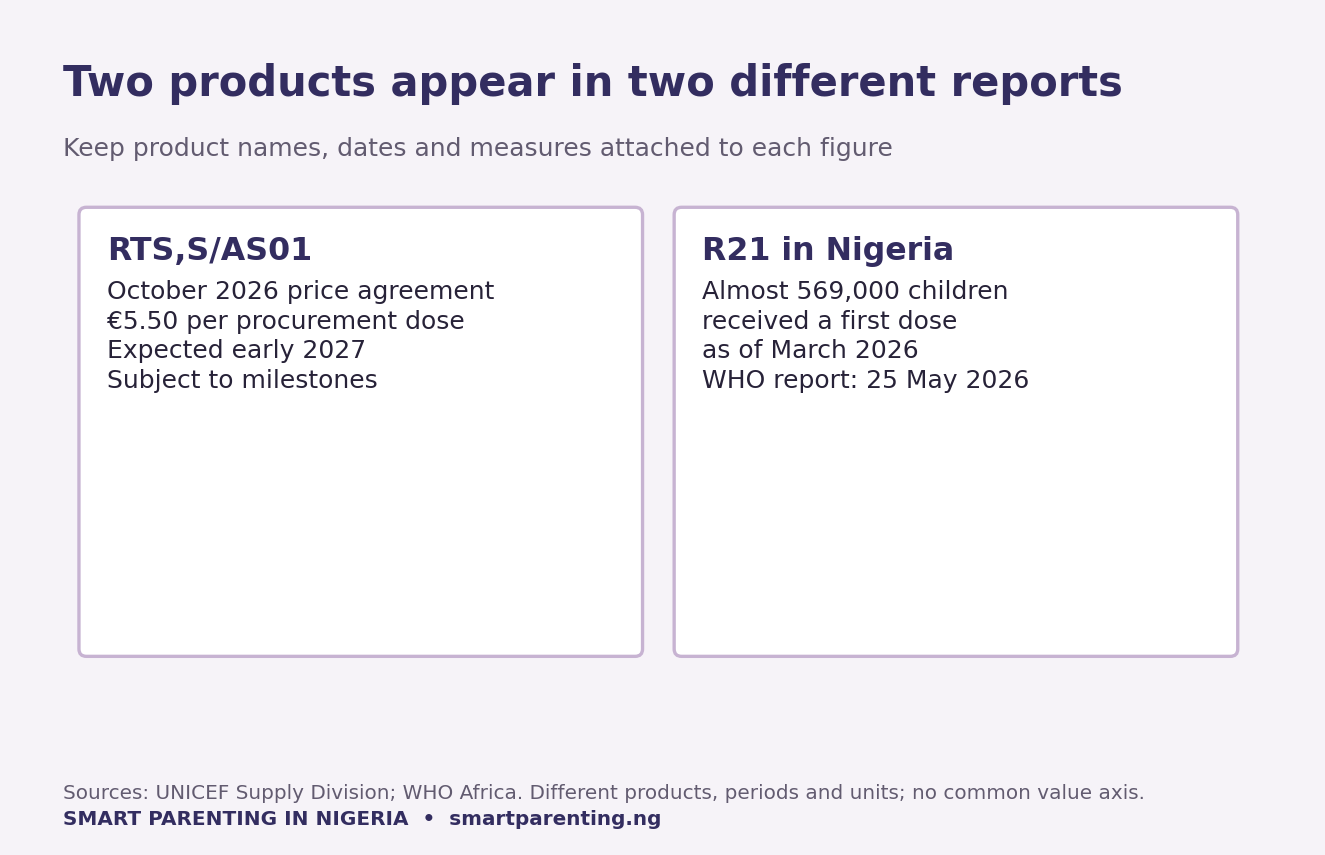
WHO’s account describes the initial R21 introduction in Bayelsa and Kebbi in 2024. It does not provide an October 2026 inventory of every Nigerian vaccination service. Therefore, a family elsewhere should confirm current local arrangements rather than infer availability from the historical count.
Malaria vaccine in Nigeria: appointment checks
Start with the vaccination service you intend to visit. Ask which malaria vaccine it currently provides and whether stock is expected for the planned session. Next, ask whether the child is eligible under the current local programme. Confirm the booking process, session date, opening hours and when availability should be rechecked.
The blank call worksheet records the service’s answer, who confirmed it and the date. It includes space for unresolved questions. An unanswered question stays unresolved; it is not a confirmation that the service is unavailable. We have filled in no facility names, contact numbers or stock claims.
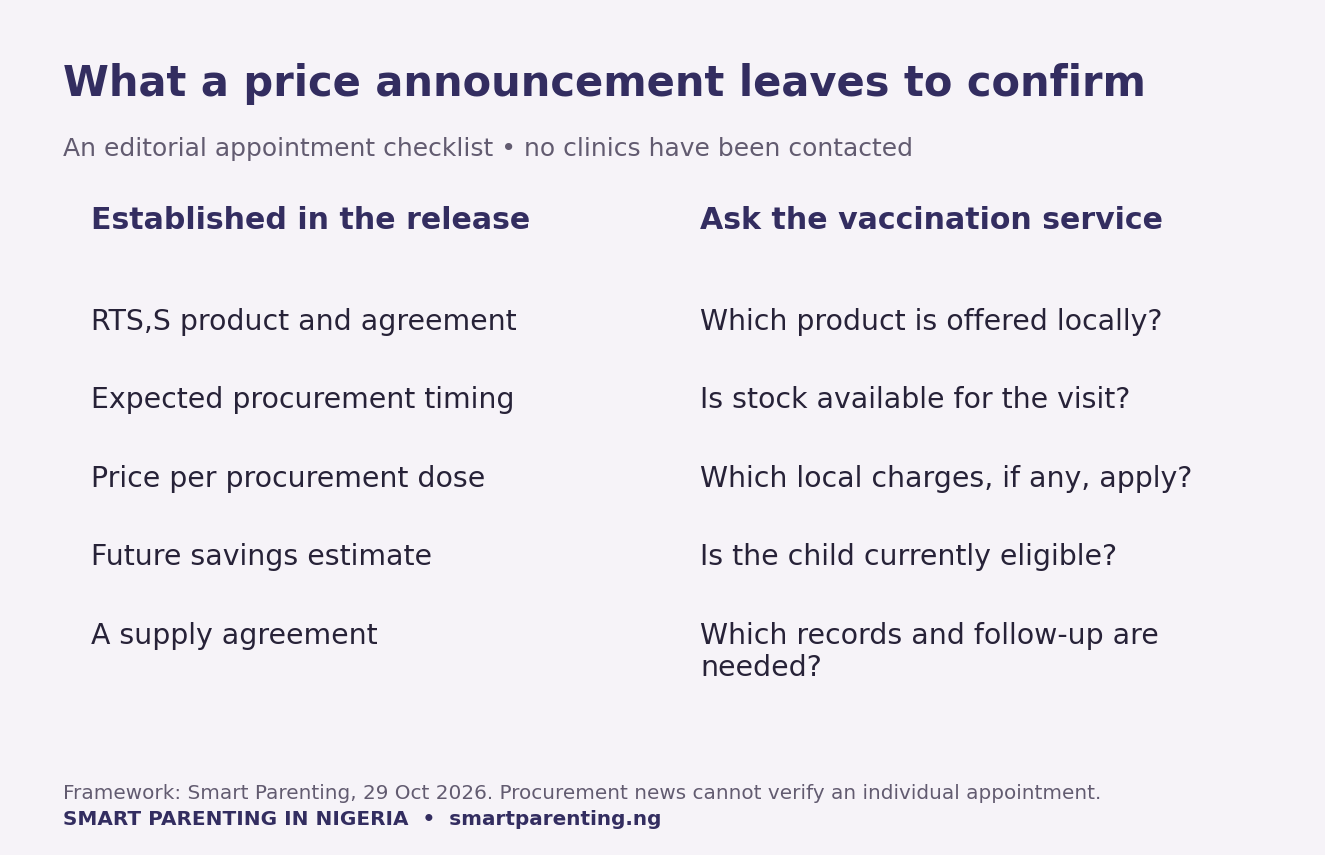
Also ask what charges, if any, apply and what each covers. A procurement price concerns the purchase of doses within a supply arrangement. It cannot establish a consultation charge, appointment charge or transport cost. Request a clear explanation before travelling or making a payment.
Let the clinician confirm eligibility and the next date
WHO’s current malaria-vaccine questions and answers, dated 4 February 2026 and checked on 29 October, describes a general four-dose recommendation from around five months of age. It also discusses national delivery approaches and circumstances in which an additional dose may be considered.
That general guidance does not replace a clinician’s review of a child’s record and the applicable local programme. Bring the existing vaccination record and ask the professional to confirm the product, dose recorded and next appointment. If a visit was missed or an entry is unclear, request an explanation rather than calculating a new date from this article.

Keep a private record of the visit
Use the blank appointment record as a memory aid alongside the official vaccination record. Copy the vaccine name and dose exactly as recorded by the clinician. Enter the visit date and the next date supplied by the service. Add its follow-up instructions and contact details, with more rows if needed.
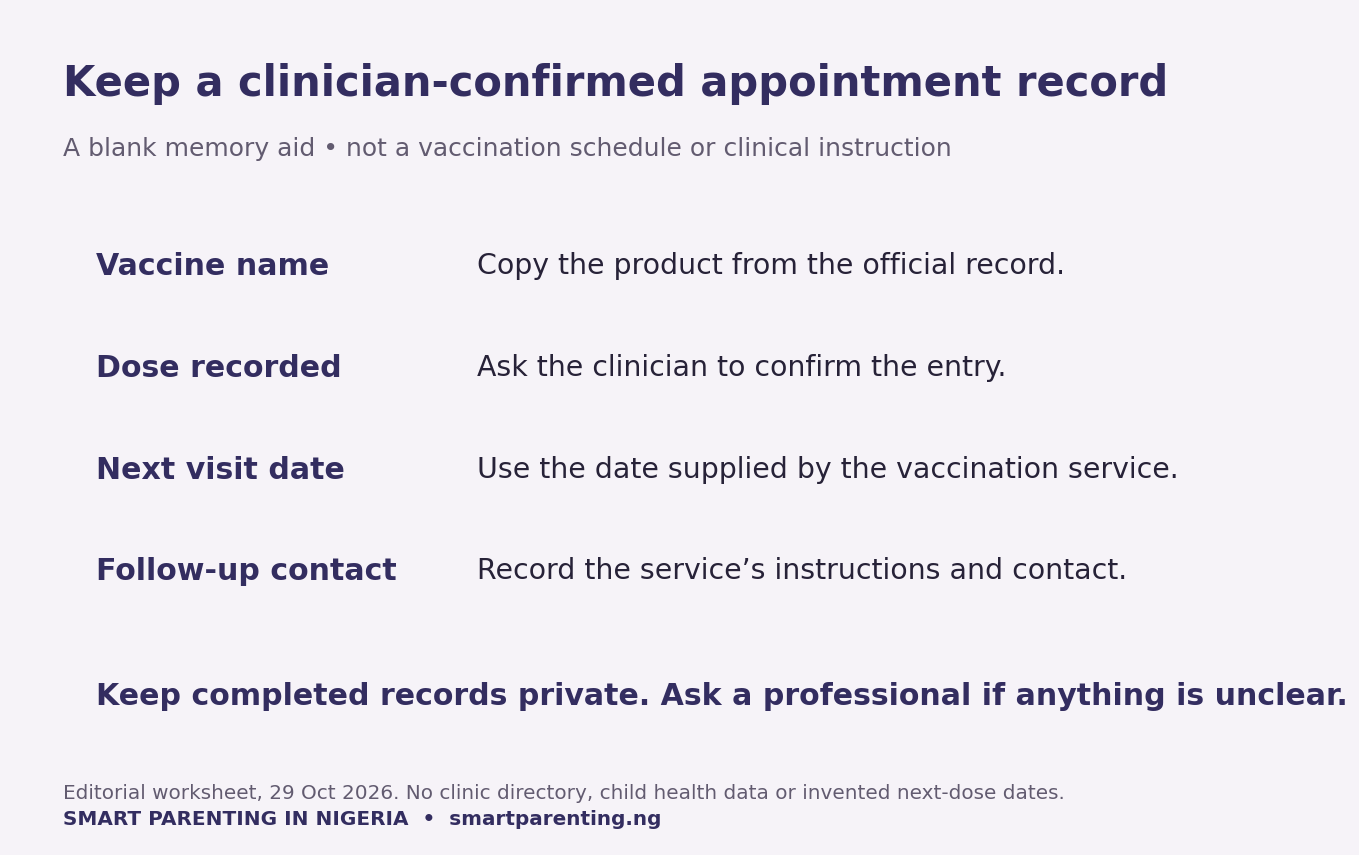
Keep completed health records private. The downloadable files contain no child names or patient information. Do not upload a completed family record as a public example. If the worksheet and official record appear to disagree, ask the vaccination professional to clarify the record.
Vaccination sits within wider malaria prevention
WHO places malaria vaccination within a comprehensive malaria-control approach. Its guidance combines prevention with appropriate diagnosis and treatment. Ask the health professional which continuing prevention measures apply to the family and what to do if the child becomes unwell. A planned vaccination visit does not replace assessment of an unwell child.
Parenting Made Just for You
Get personalized Parenting Solutions tailored to your child’s needs. Transform your parenting journey with expert guidance in 1-3 days.
Get StartedThis article does not rank RTS,S and R21. WHO states that they have not been tested against each other in a head-to-head trial, with no evidence establishing one as better. A price headline alone cannot decide which product should be used in an individual appointment.
Download the source ledger and blank appointment tools
- Product, price and date source ledger (CSV): four measures with their units, qualifiers and primary sources.
- Blank vaccination-service questions (CSV): eight questions with answer and verification fields.
- Blank clinician-confirmed appointment record (CSV): a private memory aid with no prefilled clinical dates.
For related reporting, explore our Child Health and Nutrition articles. Always confirm current appointment details directly with the relevant service.
Methods, limits and suggested citation
Smart Parenting reviewed the linked UNICEF and WHO sources on 29 October 2026. We retained each product name, publication date, reference period, unit and qualification. No exchange-rate calculation, family-price estimate, completed-course coverage rate or clinic ranking was produced.
Current stock, eligibility, charges and individual clinical decisions remain for local confirmation. Suggested citation: Smart Parenting In Nigeria (29 October 2026), Malaria Vaccine in Nigeria: Price and Appointment Checks, with product-and-date source ledger and blank appointment tools. Cite UNICEF and WHO directly when reusing their reported figures.


