






A child swimmer safety plan still matters when a young person says, “I can swim.” Knowledge, confidence, actual skill and adult supervision answer different questions. New questionnaire research explores some of those differences. It does not show that swimming lessons cause risk-taking or that a confident child is safe without supervision.
Featured image: AI-generated conceptual pool-access scene. It depicts no real venue and does not certify a gate, facility or outing as safe.
This report includes two original charts, a four-check planning infographic and four free CSV tools. We resolved the initial brief’s full-text access limitation by checking the publisher-linked 20-page accepted manuscript. Therefore, the report can identify the Chinese sample, selected correlations and limits directly rather than invent missing pathway coefficients.
What the child swimmer safety plan evidence covers
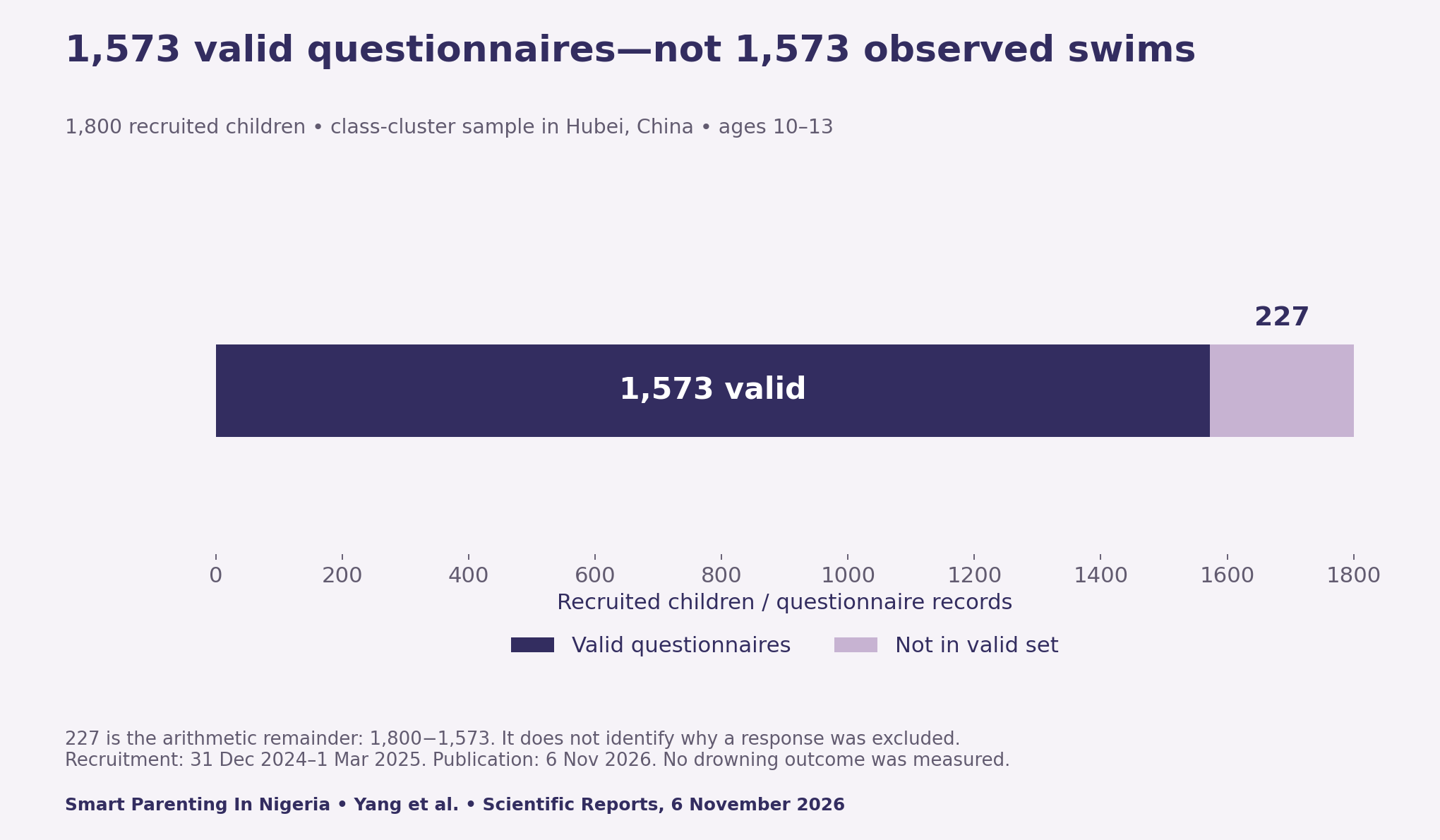
The Scientific Reports paper by Yang and colleagues appeared on 6 November 2026. Its questionnaire sample comprised 1,573 children aged 10–13 in Hubei Province, China, with a mean age of 11.32 years and standard deviation of 0.49. Recruitment ran from 31 December 2024 to 1 March 2025.
The full accepted manuscript reports 1,800 recruited children and 1,573 valid questionnaires. We calculate the remainder as 227. That number is not an injury count or a count of failed swimming tests. The study did not observe 1,573 swims or measure drowning outcomes.
Read the correlations without turning them into risks
Table 1 reports a correlation of −0.07 between water-safety knowledge and high-risk swimming-behaviour scores. The corresponding correlations were +0.23 for swimming self-efficacy and +0.16 for sensation seeking. These are selected bivariate questionnaire correlations, not adjusted mediation coefficients, percentages or probabilities that a child will drown.
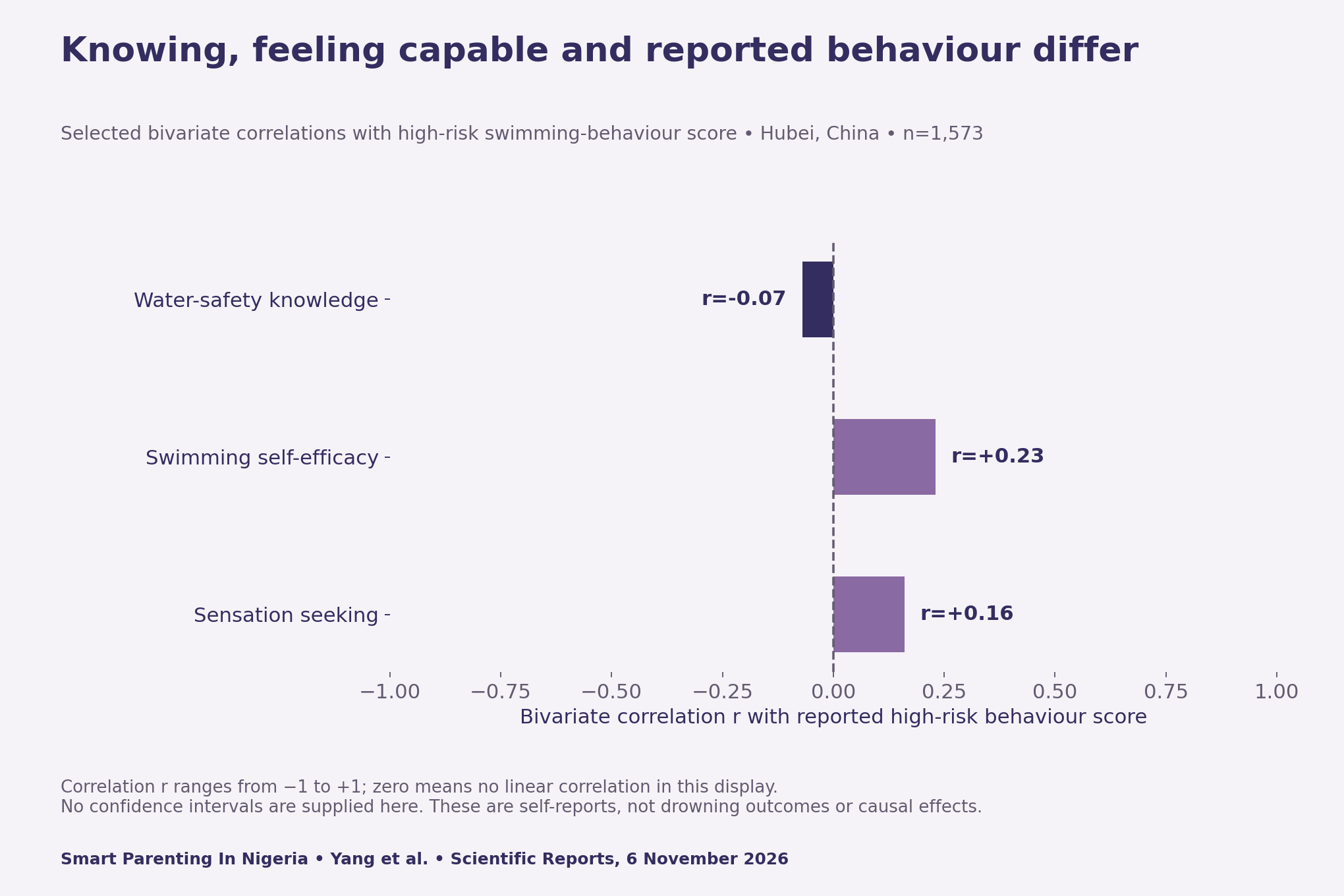
The source’s more complex models describe a negative direct knowledge association and an opposing positive indirect association through self-efficacy. In addition, sensation seeking changes the reported pathway pattern. Those are statistical associations. They do not establish the order in which knowledge, confidence and behaviour developed.
Importantly, the authors say actual swimming ability and the calibration of confidence against that ability were not directly assessed. Therefore, it would overstate the evidence to say this study observed children becoming overconfident after lessons. The risk-compensation explanation remains an interpretation requiring further direct testing.
Keep instruction and supervision in the child swimmer safety plan
The WHO drowning factsheet, updated in May 2026, describes active adult supervision and control of access to water hazards as important prevention context. It also supports basic swimming and water-safety instruction delivered with appropriate safety management. This established guidance is separate from the new questionnaire paper.
Likewise, WHO’s 2022 practical prevention guidance covers safe implementation of community interventions, including swimming and water-safety skills. Do not read an association about perceived capability as a reason to discourage appropriate lessons. Skills instruction and adult responsibility should remain part of the same broader plan.
Use four checks rather than one confidence score
First, distinguish what appropriate instruction has established from what a child says they can do. Second, identify the actual setting and current conditions. Finally, agree which adult has responsibility and how a handover will happen. These are editorial planning questions, not a validated risk scale or a new prevention programme tested in Nigeria.
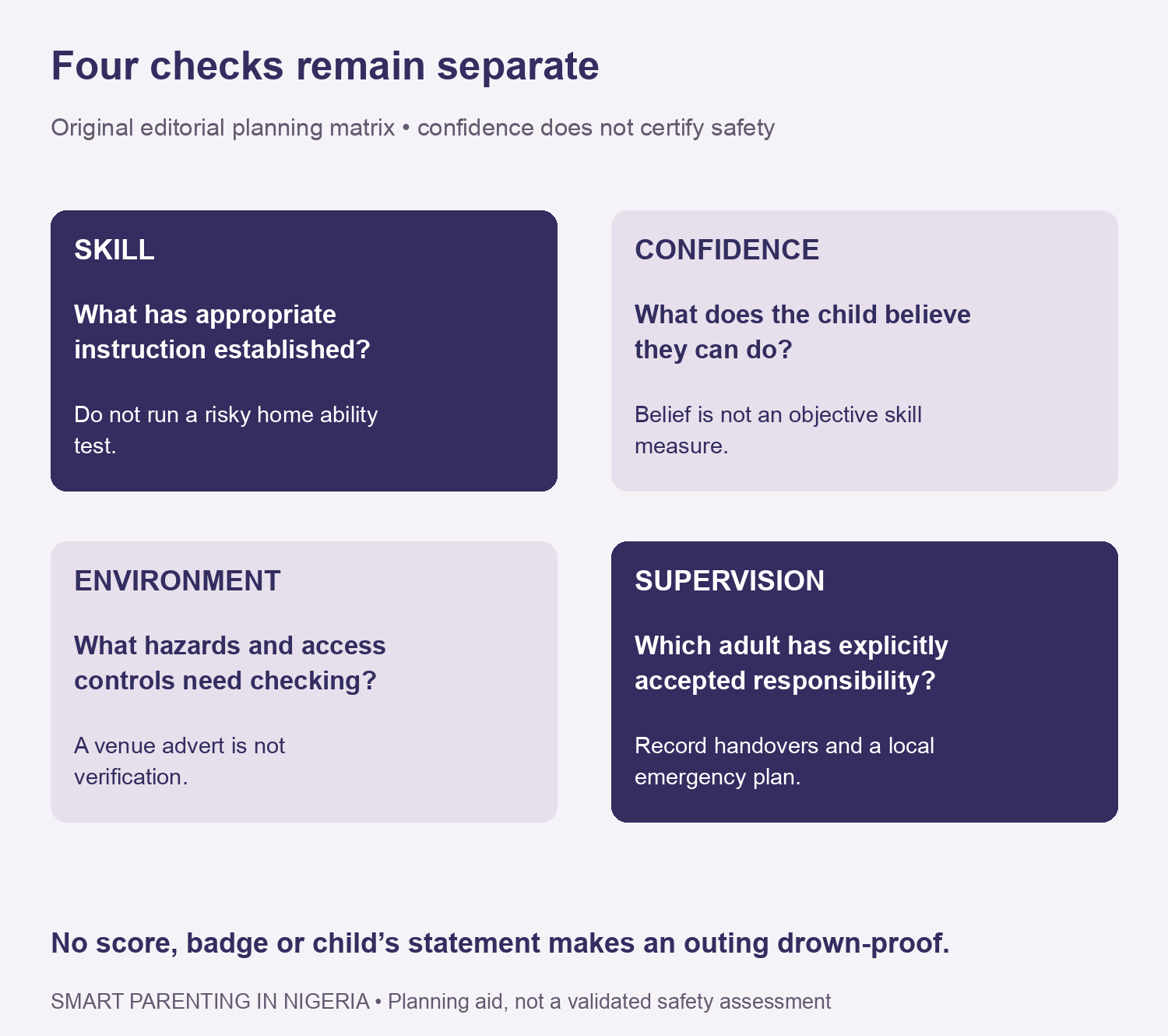
For example, a venue may advertise an instructor or lifeguard. The plan should record what the responsible adults have actually verified about those arrangements. An advertisement, a pool photograph or a holiday recommendation cannot establish the current supervision plan for a particular child.
Our family-parks guide is a destination overview, not evidence that a water venue is safe. Similarly, the preschool travel evidence report shows why a population association cannot certify an individual route. The same separation of evidence and local assessment matters here.
Prepare the private venue and supervision records
The blank outing plan records the venue alias, water-environment questions, responsible adult’s role and arrangements to verify with instructors or lifeguards. It also asks about access or communication needs, unresolved issues, an alternative plan and verified local emergency contacts. It contains no imported foreign service number.
The separate handover sheet records outgoing and incoming adult roles, explicit acceptance, the agreed activity and current conditions. In other words, it documents whether responsibility has actually passed rather than assuming that another adult is watching. It is an unvalidated memory aid, not proof that an outing meets a professional safety standard.
Parenting Made Just for You
Get personalized Parenting Solutions tailored to your child’s needs. Transform your parenting journey with expert guidance in 1-3 days.
Get StartedKeep completed records private and avoid child identifiers. Neither file uploads answers to this website. Do not stage a risky swim, simulated drowning or unsupervised water test to fill a box. Where questions about ability or venue arrangements remain unresolved, seek appropriate qualified instruction or venue guidance before proceeding.
Download the evidence and child swimmer safety plan tools
The correlation CSV preserves the selected questionnaire measures and limits. The sample register separates counts, dates and the arithmetic remainder. Two blank private files support venue planning and adult handovers. None contains participant records or a formula that predicts an individual child’s safety.
- Selected swimming questionnaire correlations (CSV)
- Swimming study sample and date register (CSV)
- Blank private supervised water-outing plan (CSV)
- Blank private adult-supervision handover (CSV)
Methods, access and limits
We checked the publisher page, full accepted PDF and established WHO pages on 9 November 2026. The brief’s direct-open failure was an access limitation, not evidence that the paper lacked methods. The public linked PDF resolved it. We read the methods, selected results and limitations; we did not refit models or independently validate the participant dataset.
The source remains an early accepted version subject to editing. Self-report, cross-sectional timing and a regional age-specific sample limit transfer to Nigerian families. Its proposed mechanisms do not establish causality, and its findings do not quantify drowning reduction. Suggested citation: Smart Parenting In Nigeria, 9 November 2026, “A Confident Child Swimmer Still Needs a Safety Plan”; research findings attributed to Yang and colleagues, DOI 10.1038/s41598-026-76244-y.


