




When a child has chronic pain, parent support questions can sit alongside the child’s own concerns at an appointment. A family may need understandable explanations, a follow-up contact and practical arrangements for travel or school. The caregiver may also have questions about support for themselves.
This guide offers two private editorial agendas for that conversation. It does not diagnose pain, decide urgency or recommend treatment. Use professional advice for the child’s care; do not wait for a worksheet or a routine appointment if you need medical help.
Child chronic pain and parent support: what the study measured
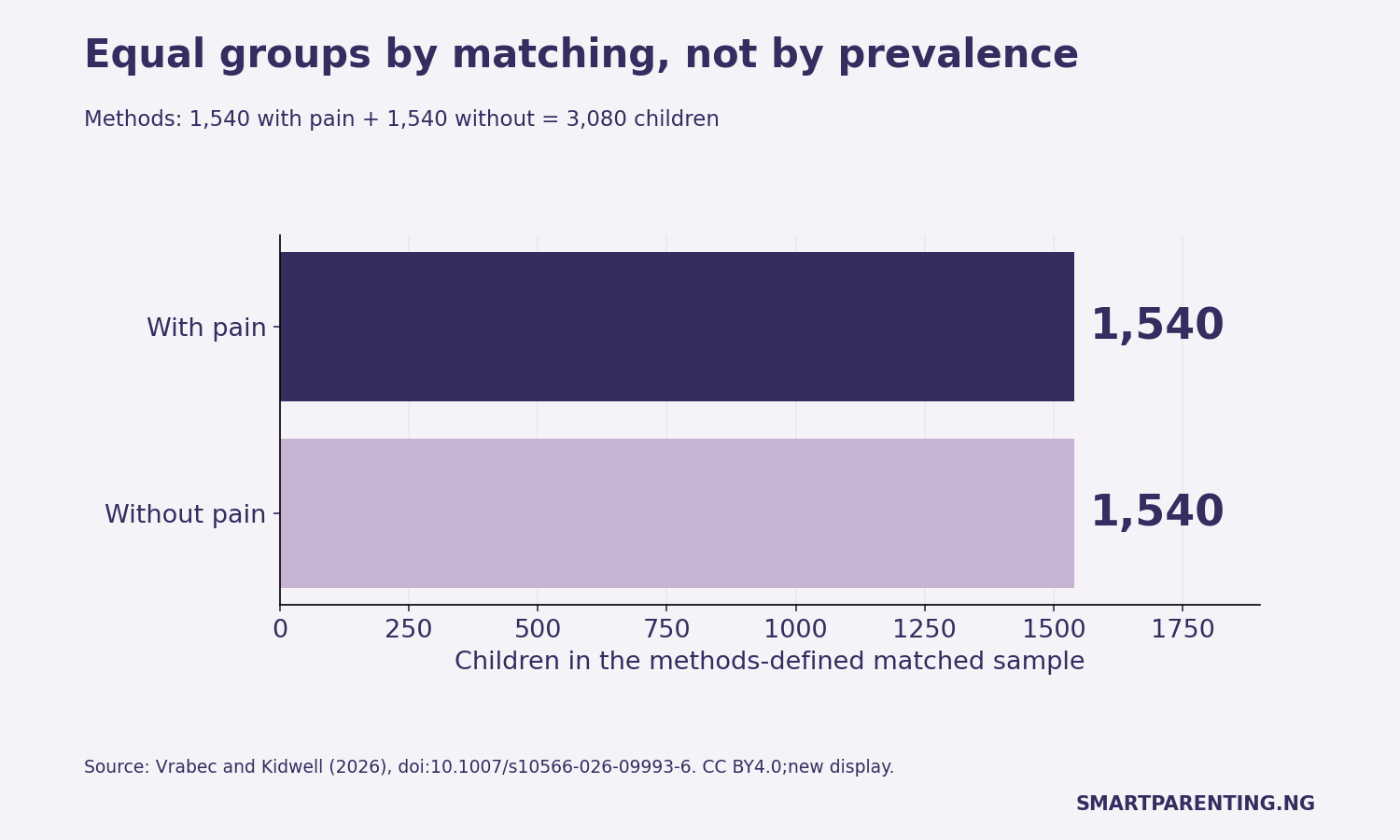
A study by Vrabec and Kidwell, published on 4 November 2026, analysed 2019 US National Survey of Children’s Health data. Its methods describe 1,540 children with pain matched to 1,540 without, on parent sex. This balanced sample is not a prevalence estimate.
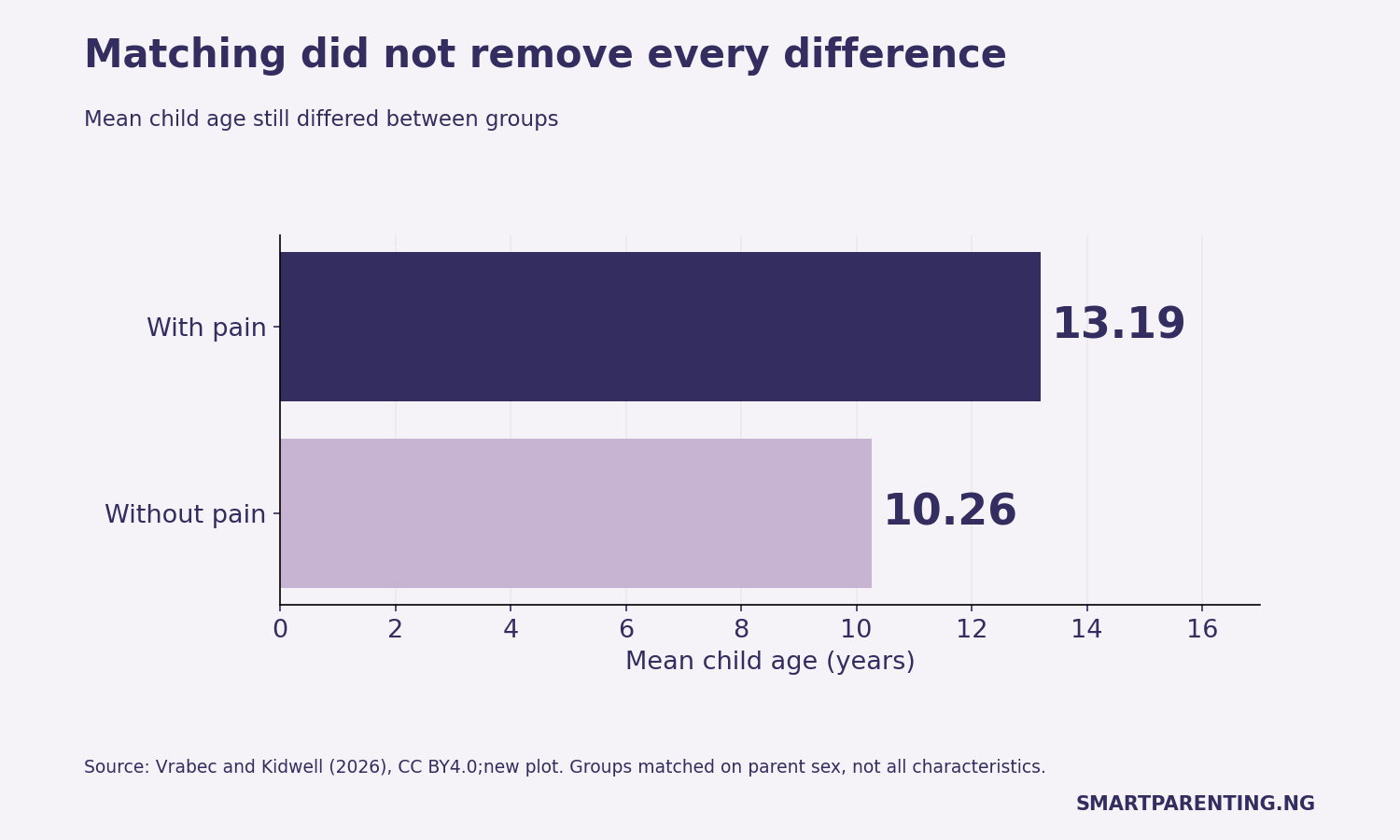
Mean child age still differed: 13.19 years versus 10.26. In one adjusted model, pain corresponded to 0.27 more parenting-stress points; a one-point higher parenting-efficacy rating corresponded to 1.45 fewer. The stress scale spanned 3–12. These are observational associations, not treatment effects or personal forecasts.
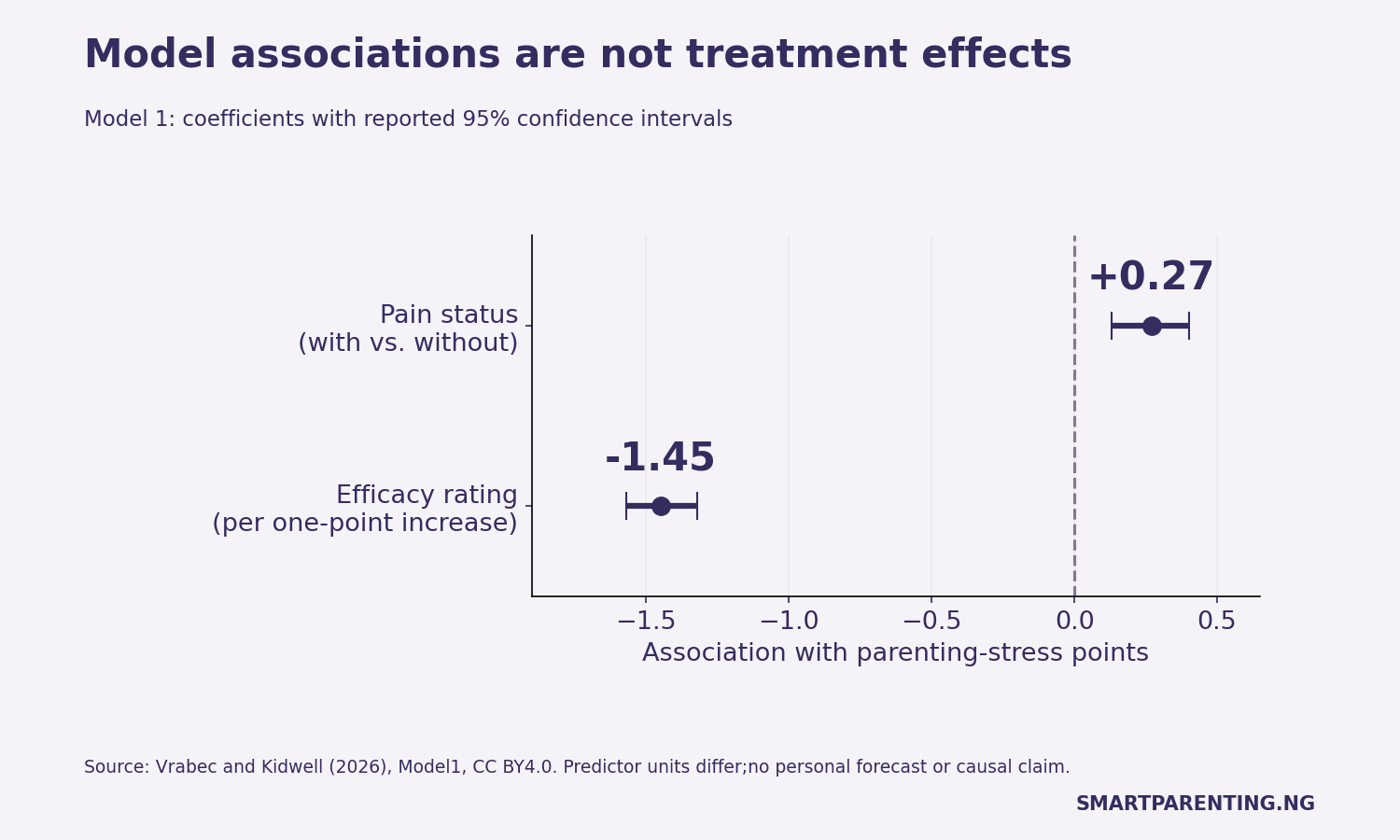
The analysis used parent reports and excluded some conditions and family configurations. Causation remains uncertain. Non-significant support or income results do not prove resources are irrelevant. The findings cannot establish Nigerian prevalence or show what support will work for a particular family.
Give the child’s concerns their own page
Start with what the child and family want the clinician to understand. The blank agenda has room for concerns, timing in the family’s own words, effects on daily activities, existing professional advice and questions. It does not ask the family to assign a diagnosis.
For example, a question might be, “What should we record before the next visit?” Another might be, “Can you explain the plan in words we understand?” These are conversation prompts, not a clinical protocol. The clinician may need different information for an individual assessment.
Include the child’s own account in their established way of communicating, where possible. Keep that account separate from an adult’s interpretation. Also write down anything that remains unclear, so the professional can ask further questions rather than inherit an assumed explanation.
Put the caregiver’s support questions beside it
A separate parent page can make practical concerns easier to raise. List the tasks involved in attending appointments and following the agreed plan. Then record who currently handles them, whether any backup person has agreed and which arrangements remain uncertain.
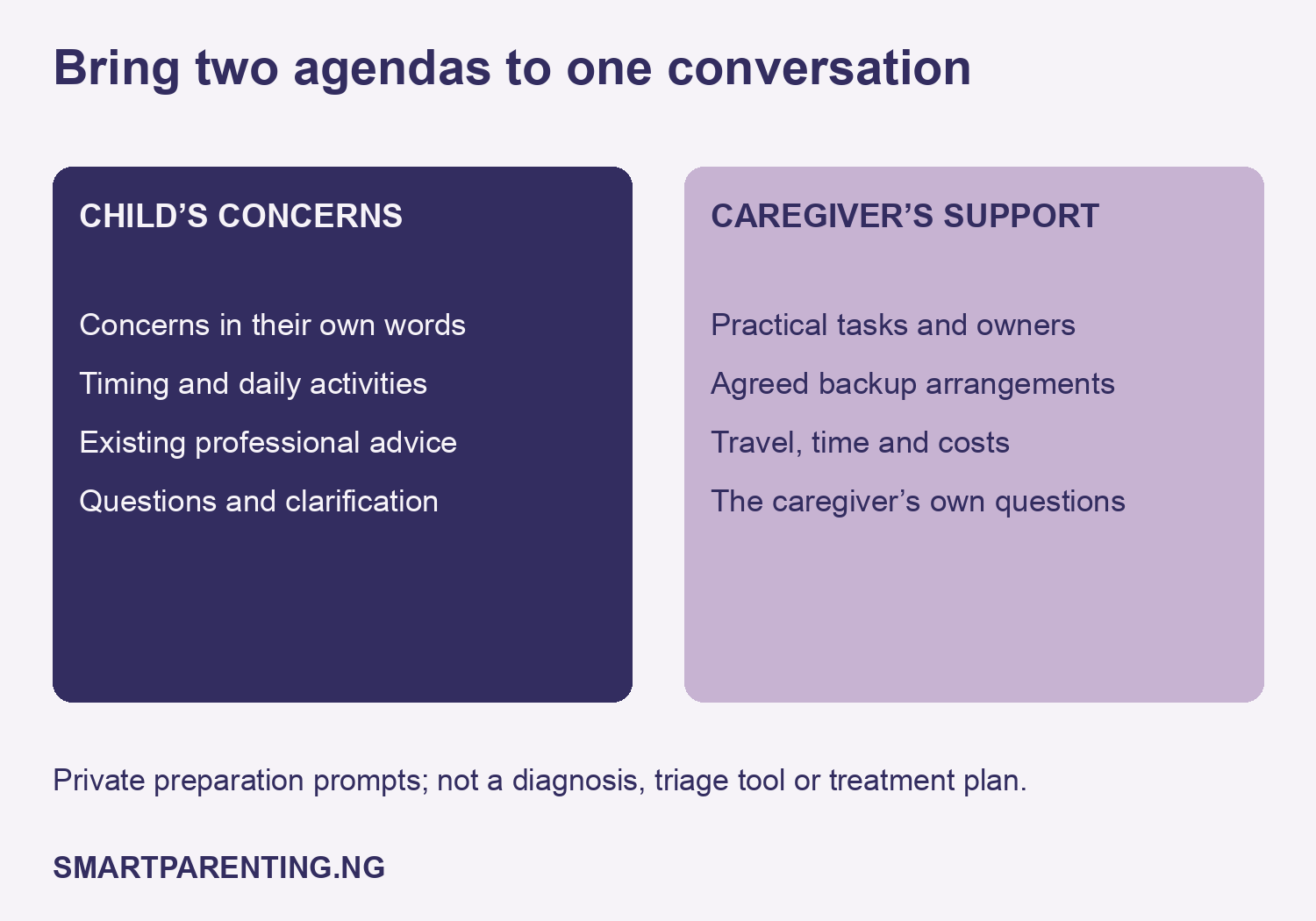
The caregiver can ask whom to contact with questions, how follow-up works and whether they should arrange their own support appointment. However, the worksheet cannot decide what services a person needs or what is locally available. Do not assume a referral, entitlement or free service exists.
Keep school and transport arrangements concrete. “Who will discuss the school day with us?” and “What follow-up information should we share?” are questions to agree with the professionals involved. A public blog cannot determine an individual school’s responsibilities or a child’s care arrangements.
Map practical tasks without a coping score
Our fictional example lists six practical tasks. Four have an agreed owner and two do not. Therefore, two tasks still need an ownership discussion. That count describes the plan, not whether a caregiver is coping well.
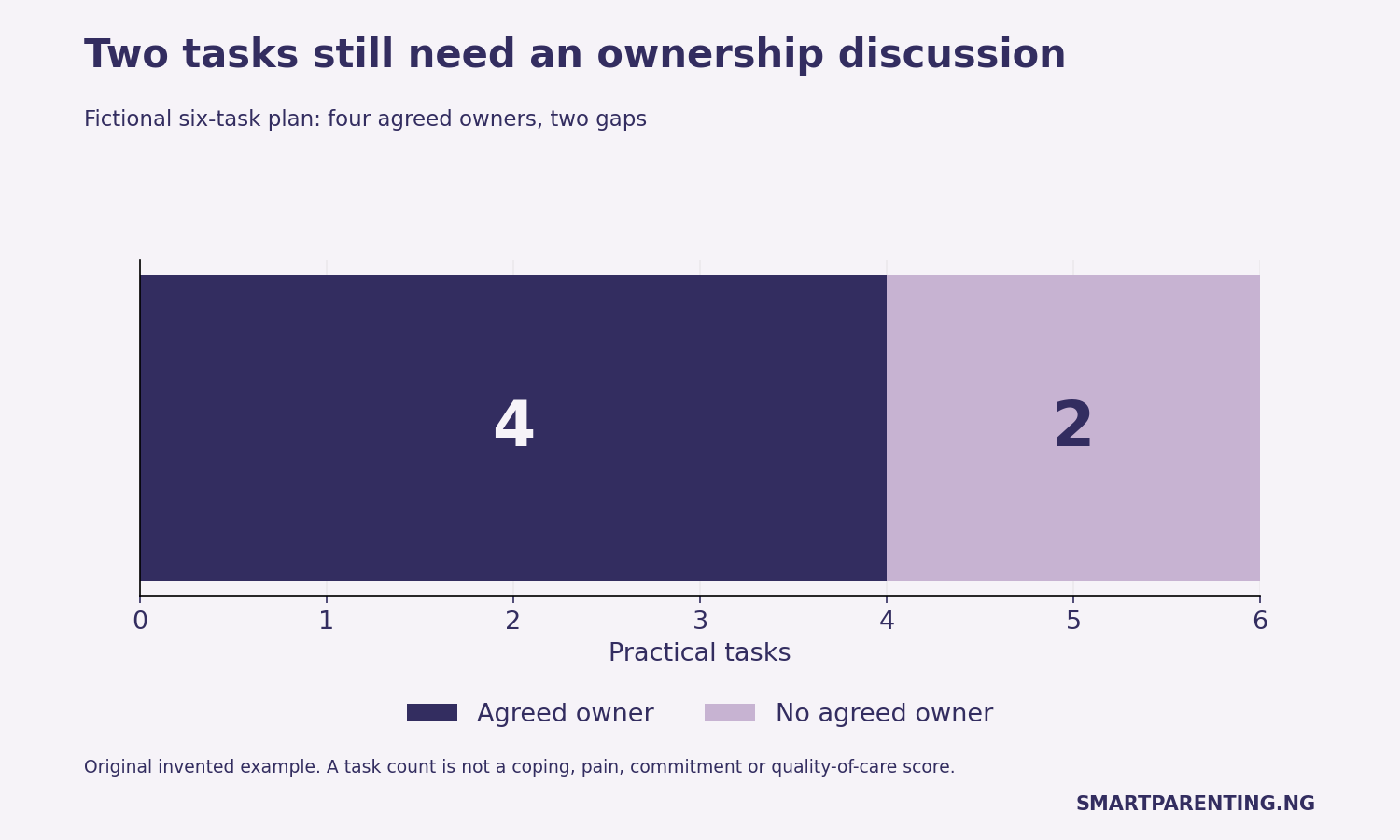
An owner’s name alone does not establish availability. For this reason, note whether they actually agreed and which time or task they accepted. Avoid assigning work to a relative, friend or partner without their agreement. Also keep payment or travel conditions visible when relevant.
The same fictional plan has two agreed backups. Four tasks lack an agreed backup. Ownership and backup are separate questions, so do not add those gaps into one supposed “risk score”. A task can have an owner and still have no replacement arrangement.
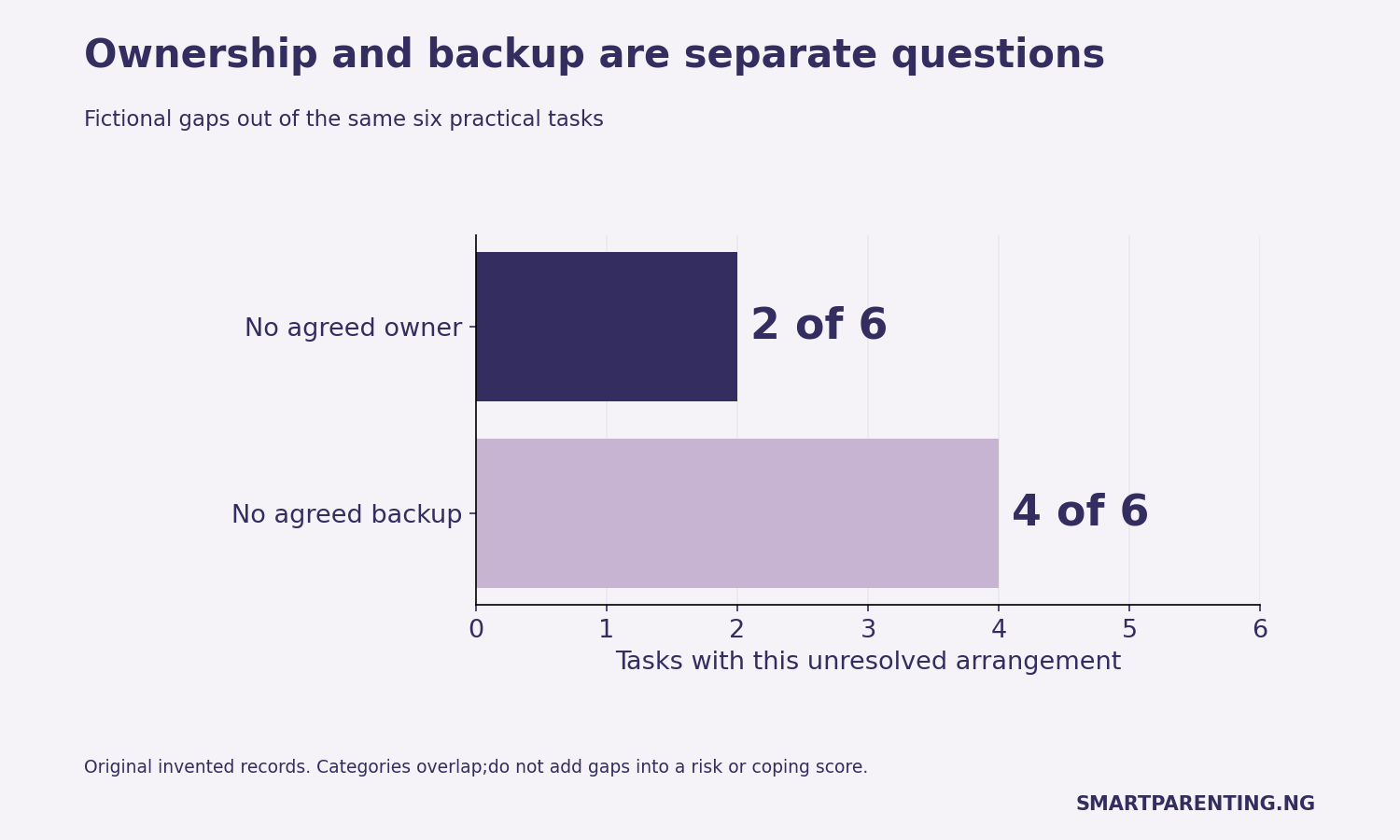
If a task has no backup, write that plainly. The next conversation may identify an option, a cost or a limit. Leaving a gap visible is more honest than assuming someone can help. The spreadsheet makes no claim that every gap can be solved.
Parenting Made Just for You
Get personalized Parenting Solutions tailored to your child’s needs. Transform your parenting journey with expert guidance in 1-3 days.
Get StartedRecord time and cost in your own circumstances
Use separate fields for travel time, appointment time, transport costs and other relevant expenses. Enter naira amounts only when they come from the family’s actual arrangements. Our fictional example supplies no provider fees, income estimates or price forecast.
A total can help prepare a practical question, but it cannot establish an entitlement to money or time off. Ask the relevant provider, employer or school about its actual arrangements. Avoid treating a figure from an overseas study as a local service promise.
Download the private appointment tools
- Selected study facts and model coefficients (CSV): source-linked values, units, confidence intervals and limits.
- Child’s private appointment agenda (CSV): blank concerns, timing, daily activities, existing advice and questions.
- Caregiver’s private task and support agenda (CSV): practical tasks, agreed owners, backup, costs and questions.
- Fictional six-task worked example (CSV): the ownership and backup counts behind the charts.
The two blank files can be printed as separate pages or used locally in a spreadsheet. No account, video or upload is required. Keep health details with the family and appropriate professionals. Do not post a completed sheet or a child’s medical information publicly.
Only the worked example contains filled tasks, and all of them are invented. Its owner and backup labels are role descriptions, not real people. The example is not a template for medication schedules, clinical decisions or emergency triage.
Questions that can clarify the next step
- What does the agreed care plan mean in everyday language?
- Which questions should we bring back, and to whom?
- What information would help the clinician at follow-up?
- How should we discuss school-related practical needs?
- Which tasks need an agreed owner or backup?
- Should the caregiver arrange a separate appointment about their own support needs?
These prompts help organise a conversation; they do not prescribe its answers. Keep the clinician’s actual instructions separate from the family’s questions. If the plan is unclear, ask the professional to explain it rather than interpreting a statistical coefficient yourself.
Our daycare time-planning guide offers a separate example of distinguishing calendar gaps from a wellbeing measure. The school-meeting guide also explains why observations and interpretations need separate fields.
Methods, attribution and limits
We checked the full primary study on 6 November 2026. The evidence CSV records the methods-defined matched counts and Model 1 coefficients. All five charts use original layouts. We attribute the research under CC BY 4.0 and reproduce no source figure, questionnaire or clinical instrument.
The two agendas and fictional logistics examples are original editorial assets, not validated screening tools. Their counts concern practical arrangements only. The requested medical review was approved before publication on 6 November 2026. Nothing in the study or worksheets establishes that parents cause a child’s pain, that confidence alone treats stress or that practical resources do not matter.


