







Diphtheria in Nigeria calls for prompt parent care seeking, not a medicine shopping list. If a child has difficulty breathing or swallowing, seek urgent medical attention. Do not wait to complete a download, obtain an online diagnosis or locate a particular drug yourself.
MSF’s 13 November report describes 86 patients managed in Katsina during 26 October–12 November: 70 severe and 16 non-severe. That is a selected programme caseload. It cannot tell a parent the chance that their child will become severely ill.
Diphtheria in Nigeria: parent care seeking and the denominator
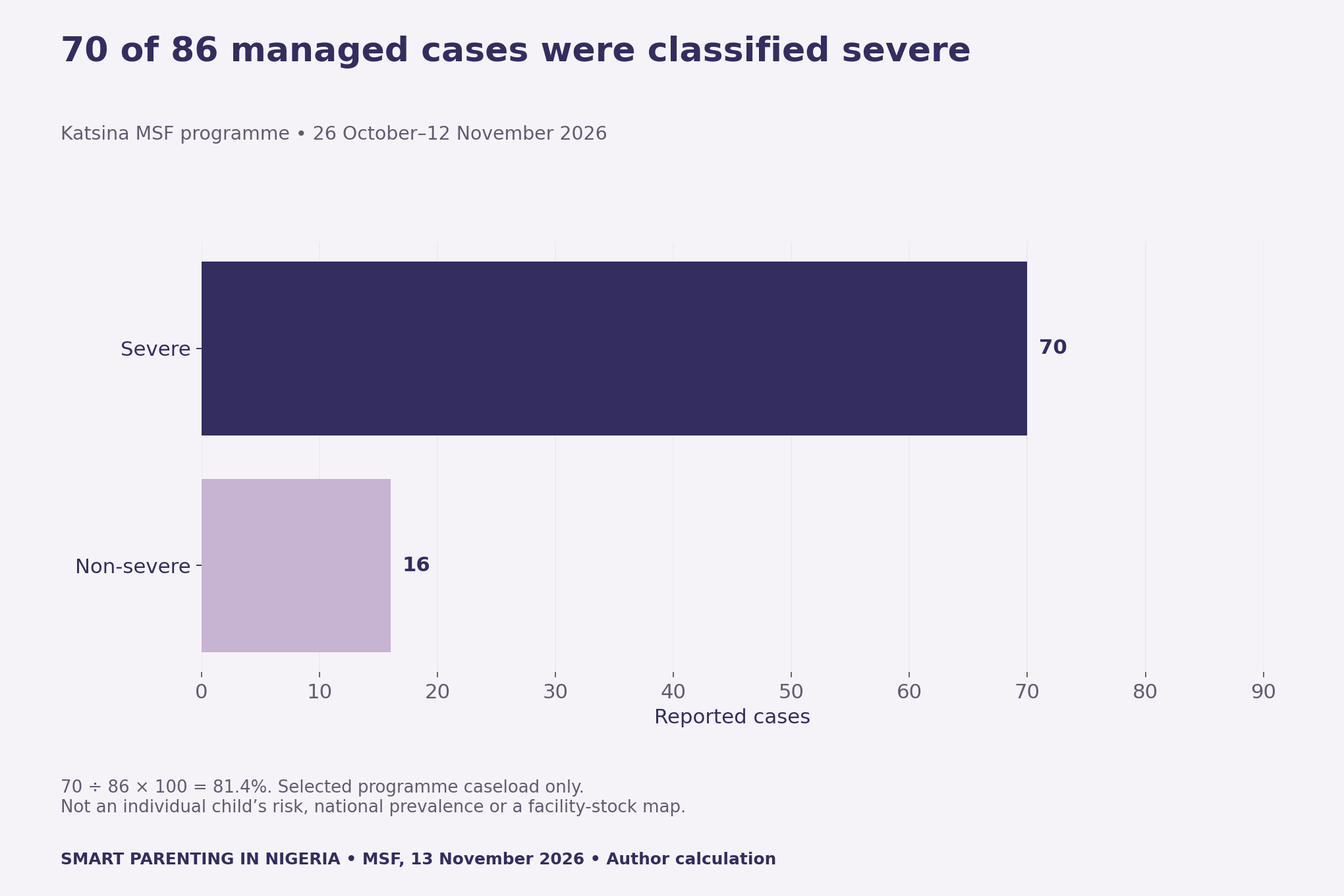
The denominator is the group beneath a percentage. Here it is 86 managed cases, not all children, all exposed contacts or every person infected in the state. Keeping that label beside the number prevents a dramatic figure from becoming a misleading personal prediction.
Our source file retains counts and the calculation separately. A reader can reproduce the percentage without accepting a broader claim about risk. We have not estimated the number of undiagnosed infections or compared treatment outcomes between facilities.
A shortage report is not a facility-by-facility answer
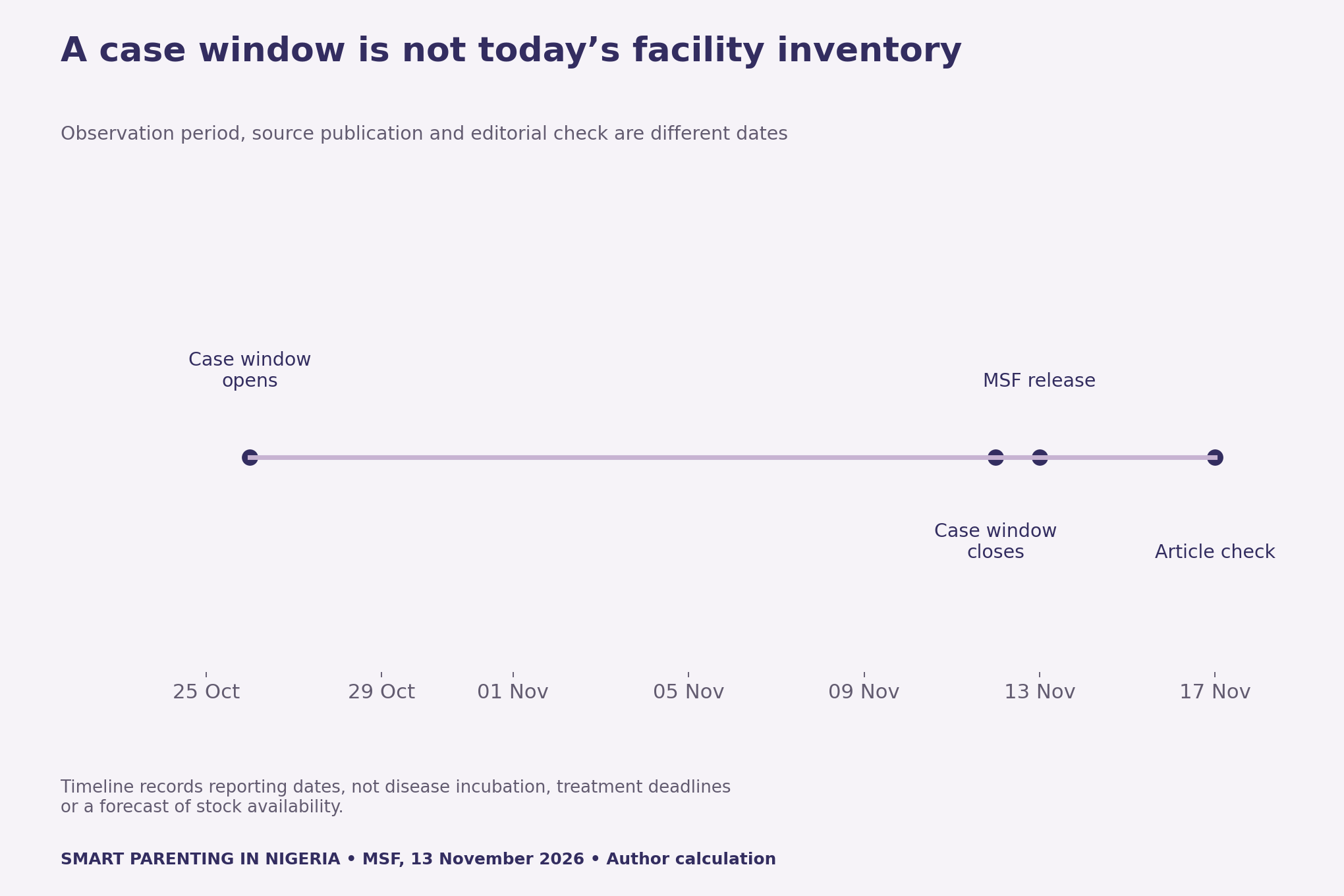
MSF warns that its antitoxin stocks are dangerously low. Its statement does not establish current stock at every health facility. Do not turn that warning into a claim that care is unavailable everywhere, or assume a named service has supplies because an older article mentioned it.
A useful question for the care team is where the child should be assessed now and whether a referral is needed. If referral is advised, ask how the receiving service will be contacted. The answer needs to come from the responsible service, not an unverified stock list shared online.
Prevention and treatment are different tasks
WHO’s diphtheria questions and answers explains vaccination and clinical treatment separately. Vaccination supports prevention; antitoxin is a treatment administered by professionals. One is not a substitute for the other. A vaccination record is useful information for the team, not a reason to delay assessment of concerning symptoms.
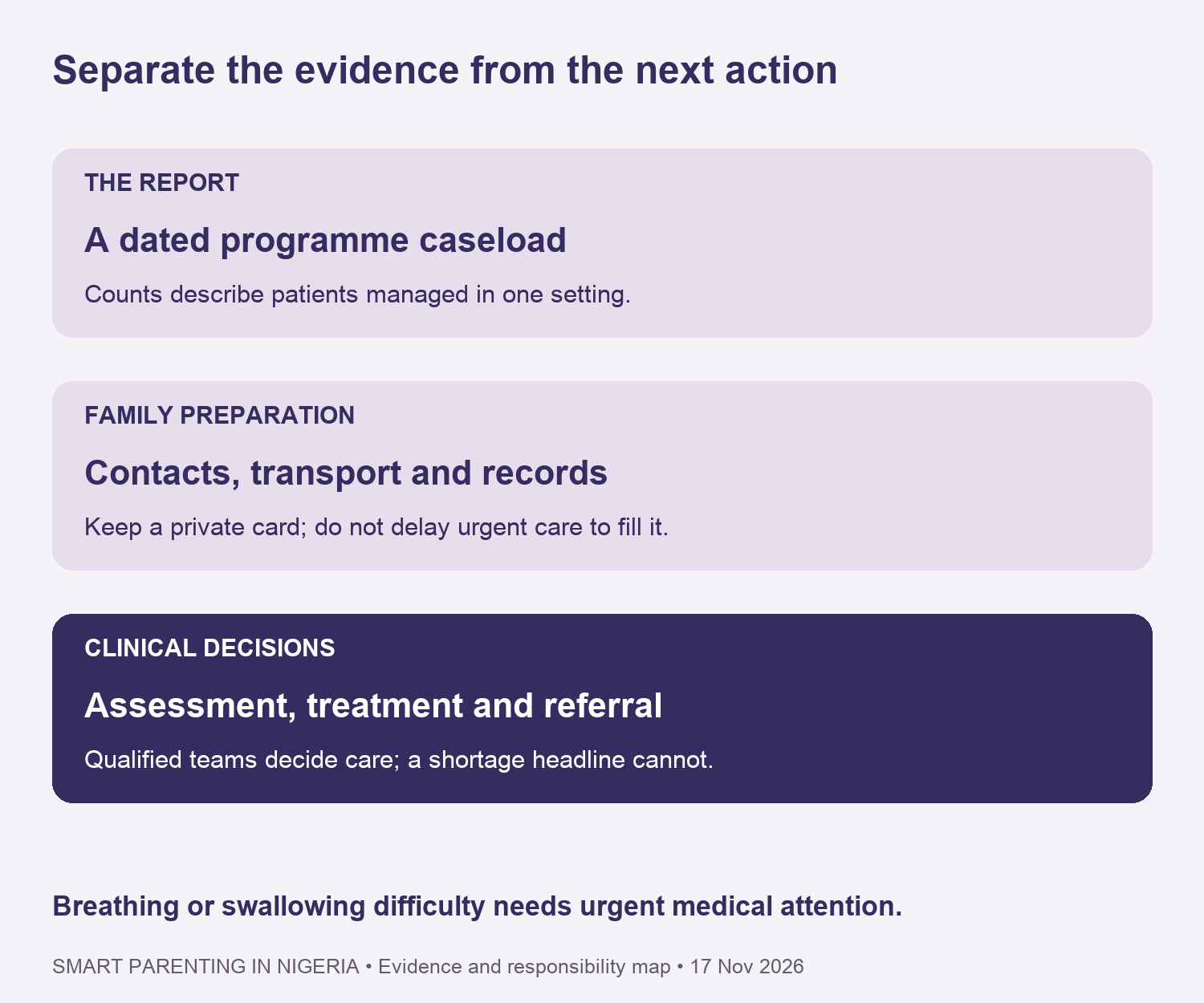
Ask a qualified vaccination service to check the child’s record against the applicable schedule. This article does not prescribe doses, tell families where to buy antitoxin or advise self-treatment. Clinicians decide assessment, treatment, referral and contact-management instructions.
Prepare a private care-contact card
A simple card can hold a usual facility, an urgent-care destination, transport arrangements and a backup caregiver. Add when each contact was checked. Leave unknown details blank rather than copying an unverified number or promising a journey time that has not been confirmed.
Keep the card private. It does not need a child’s full medical history, identity-document number or public location trail. Share only relevant details with those arranging care. Do not upload completed cards in comments or send them to this publication.
Use referral questions without delaying action
The question sheet leaves room for the destination, the person or service confirming referral, useful records and follow-up instructions. Write down the answer and its date when feasible. An answer that was correct yesterday may need checking again if a service changes.
Preparation should reduce confusion, not create another condition before a child receives help. If urgent symptoms occur, seek care. The sheet can be completed later or by another trusted adult. Do not use it to challenge or replace a clinician’s assessment.
Method, limitations and four CSV downloads
We checked the MSF release and WHO background guidance on 17 November 2026. Two figures show the reported composition and evidence dates. No facility inventory, patient survey, treatment comparison or clinical validation of our templates was performed.
The tools below are blank or aggregate-data resources. They are optional, private and non-diagnostic. For another example of separating a research association from a child-specific conclusion, see our air-pollution and childhood-eczema evidence guide.
- Katsina programme counts and percentage calculation (CSV)
- Blank private care-contact card (CSV)
- Blank care-team and referral questions (CSV)
- Confirmed versus unknown evidence register (CSV)
Suggested citation: Smart Parenting In Nigeria, “Diphtheria in Nigeria: Prepare a Care-Seeking Plan”, 17 November 2026. Sources: MSF dated release and WHO background guidance. Arithmetic and optional planning tools by this publication.
Parenting Made Just for You
Get personalized Parenting Solutions tailored to your child’s needs. Transform your parenting journey with expert guidance in 1-3 days.
Get Started


