




Importance for School Readiness and Social Confidence
Strong speech skills support school readiness and social confidence.
They help children engage with teachers and peers.
Early speech support contributes to positive school experiences.
Foundations of Early School Success
Strong speech skills help children understand classroom routines.
They support following verbal instructions from teachers.
Clear speech helps teachers assess learning needs.
Enhancing Classroom Participation
Speech skills enable children to ask questions and share ideas.
They also help children join discussions and group tasks.
Speaking clearly reduces misunderstandings during classroom activities.
- Answer questions aloud during class activities.
- Volunteer for classroom roles and duties.
- Participate in small group conversations.
Supporting Social Confidence
Speech skills help children make and maintain peer relationships.
As a result, children feel more confident joining games and conversations.
Appropriate speech supports emotional expression and conflict resolution.
Practical Approaches for Caregivers and Teachers
Caregivers and teachers can create language-rich environments at home and school.
They can also encourage frequent conversation opportunities throughout the day.
Modeling clear speech helps children learn new vocabulary during routines.
Parenting Made Just for You
Get personalized Parenting Solutions tailored to your child’s needs. Transform your parenting journey with expert guidance in 1-3 days.
Get Started- Read aloud together and talk about stories.
- Ask open-ended questions and wait for responses.
- Model clear speech and new vocabulary during routines.
Benefits for Children Transitioning to School
Clear speech eases the move into formal school settings.
Children then show confidence when interacting with teachers and peers.
Early speech support leads to more positive school experiences.
Spotting Age-Appropriate Speech and Language Milestones
This guide lists quick home checks for speech and language.
Caregivers can use simple activities to observe communication.
Use observations to decide if you should seek advice.
Overview of Quick Home Checks
Start in familiar spaces where your child feels comfortable.
Keep activities brief and playful to lower pressure.
Observe everyday routines to notice small communication changes.
What to Listen For
Listen for a growing variety of words during daily conversation.
Also watch for two or more words linked together.
Notice clarity of speech sounds as your child plays.
- A growing variety of words appears in daily talk.
- Two or more words are joined to form short phrases.
- Speech sounds are clear enough for family members to understand.
- Your child follows simple directions given during play.
- Gestures like pointing or showing support communication.
- Conversations include back and forth turns with others.
Simple Home Checks You Can Try
Try brief activities during daily routines to observe speech.
Vary tasks to see different communication skills emerge.
Unveil the Perfect Name that Tells Your Family's Story
Let us help you find a name that embodies your family's values, traditions, and dreams. Our personalized consultation weaves cultural insights to create a name that's uniquely yours.
Get StartedKeep interactions relaxed so your child stays engaged.
- Name familiar objects while tidying up together.
- Give a two step direction and watch for compliance.
- Ask your child to retell a short familiar story.
- Imitate sounds and invite copying of animal noises.
- Use pretend play to observe language in character roles.
Understanding Receptive and Expressive Skills
Receptive skills show how well your child understands speech.
Expressive skills reflect how your child uses words and sentences.
Therefore check both understanding and spoken output during routines.
When to Seek Further Advice
If concerns persist, discuss your observations with a professional.
Also share simple notes or recordings to illustrate patterns of difficulty.
However avoid panic if one task proves challenging on a single day.
Tracking Progress with Minimal Effort
Keep short dated notes after quick checks to monitor gradual changes.
Record brief voice clips to capture natural speech during play.
Review records monthly to notice emerging patterns and small gains.
Everyday Routines and Play-Based Activities
Use everyday routines and play to support early speech.
Focus on short, frequent language moments during the day.
Follow your child’s interest to keep activities engaging.
Daily Moments That Support Speech
Identify short everyday moments for focused talk.
If you already checked milestones, use these moments for practice.
For example, use mealtimes, dressing, and bath time for language play.
Also, narrate actions as you do them to provide models.
Additionally, pause to give your child time to respond and try words.
Mealtime Language Opportunities
- Describe textures and simple actions while preparing food together.
- Offer choices with two words to encourage selection and speech.
- Ask simple open prompts to invite longer responses during the meal.
Play-Based Activities to Expand Vocabulary
Choose pretend play scenarios to introduce themed words naturally.
Label props and actions as you play together.
Use repetition of new words across short play sessions for familiarity.
Games That Target Pronunciation
- Play simple sound games that focus on one sound at a time.
- Exaggerate sounds gently and then return to normal speech.
- Model correct pronunciations without directly criticizing the child.
Activities to Build Sentence Skills
Start with short, clear sentences when you speak to your child.
Expand a child’s utterance by adding one or two words.
Use question-and-answer turns to practice sequencing and grammar.
Encourage your child to describe actions during play.
Reading and Story Play
Choose short, repetitive stories to reinforce new vocabulary and sentences.
Pause during reading to let your child fill in familiar words.
Act out short story parts to combine movement with language.
Creative and Movement Activities
Use drawing or playdough to name colors, shapes, and actions while creating.
Sing simple action songs while moving to connect words and gestures.
Mirror your child’s sounds and then add new words or phrases.
Practical Strategies for Everyday Use
- Keep sessions short and frequent rather than long and infrequent.
- Follow your child’s interests to maintain engagement and participation.
- Provide clear choices to prompt speech without pressure.
- Celebrate attempts and model improved versions gently and positively.
Simple Tracking and Next Steps
Note which words and structures your child uses during routines.
Gradually introduce slightly longer sentences based on observed progress.
Keep activities playful and consistent to maintain motivation.
Find Out More: Physical Skills Children Need For First School Days
Balancing Languages at Home and School
Start by deciding which language you use in which settings.
Then, communicate the plan clearly to caregivers and relatives.
Moreover, keep the plan consistent while remaining flexible for special occasions.
Finally, revisit the plan as your child grows and their needs change.
Setting a Family Language Plan
Use the home language during daily routines to preserve family connections.
Additionally, involve relatives to reinforce natural conversation patterns.
Also, offer culturally meaningful stories and songs in the home language.
Maintaining the Home Language
Schedule brief, focused practice sessions in English before school starts.
Then, keep longer conversations in the home language to maintain fluency.
Alternate language focus by time of day or by activity.
Preparing English for Classroom Communication
Focus on practical classroom phrases that your child will need at school.
Next, practice functional expressions for greetings, requests, and following instructions.
Moreover, introduce simple academic words used in classroom tasks and routines.
Practical Activities for Language Balance
- Alternate language focus by time of day or by activity
- Use role play to rehearse common classroom interactions
- Label everyday items in both languages for visual support
Coordinating with Educators
Share your language plan with teachers at the start of term.
Also, ask teachers about classroom language expectations and routines.
Furthermore, request simple suggestions tailored to your child’s needs.
Supporting Social Communication with Peers
Encourage your child to use English for simple peer interactions at school.
However, reassure them that their home language remains valuable and accepted.
Additionally, practice short scripts for joining games and asking to play.
Managing Code-Switching and Translation
Explain that switching languages is a normal communication skill.
Then, teach when to use each language depending on the situation.
Also, model brief translations when needed to support understanding.
Monitoring Progress and Knowing When to Act
Observe your child’s comfort in classroom interactions over time.
Moreover, discuss any concerns promptly with teachers or local professionals.
Finally, adjust your home language plan based on feedback and observations.
Delve into the Subject: Signs Your Child May Be Ready For School In Nigeria
Targeted Approaches for Reluctant, Shy, or Late-Talking Children
These strategies support children who resist speaking or speak later than peers.
They build confidence gradually in everyday social situations.
Caregivers can adapt each idea to match a child’s comfort level.
Role-Play
Role-play creates low pressure chances to practice speech.
Start with predictable activities to reduce anxiety and increase trust.
Use props and playful characters to invite interaction.
Setup and Materials
Choose simple props that the child finds inviting.
Include hats, puppets, or stuffed animals if the child enjoys them.
Keep sessions short and predictable for best engagement.
How to Role-Play
Model a short conversation and invite the child to copy it.
Then switch roles and let the child lead sometimes.
Use familiar routines like greetings or play shopping as themes.
Tips for Success
Use simple strategies to encourage attempts.
- Celebrate small attempts with specific praise.
- Slow down your speech to allow processing time.
- Offer choices to give the child a sense of control.
- Repeat favored scenarios to build comfort and predictability.
Storytelling
Pick short repetitive stories with clear rhythms.
Use visual supports such as pictures or simple drawings.
Adjust story length to the child’s attention and responsiveness.
Selecting and Preparing Stories
Choose stories with predictable phrases and repetition.
Provide pictures or simple drawings to support comprehension.
Vary story length based on attention and responsiveness.
Interactive Storytelling Techniques
Pause before familiar phrases and allow the child to fill them in.
Invite the child to act out parts with gestures or sounds.
Use puppets to let the child speak through an alternate character.
Encouraging Participation
Ask simple open-ended prompts that require one or two words.
Offer a sentence starter and let the child complete it when ready.
Gradually reduce prompts as the child gains confidence speaking aloud.
Gradual Exposure
Plan small steps to expand the child’s social comfort.
Begin in familiar settings with one trusted adult present.
Introduce new people briefly while keeping the child comfortable.
Planning Small Steps
Start in a familiar place with a trusted adult present.
Then briefly introduce a new person while keeping comfort high.
Increase social demands slowly and predictably over time.
Practicing School-Like Scenarios
Rehearse simple school exchanges like answering a name or greeting a teacher.
Practice lining up, sharing items, and asking for help.
Role-play brief group interactions before real group activities.
Using Calm Support and Positive Feedback
Respond calmly to hesitant speech and avoid correcting during attempts.
Praise effort immediately, focusing on attempts not perfect phrasing.
Provide brief tangible or social rewards to reinforce participation.
Monitoring Progress and Adjusting
Track small wins to stay focused on progress.
Note observable gains like more attempts or longer phrases.
Celebrate these wins to motivate further effort.
Track Small Wins
Record short observable gains such as increased attempts.
Also note when phrases become longer or more frequent.
Celebrate successes with the child to boost motivation.
When to Change Strategies
If a strategy stalls, try a different activity or shorten sessions.
Adjust pacing based on the child’s comfort and interest levels.
Switch approaches when progress plateaus or engagement drops.
Teamwork with Caregivers
Communicate regularly with others who spend time with the child.
Share simple prompts and successful activities for consistency.
Coordinate approaches to maintain predictable support across settings.
You Might Also Like: Understanding Cognitive Growth in Nigerian Toddlers
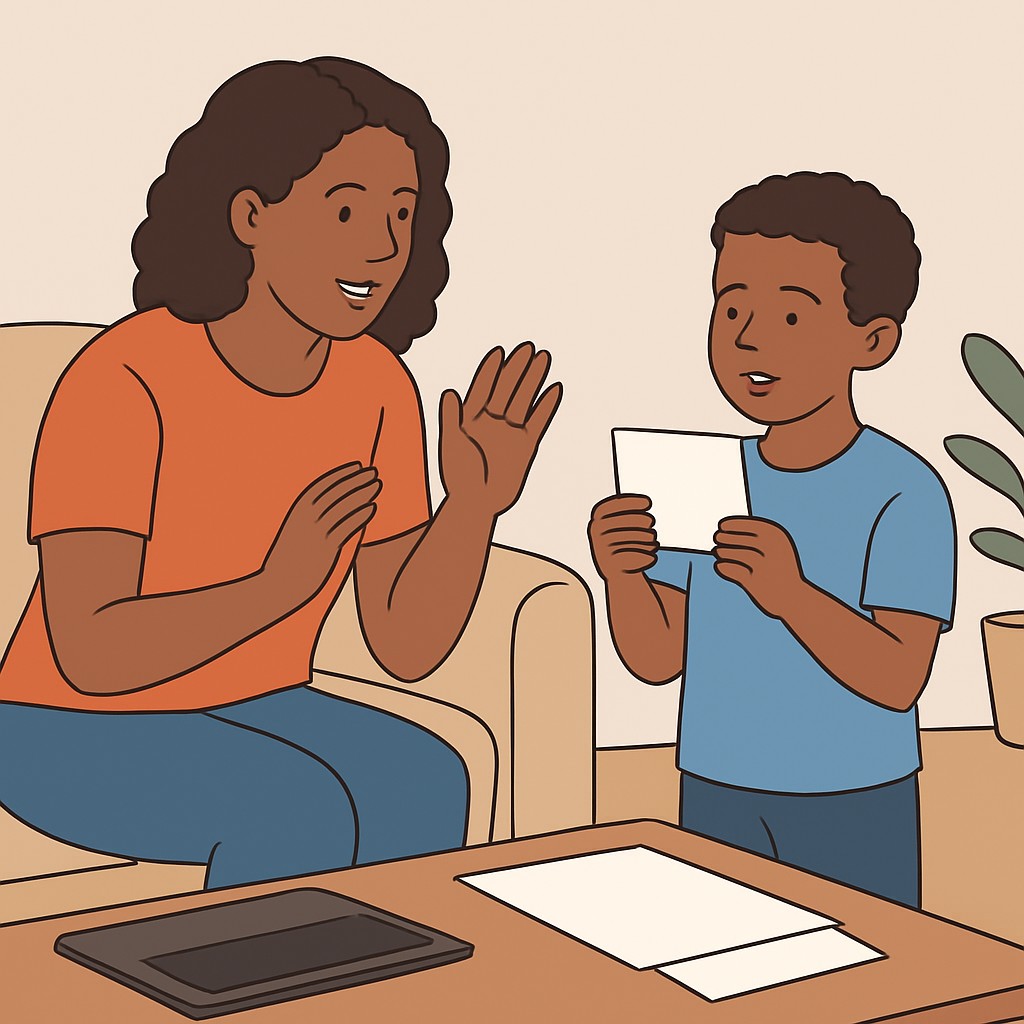
Preparing Specific School-Related Speech Tasks
This section outlines school-related speech tasks.
It focuses on following instructions, answering roll-call, and asking for help.
Also it includes sharing ideas and general practice tips.
Following Instructions
Following instructions helps children participate in classroom activities.
First teach one-step directions and then increase complexity gradually.
Next use clear short phrases when giving directions at home.
Practice Activities
- Give a simple command for a specific action.
- Add a second step when the child succeeds.
- Use gestures and visuals to support understanding.
- Praise correct responses and model missed steps clearly.
Answering Roll-Call
Answering roll-call builds confidence in spoken responses.
First practice clear name pronunciation and gentle volume control.
Then rehearse short greeting phrases and brief replies.
Asking for Help
Asking for help teaches children to request clarification and support.
Next teach simple help phrases and polite request forms.
Also model nonverbal cues like raising a hand or pointing.
Sharing Ideas
Sharing ideas supports classroom discussion and peer interaction.
Then teach simple sentence starters and common opinion words.
Additionally practice turn-taking and clear message organization.
General Tips for Practice
Keep practice sessions short and focused to maintain attention.
Use brief activities often to support steady progress.
Celebrate progress to motivate continued attempts.
Learn More: Tips for Supporting Your Child’s Transition Into Adolescence
When to Seek Professional Support
Seek professional support when concerns persist despite home strategies.
Act before school starts if worries could affect classroom participation.
Consult a qualified assessor to identify needs and next steps.
Key Signs to Watch For
Watch for unclear speech that familiar adults cannot understand.
Compare your child’s word use with same-age peers and note differences.
Also observe following instructions, stuttering, speaking anxiety, and regression.
- Speech remains unclear to familiar adults after expected development periods.
- Child uses very few words compared with same-age children.
- Child struggles to follow simple classroom instructions consistently.
- Child repeats or prolongs sounds and appears frustrated.
- Child avoids speaking in social settings or shows speaking anxiety.
- Child loses previously used words or shows regression in language skills.
When to Act Promptly
Seek assessment if home support does not improve communication.
Prioritize early help to reduce classroom participation problems.
Ask about evaluation options before school enrollment begins.
Tips for Finding Local Speech Services in Nigeria
Start by using local referrals and community networks to find services.
Contact healthcare and education providers for guidance.
Search online to locate nearby providers and contact details.
Places to Start
Start with referrals from local healthcare professionals and educators.
Ask schools and nurseries about recommended providers.
Join parent groups to collect personal recommendations.
- Ask your child’s pediatrician or primary healthcare provider for referrals.
- Contact your child’s school or nursery for guidance on local services.
- Reach out to nearby hospitals or community health centers for information.
- Join parent groups or community networks to ask for recommendations.
- Use online search to find local providers and contact details.
Practical Questions to Ask Providers
Prepare questions about qualifications and experience.
Ask if therapy can support both local languages and English.
Clarify assessment steps and typical session frequency.
- Ask about the provider’s professional qualifications and experience.
- Ask whether therapy can support both local languages and English.
- Ask about assessment procedures and expected frequency of sessions.
- Ask how the provider involves parents in therapy and home practice.
- Ask about costs, scheduling, and available payment options.
Preparing for the First Visit
Bring notes about observed concerns and any previous assessments.
Share examples of the child’s typical communication in both languages.
Agree on follow-up steps and how progress will be reviewed.
Home and School Collaboration
Coordinate home and school teams around shared speech priorities.
Define simple goals that educators and caregivers can use.
Plan regular check ins to review progress and adapt supports.
Creating Simple Speech Goals
Choose one or two targets that matter in school settings.
Phrase goals using child friendly words caregivers and teachers understand.
Link each goal to a daily classroom activity for practice.
Set a simple review date to check and adjust goals.
Communicating with Teachers
Invite teachers to describe classroom routines that support speech practice.
Summarize the child’s current goal in one short sentence.
Ask which classroom activities can reinforce the stated goal.
Agree on two simple strategies to use both home and school.
Suggested Meeting Agenda
Open meetings with a brief greeting and a clear purpose.
Share the child goal in one concise sentence for clarity.
Identify achievable supports and timing for regular practice opportunities.
- Begin with a brief greeting and state the meeting purpose.
- Share the child’s current speech goal in one sentence.
- Identify classroom supports and feasible timing for practice.
- Agree on specific home strategies and who will try them.
- Plan a short review date to check progress together.
Tracking Progress
Keep records simple and use the same format at home and school.
Use brief weekly notes to record practice attempts and successes.
Share these notes at the planned review meeting to discuss progress.
Celebrate small steps to encourage ongoing effort and confidence.
What to Record
Note the date and the activity tried for each entry.
Record the child’s response or the words the child used.
Write the agreed next small step to try after each session.
- Note the date and the activity tried.
- Record the child’s response or words used.
- Write the agreed next small step to try.
Adjusting Goals Together
Review progress regularly and change goals when needed.
If progress stalls, meet to revise strategies and targets together.
Keep the child’s comfort and confidence at the center of decisions.
Additional Resources
Bing search results for Preparing Your Child’s Speech Before School Starts Developmental Milestones


