




Preparing Emotionally for School
Starting school affects children and parents emotionally.
Thoughtful preparation benefits the whole family.
Family members can prepare by discussing feelings openly.
Making Space for Mixed Feelings
Children may feel excitement and anxiety at the same time.
Parents may also experience pride, worry, uncertainty, or sadness.
These feelings can exist together without creating a problem.
Therefore, encourage everyone to express feelings honestly and calmly.
Additionally, listen without dismissing concerns or demanding immediate confidence.
Supporting the Child
Talk about starting school in clear and reassuring language.
Invite the child to share hopes, questions, and worries.
Answer questions simply when the child raises them.
When answers remain uncertain, acknowledge that uncertainty honestly.
Reassure the child that adults will continue offering support.
Furthermore, allow the child to adjust emotionally at an individual pace.
Managing Separation
Separation can feel difficult for both children and parents.
Parenting Made Just for You
Get personalized Parenting Solutions tailored to your child’s needs. Transform your parenting journey with expert guidance in 1-3 days.
Get StartedDiscuss separation openly before it becomes emotionally overwhelming.
Use calm words that acknowledge the difficulty.
Remind the child that strong feelings can pass.
Parents should also recognise their own reactions during separation.
Consequently, calm parental communication can support a steadier emotional experience.
Balancing Excitement and Anxiety
Excitement can motivate preparation, while anxiety can create hesitation.
Neither feeling needs to control the family’s expectations.
Give both feelings room during conversations about school.
Focus on listening rather than forcing enthusiasm.
Likewise, avoid treating anxiety as a sign of failure.
Changing Family Expectations
Starting school may change what the family expects from daily life.
Parents may need to adjust their expectations of independence.
The child may need time before feeling fully comfortable.
Therefore, avoid expecting immediate emotional or practical adjustment.
Unveil the Perfect Name that Tells Your Family's Story
Let us help you find a name that embodies your family's values, traditions, and dreams. Our personalized consultation weaves cultural insights to create a name that's uniquely yours.
Get StartedNotice progress without comparing the child with other children.
Supporting Parents Through Change
Parents can discuss their expectations before school begins.
Share concerns respectfully, and make room for different perspectives.
Consider which expectations feel realistic and which need revision.
Accept that emotional preparation may continue after school starts.
Above all, provide patience, reassurance, and consistent emotional support.
Building Around the School Schedule
Starting school requires the family to organize daily routines around the school schedule.
First, review the day together and identify times for essential activities.
Then, coordinate responsibilities so everyone understands the daily plan.
Creating Smoother Mornings
Prepare morning responsibilities so everyone knows what needs attention before leaving.
Assign clear tasks for dressing, eating, gathering belongings, and preparing for transportation.
Next, place these tasks in a consistent order that suits the family.
Keep the morning plan simple enough for each family member to follow.
Adjusting Bedtimes
Set bedtime routines that support the required school schedule.
Begin evening preparations early enough to include washing, changing, and organizing belongings.
Additionally, keep bedtime responsibilities consistent across school days.
Review the routine whenever the schedule changes or family responsibilities shift.
Organizing Meals
Plan meal times around school hours and the family’s daily responsibilities.
Coordinate breakfast with morning tasks so family members can eat without disrupting preparations.
Later, arrange meals according to transportation, homework, and other responsibilities.
Share meal-related tasks so one person does not manage every responsibility.
Making Space for Homework
Set aside regular time for homework within the daily schedule.
Place homework before or after other responsibilities, depending on the family’s routine.
Meanwhile, keep homework expectations clear for everyone involved.
Protect time for meals, bedtime preparations, and necessary household tasks.
Coordinating Transportation
Clarify how each family member will manage transportation during the school day.
Include transportation details within the morning and afternoon routines.
Also, confirm who handles transportation responsibilities on each school day.
Update the plan whenever family schedules or transportation arrangements change.
Sharing Daily Responsibilities
List the household responsibilities that must happen around the school schedule.
Divide tasks according to each person’s available time and ability.
Assign responsibilities for preparing belongings, managing meals, and completing homework routines.
Encourage each family member to follow their assigned part of the routine.
Reviewing the Routine Together
Check the routine regularly to identify tasks that need adjustment.
Discuss changes before they affect mornings, meals, transportation, or bedtime.
As a result, the family can maintain a coordinated daily structure.
Planning for School Costs
Starting school introduces financial responsibilities.
These responsibilities affect the whole family.
Therefore, careful planning can make these responsibilities easier to manage.
Separate One-Time and Ongoing Expenses
Begin by separating initial purchases from costs that continue throughout the school period.
This distinction helps the family understand immediate needs and regular commitments.
Initially, consider fees, uniforms, books, and essential supplies.
Meanwhile, plan for transport, meals, and other ongoing expenses.
Review each category before school starts to create a clearer financial picture.
Plan for Fees
List every known school fee alongside its payment requirement.
Then, record when each payment becomes due.
This approach helps the family prepare for fees without overlooking them.
If fee details change, update the financial plan promptly.
Budget for Uniforms and Supplies
Uniforms can require several items, so identify each necessary piece before buying.
Likewise, make a separate list for books and school supplies.
Prioritise essential items first when available funds remain limited.
Keep the lists accessible so the family can track completed purchases.
Account for Transport and Meals
Transport costs can become regular expenses once school attendance begins.
Therefore, include expected transport spending in the family’s recurring budget.
Meals also require planning because they can add ongoing costs.
Decide how the family will manage meal expenses within its available budget.
Review transport and meal spending regularly as school routines develop.
Prepare for Other Ongoing Expenses
School may involve additional expenses beyond the main categories.
For example, consider recurring costs connected with participation in school life.
Record these costs when they become known.
Additionally, leave room in the budget for changing needs.
A flexible plan allows the family to respond without losing sight of essential expenses.
Review the Family Budget
Combine school costs with the family’s existing financial responsibilities.
Next, compare the total expected spending with available funds.
Adjust priorities when planned costs exceed the available budget.
Finally, review the plan regularly and update it as expenses change.
Gain More Insights: How To Choose Calm Over Panic Before School Starts
Sharing Family Roles During the School Transition
Starting school changes how family members support the child each day.
Therefore, parents, caregivers, and older siblings can share responsibilities clearly.
Clear roles help everyone contribute confidently during this transition.
Clarifying Each Person’s Role
Parents can discuss which responsibilities each family member feels ready to manage.
Meanwhile, caregivers can support agreed responsibilities while maintaining consistent expectations.
Older siblings can help with suitable tasks without becoming replacement parents.
As a result, clear roles reduce confusion and build confidence.
Supporting Consistent Communication
Family members can share important information about the child’s school responsibilities.
Regular communication helps adults respond consistently when needs or responsibilities change.
However, adults should protect the child from carrying messages between family members.
Instead, parents and caregivers can communicate directly whenever possible.
Encouraging the Child’s Independence
Family members can support independence by allowing the child to handle suitable responsibilities.
For example, adults can offer guidance without completing every task for the child.
Gradually, the child can make choices within clear family expectations.
Adults should notice effort while allowing manageable mistakes to teach useful lessons.
Balancing Support From Older Siblings
Older siblings can encourage the child through patience, reassurance, and practical support.
They can model responsibility without controlling the child’s choices.
Additionally, parents should explain that helping remains optional and age-appropriate.
This approach protects sibling relationships while encouraging shared family support.
Adjusting Responsibilities Over Time
Family roles may need adjustment as the child becomes more capable.
Therefore, adults can review responsibilities and discuss what feels manageable.
They can transfer suitable tasks gradually instead of changing everything at once.
Most importantly, the family can support independence while remaining available when help is needed.
Discover More: How To Prepare Your Family For A Child Starting School
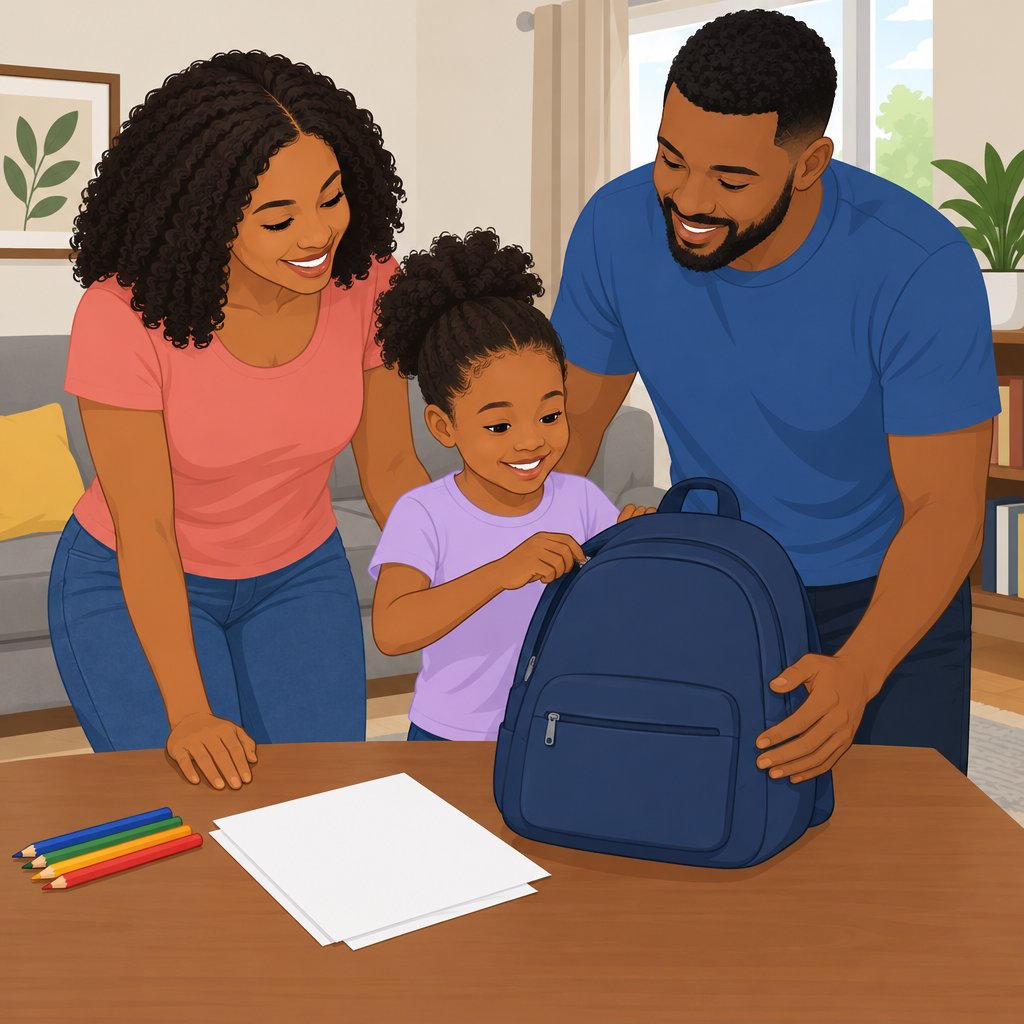
Preparing the Home for Learning
A prepared home environment helps the family support schoolwork with greater clarity.
It gives school materials and study activities a manageable place.
First, organise school materials so the child can find items without unnecessary searching.
Organising School Materials
Choose a consistent place for school materials.
Keep books, notebooks, stationery, and other school items together.
Use clear categories to separate materials for different school activities.
Therefore, the child can return each item to its proper place.
Review the storage area regularly and remove items that no longer belong there.
Also, encourage the child to organise and maintain the space.
This practice supports responsibility while keeping the home environment manageable.
Creating a Quiet Study Space
Select an area where the child can focus on schoolwork.
Keep the study space clear before homework begins.
Meanwhile, reduce distractions within the space whenever possible.
Ensure the child can reach necessary materials without leaving the study area repeatedly.
However, the space does not need to serve only one purpose.
Families can adapt an available area to support focused learning.
Agree on how family members will respect the child’s study time.
As a result, the child can approach schoolwork with fewer interruptions.
Building Consistent Homework Habits
Establish a predictable process for beginning, completing, and putting away homework.
Start by checking which school tasks require attention.
Next, help the child decide what to complete first.
Break larger tasks into manageable parts when needed.
Encourage the child to work steadily rather than rushing.
Offer support without taking over the child’s work.
Ask the child to explain instructions when clarification becomes necessary.
Then, review completed work together when appropriate.
Keep the process calm, clear, and consistent.
Supporting Independent Learning
Give the child opportunities to prepare materials before beginning homework.
Encourage the child to check completed tasks independently.
Teach the child to notice missing materials or unfinished work.
Gradually reduce reminders as the child manages more steps alone.
Meanwhile, remain available when the child needs guidance.
This approach balances dependable support with growing independence.
Keeping the Environment Flexible
Adjust the study arrangement when it no longer supports the child’s needs.
Discuss changes with the child before moving materials or changing expectations.
Maintain the same basic process even when the location changes.
For example, preserve the habits of preparing, focusing, checking, and storing.
Finally, recognise that a useful learning environment can develop gradually.
Consistent organisation and support can help the whole family approach schoolwork more confidently.
Explore Further: Balancing Cultural Expectations With Individual Parenting Styles
Supporting Siblings Through the School Transition
Starting school affects siblings because family attention and daily patterns may change.
Therefore, clear communication can help siblings understand what to expect.
It also helps siblings adjust when family attention and daily patterns shift.
Explaining the New Schedule Clearly
Describe when the child will attend school using language each sibling understands.
Also, explain that school creates new commitments without making siblings responsible for managing them.
Meanwhile, invite siblings to ask questions about the child’s changing schedule.
Answer questions honestly while keeping explanations simple and reassuring.
If plans change, share updates so siblings do not feel excluded from family decisions.
Keeping Each Sibling’s Needs Visible
Starting school should not make siblings’ interests, feelings, or responsibilities less important.
Continue recognising what each sibling needs during this family transition.
In addition, protect time for siblings to speak, connect, and receive individual attention.
Notice when a sibling needs reassurance, space, or practical support.
Avoid assuming that older siblings will always understand or quietly accept changes.
Protecting Individual Routines and Responsibilities
Review how the school schedule affects each sibling’s existing commitments.
Whenever possible, keep important personal routines consistent.
When adjustments become necessary, discuss them with the affected sibling.
Explain each change without dismissing the sibling’s preferences.
Meanwhile, avoid giving siblings extra responsibilities because another child starts school.
Share family tasks fairly and clarify expectations before changes take effect.
Encouraging Positive Connections
Invite siblings to share the child’s excitement without requiring constant involvement.
They can listen, ask questions, or offer encouragement in comfortable ways.
However, siblings should not become teachers, organisers, or emotional caretakers.
Give everyone permission to experience the transition differently.
Some siblings may feel enthusiastic, while others may need more time to adjust.
Checking In After the Transition Begins
Continue checking how siblings experience the school change after it begins.
Ask open questions that encourage honest responses.
For instance, ask what feels different and what support would help.
Listen without comparing one sibling’s response with another’s.
Then, respond to concerns through small, practical adjustments when possible.
Regular check-ins help keep siblings’ needs part of ongoing family conversations.
Explore Further: How to Foster a Strong Sense of Identity in Nigerian Children
Building a Strong School Partnership
Starting school creates an ongoing partnership between the family and the school.
Parents and caregivers can strengthen this partnership through clear, respectful communication.
Clear communication supports this partnership throughout the school experience.
Communicating With Teachers
First, learn how teachers prefer families to share questions and information.
Keep messages focused, respectful, and connected to the child’s school experience.
Also, share relevant observations about the child’s adjustment when they help teachers understand changes.
Similarly, invite teachers to share observations about the child’s participation and progress.
Ask questions whenever instructions, expectations, or feedback seem unclear.
Before contacting the teacher, gather the specific information you want to discuss.
Then, listen carefully and consider the teacher’s perspective.
Families and teachers can agree on practical ways to support the child consistently.
Understanding School Expectations
Schools may set expectations for behaviour, communication, participation, and daily responsibilities.
Therefore, ask the school to explain expectations that affect the child and family.
Clarify what the child should manage independently and where adults should provide support.
Also, check how the school communicates changes to expectations.
Understanding these expectations helps families respond consistently at home.
However, families should ask for clarification instead of relying on assumptions.
Discussing expectations early can make future conversations more focused and productive.
Keeping Track of Adjustment
Families can notice how the child adjusts to school over time.
Pay attention to what the child says about school and daily experiences.
Additionally, notice changes in communication, participation, confidence, or willingness to discuss school.
Record questions or observations that require discussion with the teacher.
Keep these notes brief, specific, and focused on the child’s experience.
Then, share relevant patterns rather than isolated concerns.
Regular communication helps families and teachers compare their observations.
Following Progress Together
Ask the teacher how the school shares information about learning and development.
Next, review feedback carefully and identify areas that need attention.
Discuss the child’s strengths alongside areas requiring further support.
Agree on the next steps that each adult will take.
Follow up later to review the child’s progress and continuing concerns.
Meanwhile, update the teacher when the child’s circumstances change.
Families should keep communication open, even when the child appears to adjust well.
Creating Consistent Support
Families and teachers can reinforce the same messages about school responsibilities.
They can also encourage the child to share questions and express concerns.
Adults should avoid placing the child between conflicting messages.
Instead, they can communicate directly and present shared expectations clearly.
When concerns arise, address them early and respectfully.
Most importantly, keep the child’s adjustment and progress at the centre of every conversation.
Supporting the Whole Household
Starting school affects the child and influences everyone’s wellbeing at home.
Therefore, families can support the child’s growth while recognising their own needs.
This balanced approach helps the household respond thoughtfully to changing demands.
Balancing Growth With Wellbeing
The child may develop new abilities, interests, and responsibilities through the school experience.
Meanwhile, family members may need space to adjust alongside that development.
Consequently, families should value progress without placing constant pressure on anyone.
They can acknowledge the child’s growth while protecting the household’s overall wellbeing.
Making Space for Flexibility
Family needs may change as everyone responds to the school transition.
Therefore, families can review their approach and make adjustments when necessary.
Flexibility allows the household to respond to changing energy, expectations, and responsibilities.
It also helps family members avoid treating every challenge as a failure.
Instead, they can adapt their plans while keeping the child’s development in view.
Practising Patience Together
Starting school may require patience from every member of the household.
Each person can acknowledge that adjustment takes time and may feel uneven.
Additionally, patient responses create space for honest conversations about changing needs.
Family members can pause, listen, and respond calmly when difficulties arise.
This approach supports the child without overlooking the wellbeing of others.
Checking In Regularly
Regular check-ins help families notice how the transition affects everyone.
They can create opportunities to share observations, concerns, and encouraging developments.
Furthermore, these conversations can reveal when the household needs greater flexibility.
Families can ask what feels manageable and what requires further attention.
They can also review whether current expectations support both growth and wellbeing.
Keeping Communication Open
Open communication helps family members understand how school affects the household.
Everyone can share feedback without assuming that one experience represents the whole family.
Likewise, listening carefully helps families recognise different perspectives.
Clear, respectful conversations can strengthen cooperation during periods of adjustment.
Recognising Shared Progress
The child’s development represents one part of the family’s wider adjustment.
Meanwhile, the household also grows through patience, flexibility, and shared awareness.
Families can recognise these efforts during regular conversations.
As a result, starting school becomes a shared family experience rather than one person’s responsibility.
Additional Resources
Google search results for What Starting School Means For The Whole Family General
Bing search results for What Starting School Means For The Whole Family General


