




Establish a Weekend-to-Week Morning Routine
Set aside a regular block on the weekend for planning the week.
Identify items to prepare across the week.
Choose simple storage spots for uniforms bags shoes and documents.
Weekend Preparation Overview
Prepare uniforms the night before and lay them out for quick dressing.
Pack school bags with the items your child needs the next day.
Place shoes by the door in a consistent spot for easy access.
Night-Before Checklist
Collect school documents and keep them in a single accessible folder.
- Uniforms laid out.
- Bags packed.
- Shoes ready.
- Documents organized.
Morning Quick Checks
On busy mornings perform a short walk-through before leaving home.
Ensure uniforms are wearable and comfortable for the day.
Open each bag and confirm the packed items are present.
Check that shoes remain in their designated spot near the exit.
Tips for Sustaining the Routine
Repeat this weekend-to-week habit to reduce morning stress over time.
Involve children in small tasks to build independence and speed.
Review and tweak the routine when it no longer fits your needs.
Morning Meal and Lunchbox Strategies
Use quick breakfasts and efficient lunchbox steps.
Parenting Made Just for You
Get personalized Parenting Solutions tailored to your child’s needs. Transform your parenting journey with expert guidance in 1-3 days.
Get StartedBalance whole grains, proteins, and fruits or vegetables.
Prepare some items ahead to save morning time.
Breakfast Basics
Choose quick, nutritious breakfast options that energize children for the day.
Additionally, aim for balance between whole grains, protein, and fruit or vegetables.
Also, prefer items that assemble in minutes without complex preparation.
Time-Saving Breakfast Tips
Prepare some breakfast components the night before.
This reduces morning tasks.
Double batch basics to create quick reheatable portions for several mornings.
Quick Assembly Ideas
- Layer a grain base with protein and fruit for a balanced bowl quickly.
- Use whole components that require no morning cooking when possible.
- Keep ready-to-eat fruit and simple sides accessible for fast packing.
- Finally, label containers to simplify choices and speed the morning routine.
Lunchbox Building Blocks
Build lunchboxes with a main item plus complementary sides and a fresh component.
Additionally, include items that children recognize and enjoy to reduce waste.
- Pack a source of protein or a filling base for lasting energy.
- Add at least one fruit or vegetable component in a child-friendly form.
- Offer small portions of different textures to keep meals interesting at lunch.
Time-Saving Packing Tips
- Prepare simple packing steps to complete quickly on busy mornings.
- Use portioned containers to speed decisions and control serving sizes easily.
- Rotate a list of favored items to reduce daily decision time.
Making Meals Appealing to Children
Invite children to choose between two prepared options to increase engagement.
Also, include colorful and varied textures to stimulate interest at mealtime.
Moreover, let children help with simple prep tasks to boost ownership and appetite.
Finally, maintain a short list of trusted favorites for overwhelming choice days.
Unveil the Perfect Name that Tells Your Family's Story
Let us help you find a name that embodies your family's values, traditions, and dreams. Our personalized consultation weaves cultural insights to create a name that's uniquely yours.
Get StartedPlan Transport and Route Options
Decide flexible departure windows instead of rigid departure times.
Then, share the transport plan with all caregivers and children briefly.
Additionally, confirm who updates others when delays occur.
Assess Transport Choices
First, list possible transport methods you could use.
Consider walking, driving, carpooling, and public transport as general options.
Additionally, note who can help with rides on different days.
Map Routes and Time Buffers
Next, identify primary routes to school and plausible alternatives.
Allow realistic time buffers to accommodate traffic and unexpected delays.
Whenever possible, try routes at the actual travel time.
Prepare Alternatives for Delays
Prepare backup routes and backup transport modes for likely disruptions.
Also, plan simple signals or messages to communicate changes quickly.
- Choose a nearby safe meeting point for sudden changes.
- Agree on a fallback driver or transport option for emergencies.
- Keep a short list of quick phone contacts for last minute help.
Set Departure Windows and Communicate Plans
Finally, review routes periodically and adjust buffers when needed.
- Identify primary and secondary routes.
- Set realistic buffers for each route.
- Agree on backup riders and communication methods.
- Test routes at peak travel times when possible.
Learn More: School Planning Tips For Busy Nigerian Parents
Teach Age-Appropriate Independence
This guide outlines age-appropriate morning tasks.
It focuses on small steps parents can teach.
These steps aim to make mornings calmer and steadier.
Why Independence Helps Mornings
Children who practice independence reduce parental morning workload.
Independence builds confidence for daily school routines.
Small daily tasks create steadier household rhythms.
Simple Tasks by Developmental Stage
This section lists simple tasks by developmental stage.
Tasks aim for independence in easy morning routines.
Use these examples to match each child’s readiness.
Toddlers and Preschoolers
- Make a simple bed by straightening blankets and pillows.
- Put pajamas in a laundry basket after getting dressed.
- Wash hands and face with supervision as needed.
- Bring a finished plate to the kitchen counter after eating.
Early Elementary Children
- Brush teeth and finish grooming without constant reminders.
- Button or zip clothing items and fasten simple closures.
- Clear breakfast dishes and place trash in a bin.
- Choose a simple outfit with limited options to decide quickly.
Older Children
- Tie shoelaces and manage basic shoe fastenings independently.
- Follow a short morning checklist and self-start tasks promptly.
- Pack small personal items they will need that day.
- Handle quick hygiene tasks without parental prompting.
How to Teach the Tasks
Model each step slowly while your child watches closely.
Break tasks into clear, manageable actions to practice.
Use short, consistent routines to reinforce new skills.
Offer simple praise for completed steps to encourage effort.
Troubleshooting and Encouragement
Expect some setbacks and respond calmly to mistakes or delays.
Reduce task load when mornings feel rushed or stressful.
Gradually increase responsibilities as your child shows readiness.
Learn More: How Nigerian Parents Can Prioritize Quality Time With Kids
Checklists, Visual Schedules and Phone Reminders
Use concise language for each checklist item.
Group tasks by location or by time of day.
Keep items short so completion feels achievable.
Design Practical Checklists
Additionally, create separate lists for adults and children.
Place lists where everyone can see them quickly.
Update lists regularly to reflect changing needs.
- Daily tasks list for routine steps
- Items to gather before leaving the house
- Quick checks for weather or special schedules
Create Clear Visual Schedules
Visual schedules show steps in order for the morning.
Use simple icons or symbols to represent each step.
Apply consistent colors to indicate timing or priority.
Place schedules at eye level for faster reference.
Adjust visuals for different weekdays or special events.
- Sequence strip showing the morning flow
- Time blocks that match usual departure windows
- Icons for tasks that children can recognize easily
Set Effective Phone Reminders
Set reminders for key time points during the morning.
Use clear labels that describe the needed action.
Schedule recurring alerts for typical school days.
Add a buffer reminder ahead of departure time.
Choose tones that prompt action without causing stress.
- Gentle pre-wake alarms to start the routine calmly
- Short countdown reminders for final departure checks
Combine Tools for Smooth Flow
Integrate checklists, visual schedules, and reminders into one system.
Then assign small responsibilities to each family member briefly.
Also review the system quickly to fine-tune timings.
Finally adapt the approach when routines change or grow.
You Might Also Like: How to Avoid Burnout While Juggling Work and Family
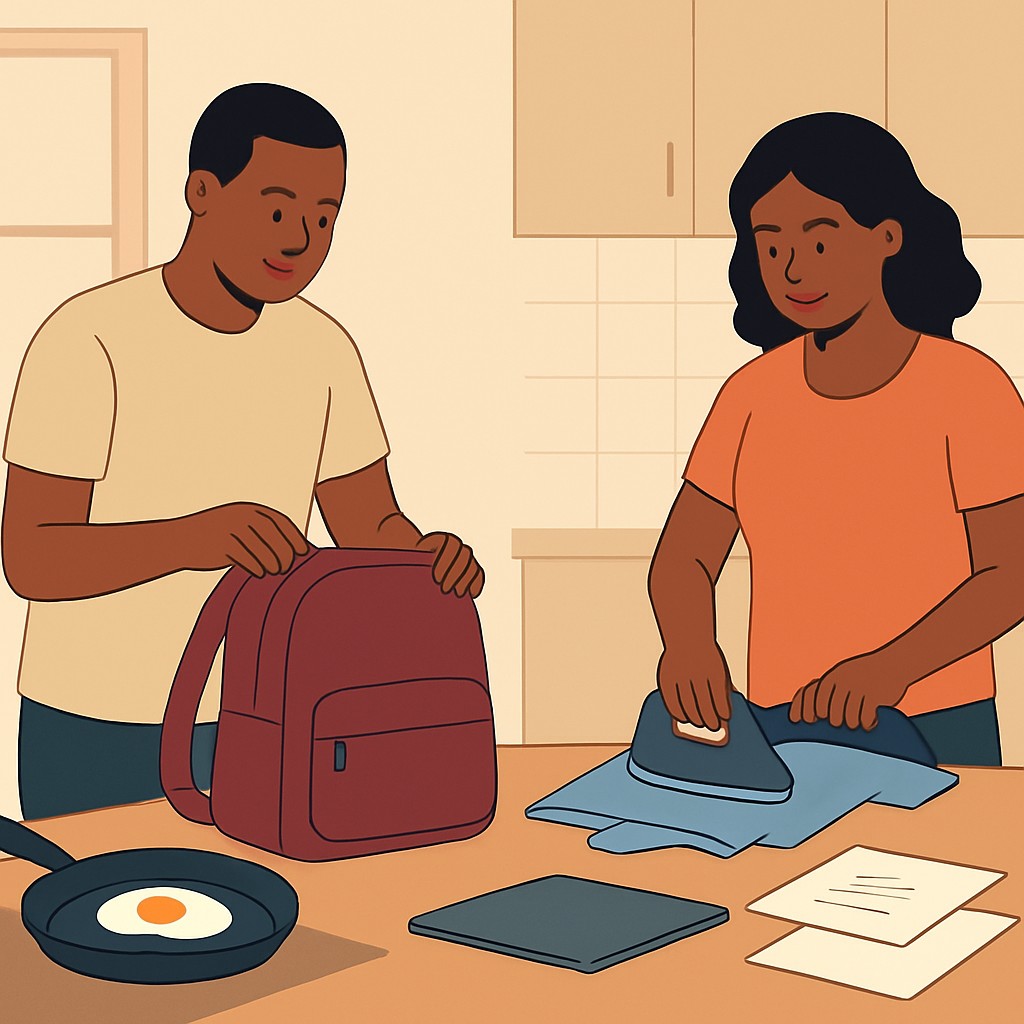
Coordinate Siblings and Staggered School Times
Coordinate siblings when school times are staggered.
Plan morning steps to align with each departure window.
Assign roles and routines to make mornings reliable.
Map Schedules and Identify Overlaps
List each child’s school start and departure requirements.
Highlight overlaps and potential gaps between departure times.
Mark windows where siblings can travel together safely.
Design Efficient Task Sequences
Order morning tasks to match each child’s departure window.
Group simultaneous tasks to reduce transition time and save minutes.
Schedule short prep blocks for staggered departures during mornings.
Keep one flexible task to cover unexpected delays or issues.
Share Roles and Create Simple Handover Routines
Assign clear roles to available caregivers or older siblings.
Rotate roles across the week to balance responsibilities.
Establish a brief handover script for staggered drop-offs.
- Driver handles school drop-offs and quick route adjustments.
- Escort escorts younger siblings between home and vehicle.
- Coordinator monitors timing and signals role switches when needed.
Use Waiting Periods Productively
Create a short list of low-effort activities for waiting times.
Prepare small items to occupy the waiting period without stress.
Keep one task available that supports later departures.
Communicate Daily and Adjust Quickly
Check for schedule changes each morning with all participants.
Confirm role assignments and any timing shifts before departure.
Adapt sequences the next day based on what worked today.
Uncover the Details: Balancing Cultural Obligations With Modern Work-Life Demands
Prepare Contingencies
This section covers contingency steps for school runs.
It outlines emergency kits, backup guardians, and school communication plans.
Review and update these plans regularly as circumstances change.
Emergency Kits
Assemble a small emergency kit for school runs.
Include items that meet your child’s everyday needs.
Also tailor the kit for weather and for medical needs.
Then store the kit where you can reach it in your vehicle or bag.
Check and refresh the kit on a regular schedule.
Backup Guardians
Identify adults who can step in if you cannot make a school run.
Next, confirm their availability and preferred contact method.
Also share basic drop-off and pick-up instructions with them ahead of time.
Then store their contact details on your phone and in the kit.
Review backup arrangements periodically to confirm they remain valid.
Clear Communication Plans with the School
Establish a clear plan to notify the school about changes quickly.
Then decide how you will contact the school office during unexpected absences.
Also provide updated emergency contacts and guardianship permissions to the school.
Next, agree how the school will inform you about emergencies and changes.
Test the communication plan so every participant understands the steps to follow.
Putting It Together
Keep all contingency details in one easy reference place.
Then share that reference with backup adults and with the school office.
Also review arrangements when routines or guardianship change.
Remain flexible and revisit plans as circumstances evolve.
Key Items to Confirm
Take a final pass through essential items before relying on backup plans.
Next, confirm contact details and pickup permissions are current.
Then make sure kit location and contents are accessible to backup adults.
- Contacts are current and reachable.
- Permissions allow designated adults to pick up children.
- Kit location and contents are known to backups.
Parental Stress-Reduction Techniques
Earlier sections covered evening prep and organizational tools.
This section explains simple stress reduction methods for parents.
Use quick actions that fit busy mornings.
Short Mindfulness Practices
Practice short mindfulness to reduce pressure before leaving.
Pause and breathe for about one minute.
Focus on slow inhales and slow exhales.
Ground yourself by noticing three nearby sensations.
Name one appreciative detail to shift perspective.
Quick Exercises
- Breath count: inhale to four, exhale to four.
- Shoulder roll to release tension.
- Stand outside for one minute of fresh air.
Setting Realistic Expectations
Adjust expectations to reduce morning pressure.
Choose two nonnegotiable goals each morning.
Accept small imperfections as normal and movable.
Communicate calm, simple expectations to children.
Lower comparison with others to ease stress.
Mindset Shifts
- Focus on progress instead of perfect outcomes.
- Accept flexibility as a strength in busy mornings.
- Celebrate small wins to build positive momentum.
Everyday Time-Saving Habits
Adopt simple habits that shorten routines without added stress.
Arrange a launch zone for essential items.
Prepare a grab bag for last-minute needs.
Limit choices by rotating a small set of quick options.
Set a realistic departure buffer to reduce rushing.
Practical Tweaks
- Store essentials where you always see them.
- Use simple routines that repeat across weekdays.
- Automate small tasks like reminders and recurring payments.
Additional Resources
Google search results for How To Prepare For School Runs Without Stress Work-Life Balance
Bing search results for How To Prepare For School Runs Without Stress Work-Life Balance


