




Emotional Readiness for School
Emotional readiness helps children manage separation, disappointment, and everyday school challenges.
It includes managing separation, handling disappointment, and responding to everyday challenges.
It also involves recognising and communicating emotional signals.
Managing Separation
Your child may separate from you with growing confidence.
They may accept brief goodbyes without becoming overwhelmed.
After separation, they may settle into school activities.
Additionally, they can express separation feelings through words or clear actions.
However, readiness does not require comfort during every separation.
Handling Disappointment
Your child may cope with disappointment without completely losing control.
They may pause, show frustration, and gradually recover.
Furthermore, they may accept that events cannot always happen their way.
Reassurance may help them continue participating afterward.
These responses suggest growing flexibility during difficult emotional moments.
Responding to Everyday Challenges
Your child may attempt ordinary challenges before asking for help.
They may keep trying after making a mistake.
Parenting Made Just for You
Get personalized Parenting Solutions tailored to your child’s needs. Transform your parenting journey with expert guidance in 1-3 days.
Get StartedGuidance may help them continue instead of giving up immediately.
Moreover, they may adjust when routines, expectations, or activities change.
They may also communicate when something feels difficult or upsetting.
Recognising Emotional Signals
Notice how your child responds across different situations.
Look for recovery after separation, disappointment, or frustration.
Also, consider whether your child can return attention to the situation.
Growing confidence, communication, and recovery can indicate emotional readiness.
However, readiness can develop gradually rather than appearing all at once.
Everyday School Skills
Observe your child during ordinary activities that involve listening, focusing, and finishing.
Choose calm moments so you can notice abilities without adding unnecessary pressure.
Use familiar activities to notice how your child manages everyday school-related skills.
Following Instructions
Give one clear instruction and allow your child time to respond.
Notice whether your child understands the instruction and begins the requested action.
Next, offer an instruction with more than one step when appropriate.
Unveil the Perfect Name that Tells Your Family's Story
Let us help you find a name that embodies your family's values, traditions, and dreams. Our personalized consultation weaves cultural insights to create a name that's uniquely yours.
Get StartedObserve whether your child remembers each step and completes them in order.
Keep your wording consistent so you can assess understanding more clearly.
Notice whether your child needs repeated reminders before acting.
Also, check whether your child asks questions when an instruction seems unclear.
Maintaining Attention
Choose a quiet activity that matches your child’s age and abilities.
Observe how long your child stays engaged before shifting attention.
Notice whether your child returns to the activity after a brief interruption.
Watch whether your child listens while another person speaks.
Also, observe whether your child follows the activity without constant redirection.
Compare attention during different activities rather than judging one moment.
Completing Age-Appropriate Tasks
Offer tasks your child can reasonably attempt without taking over.
Notice whether your child understands what the finished task should involve.
Observe whether your child gathers needed items and starts independently.
Check whether your child continues working when the task becomes less interesting.
Notice whether your child finishes the task or leaves it incomplete.
Also, observe whether your child checks the result before moving on.
Recording Observations
Write down specific observations instead of using broad descriptions.
Record the instruction, activity, response, and support your child needed.
Look for repeated patterns across different days and activities.
Consider whether tiredness, distractions, or unfamiliar tasks affect performance.
Use these observations to identify secure skills and skills needing support.
Then share clear observations when discussing your child’s ability to cope in school.
Social Readiness Indicators
Social readiness helps your child participate positively in everyday school interactions.
It includes sharing, taking turns, connecting with others, and seeking help.
Therefore, observe these abilities across different social situations.
Sharing Materials and Space
Your child shows social readiness when they share materials with others.
They can also allow another child to use shared space.
Additionally, they can communicate their needs while respecting someone else’s needs.
Notice whether your child shares without immediately withdrawing from the activity.
Encourage calm words when your child wants something another child uses.
Taking Turns
Taking turns helps children participate in shared classroom activities.
Your child may show readiness by waiting while another child participates.
Then, they can join when their opportunity arrives.
Furthermore, they can recognise that other children deserve opportunities too.
Watch for flexible participation during activities involving shared turns.
Making Friends
Your child can show readiness by approaching other children appropriately.
They may begin interactions through conversation, play, or shared activities.
They can also respond when another child invites them to participate.
Moreover, they can notice when others welcome or decline interaction.
Look for willingness to connect while respecting personal boundaries.
Your child does not need many friendships to demonstrate social readiness.
Instead, focus on their ability to begin and maintain positive interactions.
Seeking Help Appropriately
Socially ready children know when they need support.
They can identify an adult or person who can provide appropriate help.
They can explain their concern using words or another clear communication method.
Additionally, they can wait briefly for assistance when necessary.
Notice whether your child seeks help instead of remaining unable to participate.
Encourage them to ask for support when social situations become difficult.
Recognising Social Readiness
Consider these abilities together rather than focusing on one interaction.
Observe whether your child shares, takes turns, connects, and seeks help.
Also, notice how consistently your child uses these skills with others.
These observations can help you understand your child’s social readiness for school.
Discover More: Social Skills Children Need Before Starting School
Practical Self-Care Skills
School routines become easier when children manage personal needs with growing independence.
These skills support daily participation during school routines.
Regular practice helps children recognise and complete personal tasks.
Managing Clothing
Your child should practise putting on and removing everyday clothing.
They should manage fasteners, footwear, and outer layers as independently as possible.
Additionally, your child should recognise when clothing needs adjustment during the school day.
Using the Toilet
Your child should manage toileting routines without constant adult assistance.
They should remember essential steps, including cleaning themselves, flushing, and washing their hands.
Furthermore, your child should communicate clearly when they need to use the toilet.
Eating and Drinking
Your child should open, use, and close food and drink containers.
They should eat and drink independently while keeping personal items organised.
Moreover, your child should recognise when they need a drink or more food.
Maintaining Personal Hygiene
Your child should practise washing their hands at suitable points during daily routines.
They should also manage basic personal hygiene without repeated reminders.
Therefore, observe whether your child completes these steps consistently during practice.
Looking After Personal Belongings
Your child should carry, store, and collect personal belongings independently.
They should know where their items belong during regular school routines.
Additionally, your child should check belongings before moving between activities.
Following Daily Routines
Your child should complete familiar self-care steps in a practical order.
They should move through these routines without constant adult prompting.
Gradually, reduce reminders while your child practises each routine independently.
Building Independence Through Practice
Practise school-related self-care routines regularly before expecting consistent independence.
Allow your child enough time to complete each task without taking over.
Then, notice which steps your child manages confidently and which steps need further practice.
Finally, encourage your child to explain their routine and demonstrate each practical skill.
Find Out More: Preparing Your Child’s Speech Before School Starts
Communication Skills That Support School Readiness
Communication skills can show whether your child feels ready to express needs, feelings, and concerns at school.
Therefore, notice how clearly your child shares information during everyday conversations.
These skills matter during everyday school conversations.
Expressing Basic Needs
Your child should communicate important needs in a way familiar adults can understand.
They may use words, gestures, facial expressions, or another consistent communication method.
However, communication does not need to look or sound the same for every child.
The key is whether your child can make their needs known.
Also, notice whether your child communicates before frustration becomes overwhelming.
Describing Feelings
Your child’s communication can reveal how comfortably they express different feelings.
They may name an emotion, describe discomfort, or show that something feels wrong.
Additionally, your child should have a reliable way to communicate emotional changes.
This skill can help adults understand what your child needs during the school day.
Encourage your child to communicate feelings without requiring perfect words.
Sharing Concerns
Your child may encounter situations that feel confusing, uncomfortable, or worrying.
Readiness includes having a way to communicate those concerns to a trusted adult.
Notice whether your child can describe a problem or indicate that something needs attention.
They may communicate concerns through speech, signs, pictures, writing, or other familiar methods.
Most importantly, your child needs a dependable way to make concerns understood.
Communicating With Different Adults
School involves communication with adults beyond the immediate family.
Therefore, observe whether your child communicates with familiar adults outside the home.
Your child may need time, encouragement, or a preferred communication method.
Readiness does not require instant communication in every situation.
Instead, look for growing confidence when your child needs to communicate.
Checking for Understanding
Communication involves expressing ideas and understanding responses.
Notice whether your child can show when they understand what someone says.
Also, observe whether they can indicate confusion or request clarification.
This ability helps your child participate in conversations about needs, feelings, and concerns.
Furthermore, it gives adults useful information about how to support communication.
Supporting Communication Growth
Use your child’s preferred communication method consistently.
Allow enough time for your child to respond without rushing them.
Ask open questions that invite your child to share more information.
Then, acknowledge the message your child communicates.
When communication remains difficult, focus on making messages understandable and dependable.
Ultimately, communication readiness means your child can express important information at school.
Discover More: Physical Skills Children Need For First School Days
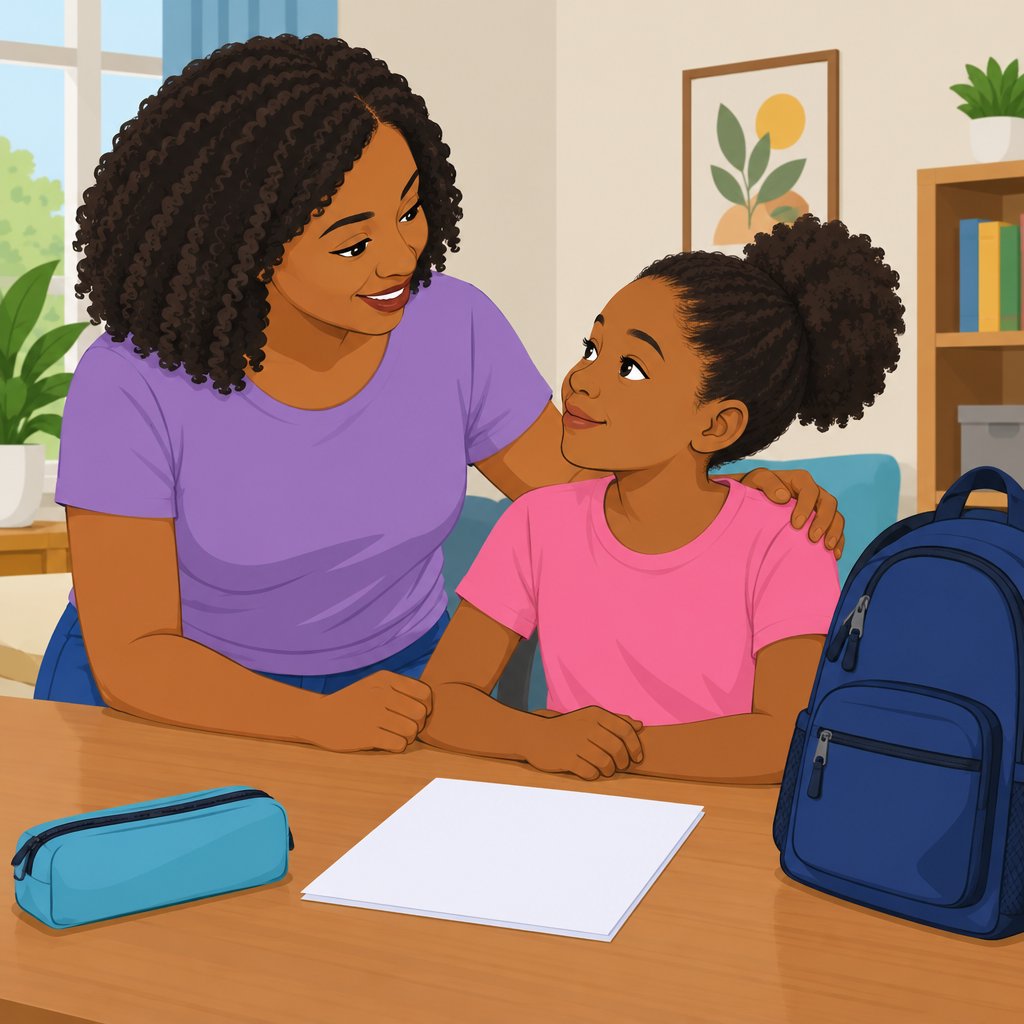
Observing Readiness Through Everyday Practice
Home routines can offer useful opportunities to observe how your child approaches preparation and change.
Choose regular moments involving several steps, such as preparing belongings or getting ready to leave.
First, explain the routine clearly and allow your child to begin.
Notice Responses During Familiar Routines
Then, observe how your child approaches each step without immediately taking over.
Notice whether your child remembers the sequence after repeated practice.
Also, watch how your child responds when the routine changes slightly.
Keep observations neutral, and focus on patterns rather than one difficult moment.
Record brief notes if they help you remember what you observed.
Use Practice Activities
Practice activities can help your child experience school-related routines in a familiar setting.
Invite your child to organize items, complete a short preparation task, or follow a simple routine.
Offer clear expectations before the activity begins.
Next, give your child enough time to try independently.
Observe which parts feel comfortable and which parts require additional practice.
Gradually adjust the activity while keeping the expectations understandable.
For example, change the order of steps or introduce a brief pause.
This approach helps you notice how your child manages small changes during practice.
Encourage Repeated Practice
Repeat activities across different days so you can compare your child’s responses.
Keep the practice familiar enough to support confidence.
However, vary small details when you want to observe flexibility.
Give feedback that describes the action rather than judging the result.
For instance, acknowledge when your child checks the next step independently.
Afterward, ask what felt easy, difficult, or confusing.
Start Readiness Conversations
Conversations can reveal how your child thinks about upcoming school experiences.
Ask open questions that invite more than a single-word answer.
For example, ask what your child expects during a school day.
Then, ask which parts seem interesting, unfamiliar, or challenging.
Listen without correcting every answer.
Instead, ask gentle follow-up questions when your child mentions a concern.
Use your child’s responses to identify topics that deserve further discussion.
Discuss Possible Situations
Describe a general school situation and ask what your child might do.
Keep the conversation simple and allow your child to suggest possible responses.
Ask what your child could try first.
Next, ask who your child might approach if the first idea does not work.
These conversations let you observe your child’s thinking without creating a test.
Reassure your child that questions and practice can continue before school begins.
Review What You Observe
After several routines and conversations, review the patterns you noticed.
Separate skills your child performs comfortably from skills needing more practice.
Choose one manageable area to practise at a time.
Then, continue observing while your child gains more experience.
Share relevant observations during conversations about starting school.
Above all, use home practice to understand your child’s current readiness.
Learn More: Signs Your Child May Be Ready For School In Nigeria
Warning Signs That Your Child May Be Struggling
Children may show different signs when school feels difficult or overwhelming.
Therefore, look for repeated changes rather than relying on one difficult moment.
Repeated patterns provide more useful information than isolated moments.
Notice Ongoing Distress
Your child may appear unusually worried, upset, tense, or unsettled about school.
They may show stronger reactions before, during, or after school-related activities.
Repeated distress can suggest that your child needs additional preparation or reassurance.
Watch for Withdrawal
Your child may become quieter or less involved when school enters conversation.
They may avoid discussing school or quickly change the subject.
They may also withdraw from activities they previously approached willingly.
These changes may indicate that your child feels uncertain or unable to cope.
Recognise Changes in Behaviour
Your child may become more irritable, tearful, frustrated, or unsettled than usual.
They may react strongly to small difficulties connected with school.
They may also resist school-related preparation more intensely than before.
Consistent changes deserve attention, especially when they affect your child’s overall wellbeing.
Look for Avoidance
Your child may repeatedly try to avoid school-related situations.
They may delay, refuse, or become distressed when facing an upcoming school experience.
However, avoidance does not always reveal the exact source of difficulty.
Instead, treat it as a signal to explore your child’s needs gently.
Consider Physical Signs
Your child may describe feeling unwell when school becomes a concern.
They may mention discomfort, tiredness, or other physical feelings during stressful periods.
Take these concerns seriously rather than assuming they reflect unwillingness.
Consider whether these signs appear repeatedly around school-related situations.
Identify When Extra Support May Help
Offer additional support when difficulties continue despite calm encouragement.
Provide extra preparation when your child seems unsure about what school may involve.
Use encouragement that recognises effort without creating additional pressure.
Give your child opportunities to express concerns at a comfortable pace.
Also, consider involving a suitable supporting adult when concerns persist.
Early support can help your child approach school with greater confidence.
Respond Calmly and Consistently
Listen carefully when your child shows signs of difficulty.
Ask gentle questions instead of demanding immediate explanations.
Acknowledge your child’s feelings without presenting them as a failure.
Then, focus on one manageable source of support at a time.
Monitor changes so you can recognise whether your support meets your child’s needs.
Working With Teachers To Monitor Adjustment
Begin by asking the teacher how your child participates in daily school activities.
Then, share relevant observations from home without presenting assumptions as facts.
Use respectful language that invites collaboration rather than placing blame.
Also, agree on the best way to exchange updates about your child’s adjustment.
Ask which parts of the school day seem comfortable for your child.
Also, ask when your child appears uncertain, withdrawn, frustrated, or overwhelmed.
Request specific observations instead of relying on broad descriptions.
For example, ask what happened before and after a concern appeared.
Clarify whether the concern occurs occasionally or across different situations.
Next, compare information from home and school to identify possible patterns.
Notice whether challenges connect with particular activities, transitions, or interactions.
Consider what support helps your child participate more successfully.
Review progress through repeated conversations rather than one isolated update.
Keep the focus on observable behavior and practical support.
Responding Constructively To Challenges
First, listen carefully when the teacher describes a concern.
Ask clarifying questions before deciding what the information means.
Acknowledge the teacher’s perspective while sharing your own observations.
Then, discuss possible responses that respect your child’s needs.
Work with the teacher to choose a small number of clear actions.
Define what each adult will do when your child encounters difficulty.
Keep expectations consistent between home conversations and school communication.
Choose language that helps your child understand the support available.
Revisit the plan when circumstances or needs change.
Meanwhile, talk with your child calmly about school experiences.
Invite your child to describe what felt easy or difficult.
Avoid demanding details when your child does not want to talk.
Recognize effort and openness rather than focusing only on results.
Share encouraging messages that support continued communication.
Reviewing Progress With Teachers
Maintain communication so small concerns receive attention early.
Share changes that may affect your child’s school experience.
Ask whether agreed support remains useful.
Additionally, invite the teacher to suggest adjustments when needed.
Change the approach when observations show that current support helps less.
Build on strategies that encourage participation and confidence.
Discuss concerns promptly instead of allowing misunderstandings to grow.
Continue treating the teacher as a partner in supporting adjustment.
Measure progress through your child’s participation, communication, and comfort at school.
Remember that adjustment can involve both successes and continuing challenges.
Use teacher feedback to understand needs more clearly.
Most importantly, respond with patience, consistency, and constructive teamwork.
Additional Resources
Google search results for How To Know Your Child Can Cope In School Developmental Milestones
Bing search results for How To Know Your Child Can Cope In School Developmental Milestones


