




Nutritious Packed Lunches and Snacks for Sustained Energy
Aim for balanced portions to support steady energy throughout the school day.
Pack foods from protein, carbohydrate, fruit, vegetable, and healthy fat groups.
Control serving sizes to keep portions age-appropriate and moderate.
Balanced Portion Guidelines
Include a mix of protein, carbohydrates, fruits, vegetables, and healthy fats.
Keep portions age-appropriate and avoid oversized servings.
Pack smaller snacks for mid-morning or mid-afternoon energy boosts.
Hydration Strategies
Provide a refillable water bottle to encourage regular drinking at school.
Remind children to sip frequently instead of drinking all at once.
Include naturally hydrating options when appropriate and safe for the school day.
Safe Storage and Temperature Control
Use insulated lunch bags or boxes to maintain safe food temperatures.
Include a small cold pack for items that need refrigeration.
Separate wet or smelly items in sealed containers to prevent spoilage or smells.
Packing Practical Tips
Prepare lunches the night before to save morning time and reduce stress.
Use portioned reusable containers to control serving sizes and reduce waste.
Involve children in packing to encourage healthy choices and acceptance.
Parenting Made Just for You
Get personalized Parenting Solutions tailored to your child’s needs. Transform your parenting journey with expert guidance in 1-3 days.
Get StartedSnack Timing and Choices
Offer snacks that combine carbohydrates and protein for sustained energy between meals.
Limit sugary treats that cause quick energy spikes and crashes.
Pack foods that stay safe without immediate refrigeration when refrigeration is unavailable.
- Protein and carbohydrate balance
- Small fruit or vegetable portion
- Hydrating beverage option
- Easy-to-open packaging
Ergonomic Backpack Selection and Weight-Management Rules
This guide covers ergonomic selection and weight-management practices for child backpacks.
Follow practical packing methods and daily habits to minimize strain.
Use straps, padding, and organized compartments to stabilize loads effectively.
Choosing an Ergonomic Backpack
Match the backpack to the child’s torso length for proper fit.
Prefer padded shoulder straps and a padded back panel for comfort.
Select a bag with a waist or chest strap to stabilize the load.
- Look for multiple compartments to organize items.
- Choose firm padding that provides consistent support.
- Prefer wide straps to distribute pressure evenly.
- Select a lightweight shell that still reinforces structure.
Materials and Construction
Prefer lightweight materials that still provide durability.
Ensure seams and zippers show solid construction before use.
Evaluate fabric strength and reinforcement to maintain long term performance.
Packing Techniques to Balance Weight
Pack heavy items close to the back for better balance.
Distribute items evenly between compartments to avoid shifting.
Unveil the Perfect Name that Tells Your Family's Story
Let us help you find a name that embodies your family's values, traditions, and dreams. Our personalized consultation weaves cultural insights to create a name that's uniquely yours.
Get StartedUse small pouches to organize and stabilize smaller items.
Limit nonessential items to reduce overall load.
Weight-Management Rules
Aim to keep the bag as light as practical for daily needs.
Remove unneeded textbooks and items before leaving home.
Encourage children to carry only school essentials for that day.
Check and adjust straps so the bag sits comfortably.
Teach children to use both shoulder straps every time.
Daily Habits and Monitoring
Establish a routine to review bag contents each evening.
Inspect straps and seams regularly for wear and tear.
Adjust packing habits as the child’s needs change over time.
Hygiene and Infection-Prevention Items for the School Bag
Pack personal hygiene items to reduce infection risks at school.
This section complements packed lunch guidance on safe storage briefly.
Teach the child to wipe down eating surfaces with wipes when needed.
Essential Personal Hygiene Items
Use hand sanitizer when soap and water are unavailable before eating.
Teach children to use wipes and tissues for sneezes and coughs.
Dispose of used items in sealed bags until proper bins are available.
- Pack an alcohol-based hand sanitizer for quick hand cleaning.
- Include moist wipes for cleaning hands and small surfaces.
- Include a small pack of tissues for runny noses and sneezes.
- Bring a resealable bag for used tissues and soiled wipes.
- Bring spare clean face coverings when they are appropriate to use.
- Include a basic first-aid item for minor cuts and grazes.
How to Pack and Use Hygiene Items Safely
Keep hygiene items in a separate easy-to-open pouch inside the bag.
Label the pouch to help the child find items quickly.
Cover food until the child is ready to eat to reduce exposure.
Safe Food-Handling Practices
Wash or sanitize hands before handling or eating food.
Use clean utensils rather than bare hands when possible.
Avoid sharing food and utensils to reduce cross-contamination risks.
Managing Waste and Clean-Up
Provide a small sealable pouch for waste and soiled items inside the school bag.
Instruct the child to place used wipes and tissues inside that pouch.
Require handwashing or sanitizing after handling waste or cleaning spills.
Learn More: How To Avoid Sickness When Your Child Starts School
Basic First-Aid Kit
This kit holds basic supplies for minor injuries.
Keep these items organized inside the bag for quick access.
Also check the kit often for damage and expired items.
Essential Items to Include
Pack adhesive plasters in several sizes.
Include sterile gauze pads and adhesive tape.
Add antiseptic wipes for minor wound cleaning.
Pack disposable gloves and tweezers.
Include small scissors and a thermometer when possible.
Storage and Maintenance
Store the kit in a waterproof pouch.
Keep the pouch easy to reach inside the bag.
Check supplies regularly for damage or expiry dates.
Replace used items immediately after use.
Prescribed Medications
Prescribed medications require careful handling and storage.
Ensure a caregiver can access and identify each medication quickly.
Store dosing instructions and any measuring tools near the medications.
Packing and Labeling
Keep medications in their original labelled containers.
Include a small spare dose when appropriate.
Place measuring spoons or syringes for liquid doses.
Instructions and Documentation
Include clear written dosing instructions from the caregiver.
Note times and any special administration steps.
Keep a backup copy of instructions in a sealed pouch.
Clear Emergency and Contact Information
Maintain clear emergency and contact information for quick reference.
Make sure the child and caregivers can access the information quickly.
Update the information whenever contact or medical details change.
What to Include
Write emergency contact names and phone numbers clearly.
List known allergies and chronic health conditions.
Include the child’s doctor contact and any preferred hospital.
Where to Place It
Place a laminated card in the outside pocket of the bag.
Keep a digital copy on the caregiver’s phone for quick access.
Inform school staff where the information and medications are kept.
Learn More: How To Prepare Your Child’s Body For School
Clothing and Weather-Ready Items
Pack spare clothing for unexpected needs.
Additionally, store spare items to keep them clean and dry.
Select fabrics that dry quickly and breathe well.
Spare Uniform and Clothing Basics
Pack a clean spare uniform for unexpected stains or mishaps.
Include an extra pair of undergarments when space allows.
Place spare clothing in a sealed bag to keep it dry and clean.
Rain Protection
Include a compact rain jacket or poncho for quick coverage.
Pack a foldable umbrella if school rules allow it.
Store rain items where they remain accessible during wet conditions.
Sun Protection
Include a hat or cap to reduce direct sun exposure.
Pack a lightweight long sleeve shirt for extra sun protection.
Consider a small breathable scarf for quick neck protection.
Choosing Fabrics and Care Tips
Choose breathable and quick drying fabrics for warm weather comfort.
Prefer materials that dry quickly after rain to prevent discomfort.
Rotate spare items regularly to maintain cleanliness and proper fit.
Gain More Insights: The Role of Traditional Nigerian Foods in Boosting Children’s Health
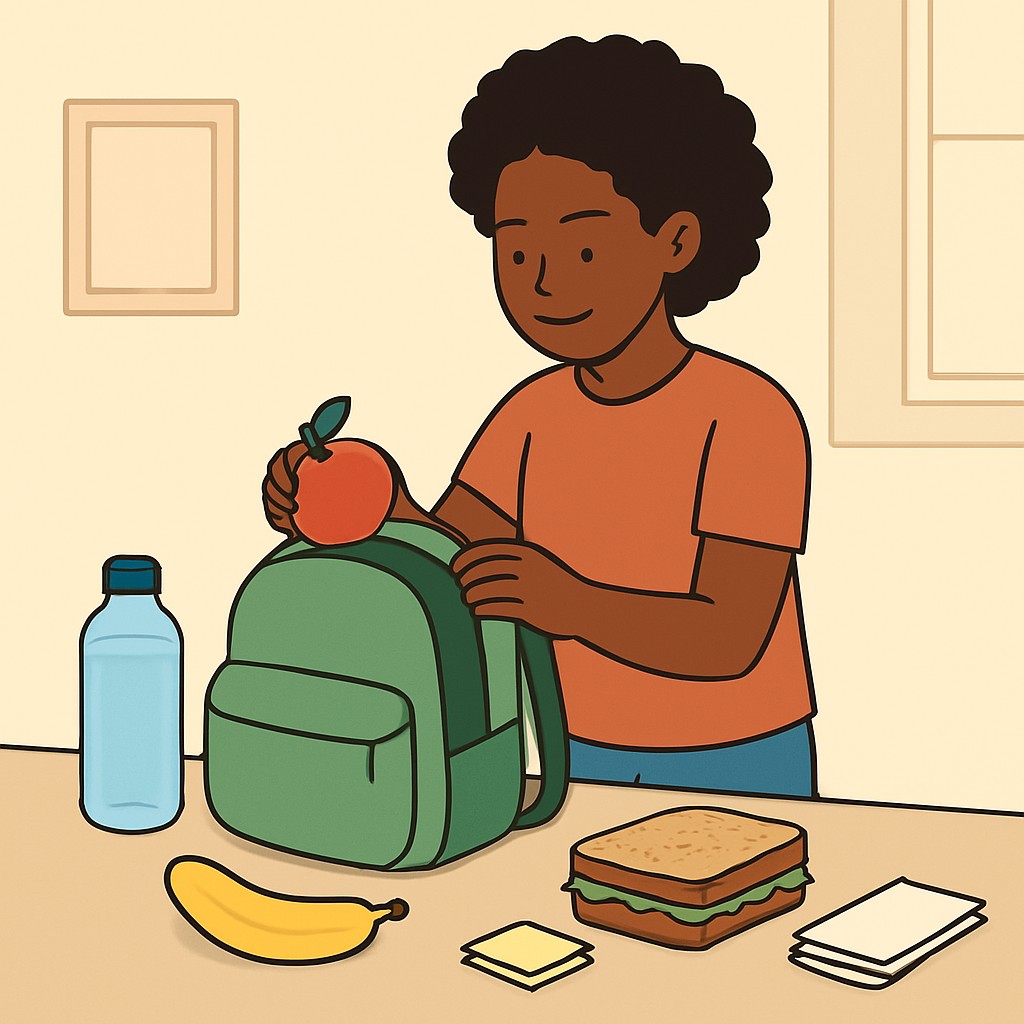
Study Supplies and Learning-Support Tools
This section lists study supplies.
It also lists learning-support tools.
These items support a productive school bag.
Writing and Note-Taking Tools
- Pens and pencils provide clear, legible writing for daily tasks.
- An eraser and sharpener enable quick, neat corrections.
- Highlighters help mark key ideas during review sessions.
- Notebooks keep notes organized by subject and date.
Organization and Time Management
- A planner or assignment book records tasks and deadlines.
- Folders or sleeves separate and protect loose papers.
- Sticky notes serve as quick reminders and page markers.
- A small pouch keeps pens and small tools together.
Reference and Learning Aids
- Carry concise subject notes or study guides for quick review.
- Index cards support active recall and brief summaries.
- Concept maps and summary sheets clarify complex ideas visually.
Digital Devices and Accessories
- If permitted, keep a charged device and its charger handy.
- Compact headphones support focused study during appropriate times.
- A protective case reduces the risk of accidental damage.
Tools for Concentration and Comfort
- Bring a timer to structure study intervals and scheduled breaks.
- A small reading light helps in low-light study situations.
- Ergonomic grips reduce hand fatigue during longer writing sessions.
Packing and Maintenance Tips
Place frequently used items where you can reach them quickly.
Also, check supplies weekly and replace worn or missing items promptly.
Keep paper materials flat and dry inside the bag.
Explore Further: How Nutrition Impacts Academic Performance in Nigerian Children
Practical Organization Methods and Morning Packing Routines
This guide presents practical organization methods for daily departure routines.
It also outlines morning packing steps to reduce last-minute delays.
Finally, the routines support quick retrieval of essentials before leaving.
Set Up a Home Packing Station
Place a small area near the exit for daily preparation items.
Also keep clear containers or trays to separate item categories.
Attach hooks or a shelf to make retrieval quick.
Display the day’s checklist where everyone can see it.
Store spare essentials in a labeled box for easy access.
Create a Simple Daily Checklist Template
Design a short checklist that fits on an index card or phone note.
Then break the checklist into clear action steps for morning tasks.
Also include a spot for last-minute reminders and signatures when needed.
Keep one master checklist and one copy per child.
- Morning readiness items.
- Important papers and permissions.
- Charged devices and quick homework checks.
- Final visual inspection before departure.
Night-Before Packing Routine
Prepare as many items as possible the evening before departure.
Then run through the checklist to spot any missing items.
Place prepared items together to speed up morning gathering.
Check batteries and chargers for electronic items the night before.
Set out keys and shoes to avoid last-minute searches.
Morning Quick-Check Routine
Begin the morning with a fast visual sweep of the packing station.
Then follow the checklist item by item to ensure completeness.
Have children confirm they packed their assigned items aloud.
Do a last glance at important papers before leaving.
Grab the prepared kit and move toward the exit confidently.
Streamlining and Delegation Tips
Assign simple age-appropriate packing tasks to each child.
Rotate weekly responsibilities to build consistent habits.
Reduce choices to two or three options to avoid delays.
Batch similar tasks to save time on busy mornings.
Review and refine routines periodically for continuous improvement.
Budget-Friendly and Culturally Appropriate Options
This section outlines budget friendly and culturally appropriate options for packed meals.
It emphasizes local sourcing, cultural adaptations, and practical packing tips.
Follow these ideas to reduce costs and respect family food preferences.
Affordable Local Sourcing
Start by choosing ingredients from nearby markets to save money.
Also prefer seasonal produce to enjoy lower prices and fresher items.
Moreover, buy whole staple items and portion them at home to stretch budgets.
- Open-air markets often offer fresh produce at competitive prices.
- Small neighborhood shops can stock everyday staples affordably.
- Community or bulk purchases reduce cost per portion when practical.
- Home gardens or shared gardens can supplement ingredients for packed meals.
Smart Substitutions and Cultural Adaptations
Choose substitutions that respect family food preferences and cultural tastes.
For instance, prepare traditional recipes with simple, lower cost ingredients when possible.
Also replace expensive packaged items with homemade alternatives for savings.
- Swap processed snacks for homemade versions using familiar flavors and ingredients.
- Use staple grains or tubers as versatile bases for varied packed meals.
- Replace expensive dairy or packaged spreads with locally available, cost effective options.
- Adapt portion sizes and components to match children’s appetite and family norms.
Cost-Saving Packing and Storage
Invest in durable, reusable containers to lower long term packing costs.
Furthermore, choose multipurpose containers that fit different meal types efficiently.
Also, portion foods when fresh to reduce daily preparation time and waste.
- Use reusable wraps or cloths for produce as an economical packaging option.
- Pack water in refillable bottles to avoid repeated purchases of drinks.
- Label containers to rotate food and prevent spoilage effectively.
Shopping and Meal-Prep Strategies
Plan simple weekly menus to focus purchases and avoid impulse spending.
Next, prepare components in batches to save time and maximize ingredients.
Also, rotate recipes around seasonal availability to keep costs steady.
- Create a short shopping list to limit unnecessary purchases.
- Compare unit prices to choose the most economical packaging and portion sizes.
- Repurpose leftovers into new packed items to reduce food waste and costs.
Additional Resources
Google search results for What To Pack In A Healthy Nigerian School Bag Child Health and Nutrition
Bing search results for What To Pack In A Healthy Nigerian School Bag Child Health and Nutrition


