




Playful Everyday Routines
Everyday routines can become playful learning opportunities through simple, purposeful involvement.
First, invite children to participate instead of completing each routine for them.
Then, describe the task clearly and allow children time to respond.
Skill Building Through Sorting
Sorting helps children focus on similarities and differences during familiar routines.
Invite children to sort items according to one simple feature.
Next, encourage them to explain how they grouped the items.
Keep the activity flexible so children can concentrate on the process.
Shared Tidying Practice
Tidying gives children practice following a sequence of simple actions.
Ask children to help return items after an activity.
Meanwhile, offer one clear direction before adding another.
As children finish, acknowledge their participation and continued effort.
Matching During Everyday Activities
Matching activities encourage children to notice connections between related items.
Invite children to place matching items together during everyday routines.
Afterward, ask them to check whether each pair belongs together.
This process supports careful attention and active participation.
Parenting Made Just for You
Get personalized Parenting Solutions tailored to your child’s needs. Transform your parenting journey with expert guidance in 1-3 days.
Get StartedSimple Instructions for Shared Routines
Simple instructions help children practice listening and responding during shared routines.
Begin with a short direction that describes one action.
Next, pause so children can process the instruction and act.
Gradually connect simple directions when children show readiness.
Additionally, encourage children to repeat the direction in their own words.
Focused Participation During Play
Playful routines give children opportunities to focus on manageable tasks.
Choose activities that match the routine and maintain a clear purpose.
Then, reduce unnecessary steps that could distract from the task.
Offer gentle reminders when attention shifts away from the activity.
Finally, let children complete as much of the routine as possible.
Everyday Routines and Classroom Readiness
These activities help children practice participation within familiar expectations.
Sorting, tidying, matching, and following instructions can strengthen focus and readiness.
Therefore, keep learning playful, consistent, and connected to everyday routines.
Build Communication Through Shared Reading
Story time gives children regular opportunities to listen, respond, and share attention.
Unveil the Perfect Name that Tells Your Family's Story
Let us help you find a name that embodies your family's values, traditions, and dreams. Our personalized consultation weaves cultural insights to create a name that's uniquely yours.
Get StartedChoose a comfortable time, then invite the child to focus on the story.
Pause while reading, and encourage the child to describe what they notice.
Afterward, ask the child to share thoughts about the story.
Strengthen Listening During Story Time
Read with expression, and maintain a steady pace.
Pause between ideas so the child can follow the story.
Then, invite the child to recall details using their own words.
Encourage careful listening by asking the child to respond to the story.
Keep responses positive, and give the child time to speak.
Expand Vocabulary Through Picture Discussions
Discuss the pictures before, during, and after reading.
Ask questions about what the child notices in each picture.
Encourage the child to describe people, actions, and details.
Introduce new words while discussing the pictures.
Then, invite the child to use those words during conversation.
Allow different answers, because picture discussions can encourage confident speaking.
Use Rhymes to Explore Language
Share rhymes together, and encourage the child to listen for repeated sounds.
Invite the child to join familiar parts of each rhyme.
Next, pause briefly and let the child continue the rhyme.
Vary your voice, and make the activity enjoyable.
Rhymes can help children notice how words sound together.
Encourage Pretend Reading
Invite the child to hold a book and turn the pages.
Encourage the child to retell the story using pictures and memory.
Let the child create words for the pictures and events.
Listen patiently, and show interest in the child’s ideas.
Pretend reading gives children opportunities to practise speaking and early literacy skills.
Finally, celebrate the child’s effort and encourage another reading attempt.
Build Early Numeracy Through Play
Familiar household activities help children explore numbers, shapes, patterns, and groups.
Moreover, playful practice connects early numeracy with everyday experiences.
These activities encourage children to notice mathematical ideas while using familiar materials.
Play Counting Games
Invite children to count familiar objects during relaxed activities at home.
Ask them to count each object once while moving through the group.
Then, encourage them to check the total by counting again.
Use simple questions that prompt children to notice quantities.
For example, ask which group has more objects or fewer objects.
Next, ask children to add or remove objects and recount the group.
This approach turns counting into an active game with household materials.
Search for Shapes
Start a shape hunt around the home using familiar objects.
Invite children to notice shapes and describe what they find.
Encourage them to compare shapes that look alike or different.
Additionally, ask children to group objects according to their shapes.
Keep the search playful by letting children choose where to look next.
Shape hunts help children connect mathematical ideas with their surroundings.
Create Simple Patterns
Use household objects to create repeating arrangements.
Invite children to copy a pattern and continue it.
Then, ask them to create a pattern for someone else to follow.
Encourage children to explain what repeats within their arrangement.
Change the objects or arrangement when children want a new challenge.
Pattern-making supports careful observation and helps children predict what comes next.
Sort Household Objects
Ask children to group familiar objects according to shared features.
They can decide which objects belong together and explain their choices.
Next, invite them to reorganize the same objects using a different feature.
For example, children can sort by shape, size, or another visible characteristic.
Encourage children to compare the groups after sorting.
Sorting activities strengthen children’s ability to notice similarities, differences, and categories.
Encourage Mathematical Talk
Use clear questions while children count, compare, search, arrange, and sort.
Ask children to describe their thinking instead of seeking only quick answers.
Pause after each question so children can examine their choices.
Finally, let children choose familiar objects for new numeracy games.
Uncover the Details: How To Prepare Your Child For School Through Play
Creative Practice for Hand Skills
Creative activities help children practise the hand movements needed for writing.
These activities also encourage children to control direction, pressure, and movement.
Furthermore, varied practice helps children develop coordination through enjoyable experiences.
Drawing Practice
Encourage children to draw freely using lines, curves, and simple shapes.
Next, invite them to vary their movements and control their hand direction.
Drawing practice develops coordination between children’s hands and eyes.
Colouring Practice
Offer colouring activities that encourage children to guide their movements carefully.
They can practise staying within spaces while controlling pressure and direction.
Additionally, colouring strengthens the control children use during writing.
Threading Skills
Threading activities encourage children to guide materials through spaces with care.
Children can practise holding, positioning, and moving materials with greater control.
Therefore, threading supports coordination and hand strength through repeated practice.
Folding Activities
Folding gives children opportunities to use both hands together.
They can practise aligning edges while controlling each movement.
Meanwhile, folding supports coordination, precision, and steady hand movements.
Safe Craft Activities
Choose safe, child-friendly crafts that encourage children to use their hands actively.
Let children practise joining, arranging, pressing, and shaping craft materials.
Keep each activity suitable for the child’s abilities and provide close supervision.
Steady Progress Through Practice
Begin with activities that match the child’s current hand control.
Then, offer varied practice through drawing, colouring, threading, folding, and crafts.
Allow children to repeat activities as they build confidence and control.
Celebrate their effort while keeping the focus on enjoyable practice.
Delve into the Subject: Creative Activities Before Your Child Starts School
Practising School Conversations Through Role-Play
Role-play lets children practise school interactions in a familiar home setting.
Children can choose teacher, learner, or school helper roles.
Parents can take another role and participate actively.
Simple School Roles
Invite your child to choose a teacher, learner, or school helper role.
Then, take another role and participate actively in the game.
Afterward, switch roles so your child experiences different responsibilities.
Friendly Greetings
Begin each role-play with a simple greeting between the characters.
Encourage your child to greet others clearly and respond when someone speaks.
Next, repeat the greeting practice while changing roles.
Sharing and Turn-Taking
Use the role-play to practise sharing attention, materials, and opportunities to speak.
Encourage each character to wait while another character takes a turn.
Then, praise your child for waiting, sharing, and rejoining the activity.
Communication Skills
Invite your child to practise expressing needs during the game.
For example, encourage the learner to ask for help or request a turn.
Likewise, let the teacher or school helper respond to those requests.
As a result, your child practises communicating needs through spoken words.
Flexible Role Changes
Change roles during the game to encourage flexible participation.
Let your child experience leading, listening, helping, and waiting.
Meanwhile, keep the activity playful and easy to follow.
Reflection After Playing
Afterward, ask your child which role they enjoyed most.
Discuss how the characters greeted one another, shared, and took turns.
Finally, invite your child to describe how each character communicated their needs.
See Related Content: Fun Outdoor Games That Reflect Nigerian Culture
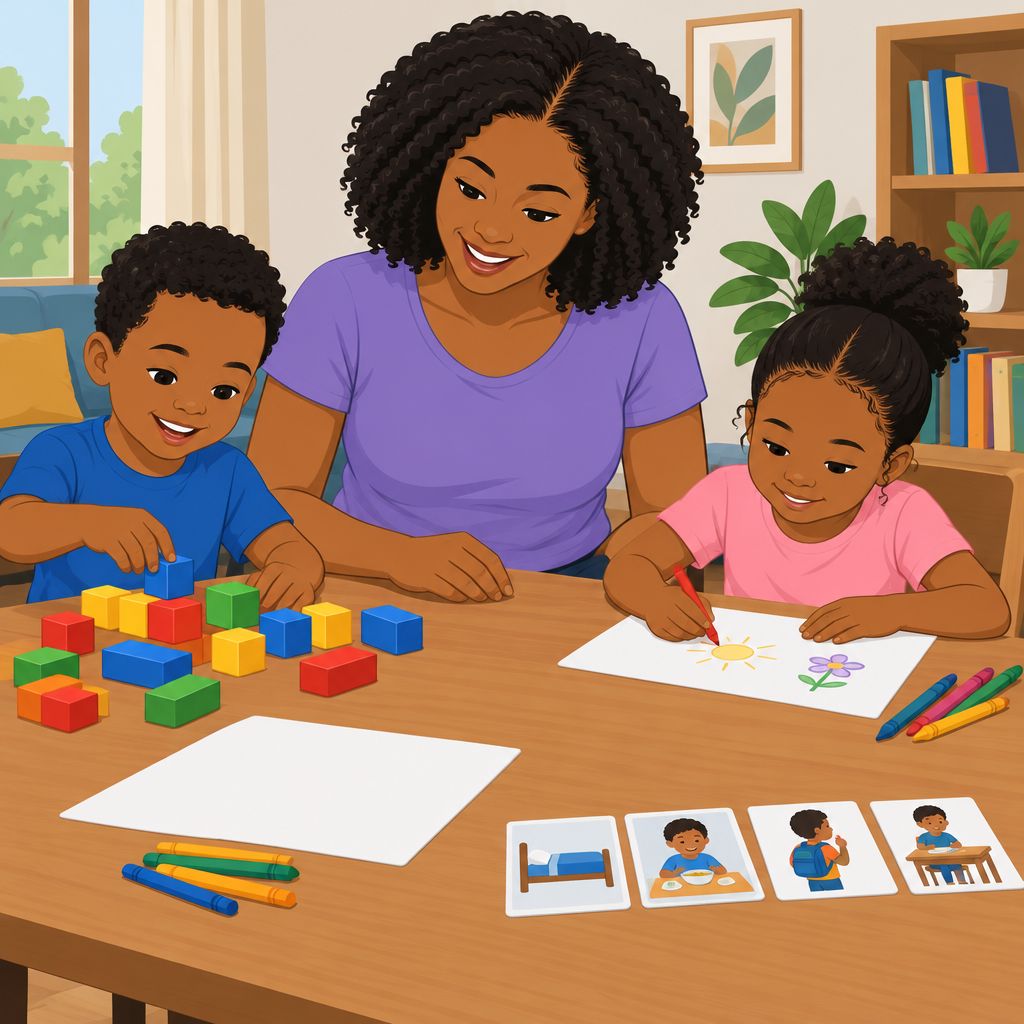
Simple Choices During Daily Routines
During everyday routines, offer children two simple choices.
For example, let them choose which belongings to pack first.
Then, encourage them to complete the task they selected.
These small decisions help children practise making choices independently.
Self-Care Practice at Home
Invite children to pack their belongings before leaving home.
Next, encourage them to put on their shoes without immediate assistance.
Also, let them practise opening and closing suitable containers.
Give clear instructions, then allow enough time for them to try.
Responsibility Through Step-by-Step Practice
Break each responsibility into simple steps when needed.
For instance, children can gather belongings and place them together.
Afterward, invite them to check their items.
Finally, ask them to return belongings to their usual place.
Offer encouragement while children manage suitable tasks themselves.
Gradually, these routines support independence and self-care.
See Related Content: How to Turn Everyday Chores Into Fun Learning Activities
Playful Challenges for Curious Minds
Plan activities that invite children to explore, think, and try different approaches.
These experiences encourage curiosity, problem-solving, persistence, and creative thinking.
Children can explore ideas through playful challenges.
Puzzles That Encourage Problem-Solving
Offer puzzles that match the child’s current level of challenge.
Invite the child to examine each piece before choosing where it belongs.
Encourage the child to try another approach when the first attempt fails.
Instead of solving the puzzle, ask questions that support careful thinking.
For example, ask what the child notices or where a piece might fit.
Allow enough time for the child to continue without rushing.
Celebrate persistence by recognising the effort behind each attempt.
Building Activities for Creative Thinking
Provide opportunities for children to build, arrange, and change their ideas.
Invite them to create something using available building materials.
Ask children what they want to make before they begin.
Then, let them choose how to develop their idea.
Encourage children to examine their structures and consider possible changes.
If a structure changes, ask what the child might try next.
Consequently, children can practise flexible thinking while developing their own designs.
Treasure Hunts with Simple Clues
Create a treasure hunt that encourages children to observe and think carefully.
Offer a clue that guides the child toward the next part of the activity.
Keep the clues simple enough for the child to understand independently.
Invite children to search, pause, and discuss what they notice.
Let them suggest where they might look next.
When children experience difficulty, encourage them to revisit the clue.
Additionally, allow children to create clues for someone else.
This approach gives them opportunities to plan, communicate, and think creatively.
Open-Ended Challenges
Present challenges that allow children to choose their own methods.
Ask them to find different ways to complete the same task.
Avoid showing one correct solution at the beginning.
Instead, invite children to explain their choices and compare their ideas.
Encourage them to change their plans when new ideas appear.
Support persistence by treating mistakes as chances to try again.
Furthermore, ask children to describe what they might do differently next time.
Keeping Children Engaged
Offer short activities, then adjust the challenge when interest changes.
Observe which parts encourage the child to continue exploring.
Next, provide another opportunity to use that interest in a fresh way.
Give children space to lead while remaining available for encouragement.
Most importantly, focus on their thinking, effort, and willingness to try.
Move, Sing, Stretch, and Play
Active home activities help children practise coordination, body awareness, energy management, and participation.
These experiences encourage children to notice their bodies while joining enjoyable activities.
Moreover, varied movement helps children practise changing energy levels and following directions.
Use Songs With Actions
Choose songs that invite children to clap, tap, sway, march, or copy simple movements.
Encourage children to match their movements with the song’s rhythm.
Then, alternate energetic and gentle songs to practise managing different energy levels.
Invite children to pause when the music pauses.
Afterward, ask children to restart when the music begins again.
Play Movement Games
Offer movement games that involve stopping, starting, balancing, reaching, and changing direction.
For example, ask children to move like different animals without requiring characters or equipment.
Next, add simple instructions that encourage children to listen and respond physically.
Invite children to move slowly, quickly, quietly, or with wide actions.
These changes help children notice their bodies while controlling their movements.
Add Gentle Stretching
Include gentle stretches before or after active play.
Invite children to reach upward, bend carefully, extend their arms, and relax their shoulders.
Meanwhile, encourage slow breathing while children hold comfortable positions briefly.
Remind children to move within comfortable limits and avoid forcing any stretch.
Stretching can create a calm transition after energetic movement.
Explore Outdoor Movement
Use outdoor play to give children space for walking, running, jumping, and changing direction.
Encourage children to notice how their bodies move across different spaces.
Invite them to pause, look around, and choose their next movement.
Outdoor play also gives children opportunities to adjust their speed and energy.
Therefore, alternate active movement with quiet observation or gentle walking.
Practise Participation Rhythms
Create short activity periods that combine movement, pauses, and calm recovery.
Begin with a song, continue with a movement game, and finish with stretching.
This sequence helps children practise joining activities, following changes, and settling their bodies.
Offer encouragement as children participate, pause, and begin again.
Finally, let children help choose between movement options when appropriate.


