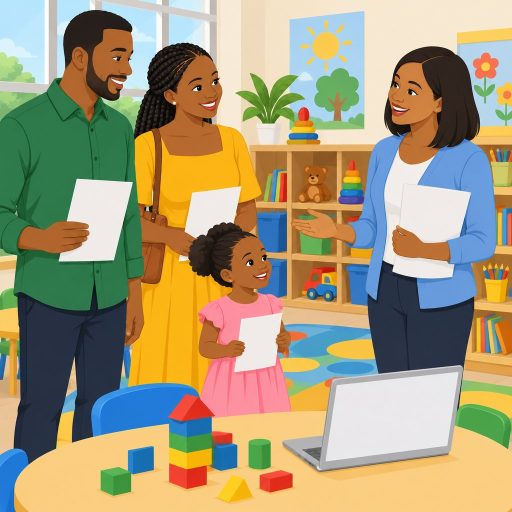




Building a Positive School Mindset
Begin conversations about school with warmth, curiosity, and encouragement.
Help your child view learning as a meaningful part of each school day.
Present each school day as an opportunity to explore ideas and discover experiences.
Enthusiastic Conversations About Learning
Describe learning as an opportunity to explore ideas and discover new experiences.
Ask your child what interests them before discussing school activities.
Also, listen carefully when your child shares thoughts about learning.
Respond with interest rather than turning every conversation into a performance review.
Respectful Conversations About Teachers
Talk about teachers with respect and encouragement.
Explain that teachers guide learning and support students during new experiences.
Invite your child to share questions or feelings about their teacher.
Then, acknowledge those feelings without creating unnecessary worry.
Friendly Conversations With Classmates
Discuss classmates as people your child may meet, learn with, and understand.
Encourage your child to approach new classmates with kindness and openness.
Remind your child that positive connections can begin through simple conversations.
However, avoid pressuring your child to form friendships immediately.
Parenting Made Just for You
Get personalized Parenting Solutions tailored to your child’s needs. Transform your parenting journey with expert guidance in 1-3 days.
Get StartedNew School Experiences
Present unfamiliar school experiences as chances to learn and adjust.
Use calm, reassuring language when your child mentions something unfamiliar.
Encourage questions because they can help your child express uncertainty.
Meanwhile, allow your child to share concerns without demanding instant confidence.
Encouragement Without Pressure
Recognize your child’s effort, curiosity, and willingness to participate.
Avoid making school feel like a test of your child’s worth.
Instead, offer steady encouragement that respects your child’s individual feelings.
Keep your message consistent about learning, teachers, classmates, and new experiences.
Encourage your child to approach each part of school with an open mind.
Preparation for the First School Day
Preparation can help your child approach the first school day with greater emotional and practical readiness.
Clear explanations can help your child understand what school may involve.
Regular practice can also make familiar tasks easier to manage.
The Daily School Routine
Begin by describing the daily routine in simple, clear language.
Explain what may happen before school, during school, and after school.
Unveil the Perfect Name that Tells Your Family's Story
Let us help you find a name that embodies your family's values, traditions, and dreams. Our personalized consultation weaves cultural insights to create a name that's uniquely yours.
Get StartedThen, discuss the order of activities without adding unnecessary detail.
Use familiar words so your child can understand each part more easily.
Also, invite your child to ask questions about the routine.
Answer each question honestly and calmly.
If you do not know an answer, say so clearly.
Afterward, explain that you will share more information when you know it.
Practice with Basic School Tasks
Practise simple tasks that your child may need during the school day.
For example, encourage your child to practise managing personal belongings.
In addition, practise asking for help when something feels difficult.
Show your child how to communicate a need using clear words.
Next, allow your child to repeat each task at a comfortable pace.
Offer guidance when necessary, but let your child attempt the task independently.
This practice can make familiar actions feel easier to manage.
Honest Answers About School
Listen carefully when your child raises concerns about starting school.
Pause before answering so you can respond to the actual question.
Use direct language instead of avoiding uncomfortable topics.
However, keep your answers brief enough for your child to understand.
Acknowledge uncertainty rather than creating details you cannot confirm.
For instance, explain that some information may become clearer later.
Encourage your child to continue asking questions whenever something feels confusing.
Emotional Readiness for School
Talk about feelings your child may experience before the first school day.
Explain that different feelings can occur during a new experience.
Invite your child to describe worries, excitement, or uncertainty.
Listen without dismissing or exaggerating those feelings.
Next, help your child identify questions that need clear answers.
Review those questions together before the first day.
Keep the conversation open so your child can return to it later.
A Simple Preparation Plan
Break preparation into small tasks that your child can understand.
Discuss what your child needs to remember for the first school day.
Practise the tasks again when your child wants more support.
Keep instructions consistent so your child hears the same guidance.
Finally, remind your child that questions remain welcome throughout the preparation.
Build Confidence Through Everyday Responsibility
Age-appropriate responsibilities help your child practise independence before and during school.
These tasks give your child regular opportunities to manage everyday expectations.
With guidance, your child can gradually handle more responsibilities independently.
Organise School Items
First, invite your child to organise school items with guidance when needed.
Encourage your child to check that items are ready for school.
Then, let your child take increasing responsibility for keeping those items organised.
Practise Following Instructions
Give clear instructions and allow your child time to listen and respond.
Next, ask your child to follow instructions independently when appropriate.
Offer calm reminders rather than completing every task for your child.
Encourage Help-Seeking
Teach your child to ask for help when a task feels unclear or difficult.
Explain that asking for help supports learning and independence.
Also, encourage your child to describe what they need clearly.
Offer Support Without Taking Over
Provide guidance while allowing your child to attempt each responsibility.
When your child struggles, encourage another attempt before stepping in.
As a result, your child can practise making decisions and managing responsibilities.
Learn More: What First-Time Parents Should Know About Nursery School
Make Learning Feel Natural at Home
At home, connect learning with stories, conversations, creative activities, and playful discovery.
This approach keeps learning enjoyable.
It introduces ideas children may encounter in school.
Explore Ideas Through Stories
Share stories that invite curiosity, imagination, and discussion.
After reading, ask your child what they noticed, wondered, or imagined.
Then, encourage them to describe characters, events, or possible endings.
Let your child retell the story through drawing, acting, or invented words.
As a result, storytelling becomes an active experience rather than a passive activity.
Keep Conversations Open
Talk about everyday observations and invite your child to share their thinking.
Ask open questions that encourage explanations instead of single-word answers.
For example, ask what your child notices, predicts, remembers, or wants to explore.
Also, listen patiently and respond to their ideas with genuine interest.
These conversations create enjoyable opportunities for children to express their thoughts.
Encourage Creative Expression
Offer creative activities that let children explore ideas in flexible ways.
Invite them to draw, build, move, pretend, or make up stories.
Rather than correcting every detail, ask them to explain their choices.
Next, encourage them to change, extend, or revisit their creations.
This keeps the focus on curiosity, participation, and enjoyment.
Use Play to Connect Ideas
Play can help children explore ideas they may encounter in school.
Use pretend play to create simple situations involving stories, conversations, or shared activities.
Let your child choose roles, guide the action, and develop the play.
Meanwhile, join when invited and follow their ideas.
Keep activities relaxed, so learning stays connected to enjoyment.
Follow Your Child’s Interests
Notice which topics, stories, or activities capture your child’s attention.
Then, build related conversations, creative choices, and playful moments around those interests.
Offer invitations instead of demanding a particular response.
If interest fades, pause and return to the activity another time.
Consequently, home learning can remain positive, flexible, and enjoyable.
Uncover the Details: How To Know If Your Child Is Ready For School
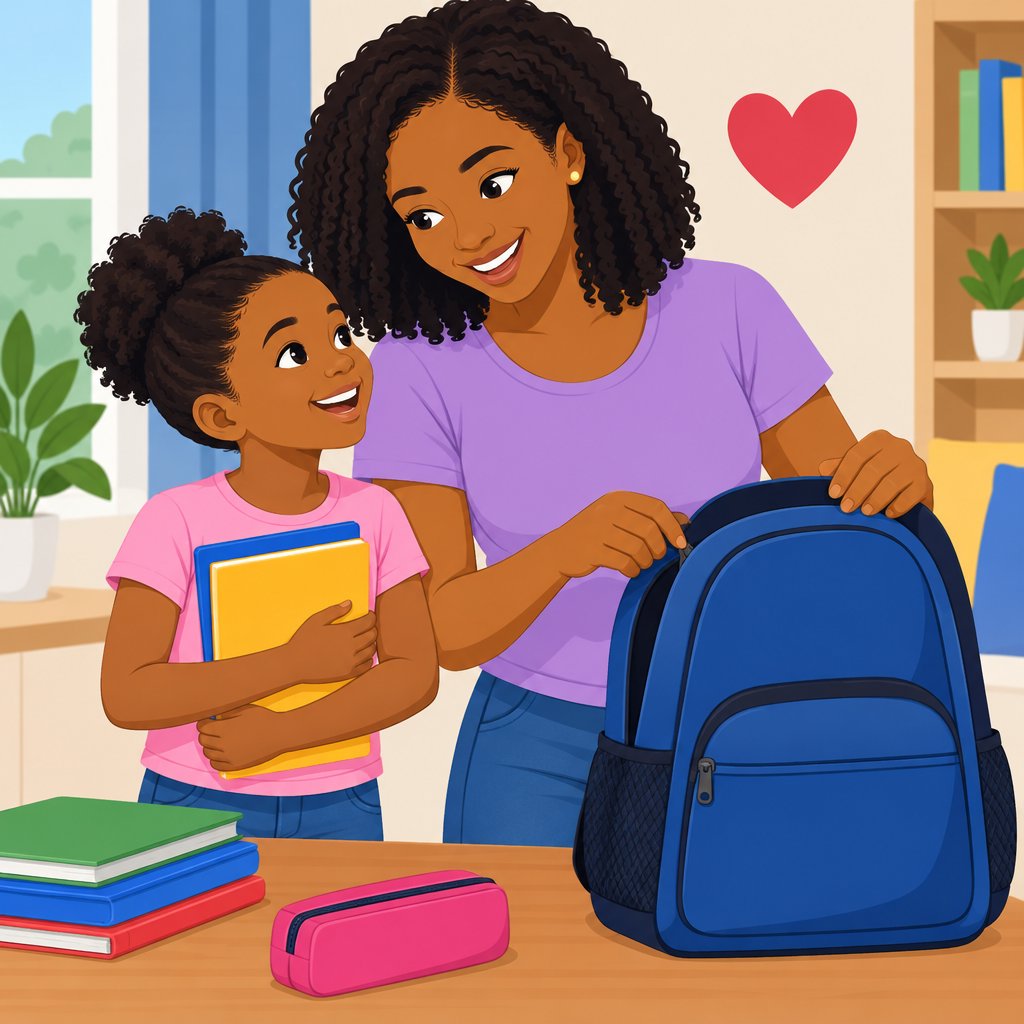
Build Positive Social Habits
Positive social habits help your child participate comfortably with others at school.
Your child can practise these habits during ordinary conversations and shared activities.
Regular practice can make respectful social choices feel more familiar over time.
Practise Friendly Greetings
Encourage your child to greet others politely.
For example, practise simple greetings when meeting teachers, classmates, and other people.
Also, help your child notice when someone offers a greeting.
Then, encourage your child to respond with words, eye contact, or a friendly gesture.
Encourage Sharing
Explain that sharing gives others opportunities to participate.
Meanwhile, practise taking turns with toys, materials, or activities.
Encourage your child to offer an item before someone asks.
When sharing feels difficult, acknowledge your child’s feelings and guide a fair choice.
Strengthen Listening Skills
Teach your child to listen while another person speaks.
Next, encourage your child to pause, look toward the speaker, and wait before responding.
Ask your child to repeat important instructions in their own words.
Additionally, remind your child to listen without interrupting.
Support Cooperation
Show your child how people can work together toward a shared activity.
Encourage your child to contribute ideas while considering other people’s suggestions.
Practise completing shared tasks by taking turns and following agreed directions.
Finally, celebrate cooperative choices with specific, encouraging words.
Handle Disagreements Respectfully
Teach your child to express different opinions calmly.
When disagreements occur, encourage your child to use respectful words.
Help your child explain what happened without blaming another person.
Then, guide your child toward listening and considering another viewpoint.
Encourage your child to suggest a fair solution when possible.
If resolving the disagreement feels difficult, remind your child to seek adult help.
Make Social Practice Consistent
Discuss one social habit at a time.
Practise the habit through ordinary conversations and shared activities.
Notice your child’s effort, and provide gentle guidance when needed.
Over time, consistent practice can make respectful social choices feel more familiar.
Uncover the Details: How To Choose The Right First School In Nigeria
Creating an Organised School-Day Routine
A predictable routine helps school mornings feel organised and manageable.
Start by planning sleep, dressing, meals, homework, and punctuality together.
This approach gives each school day a clear and consistent structure.
Protected Sleep Time
Set a regular bedtime that gives your child enough time to rest.
Keep the bedtime routine calm and consistent each evening.
Also, begin preparations early so your child does not feel rushed.
Encourage your child to follow the same sequence each night.
For example, the sequence can include preparing for bed, changing, and settling down.
Meanwhile, keep morning expectations in mind when planning the evening routine.
Simplified Dressing
Choose school clothes in advance to reduce morning decisions.
Then, place the selected clothes where your child can find them easily.
Check that the clothing remains suitable for the school day.
Allow enough time for dressing without creating unnecessary pressure.
If plans change, explain the new clothing choice clearly and calmly.
Nutritious Meal Planning
Plan breakfast so your child can begin the day without rushing.
Prepare meal items before morning whenever possible.
Keep mealtimes consistent across school days.
Give your child enough time to eat before leaving home.
Additionally, organise required school meal items during the evening.
This approach connects meal preparation with the wider routine.
Manageable Homework
Set a regular homework time after the school day.
Choose a suitable place where your child can focus.
Keep homework expectations clear and straightforward.
Build a short pause into the routine before homework begins.
Afterward, encourage your child to complete the work within the planned period.
Finally, return completed work to the appropriate school items.
Punctual Morning Preparation
Work backwards from the required departure time.
Allow time for waking, dressing, eating, and leaving.
Use clear reminders as each morning stage approaches.
Keep frequently needed school items in one consistent place.
Complete as many morning preparations as possible the previous evening.
Additionally, review the next day before bedtime.
This review can identify clothing, meal, homework, or timing needs.
Shared Routine Reviews
Notice which parts of the routine work smoothly.
Then, adjust any step that regularly causes delays or confusion.
Keep changes simple so your child can follow them consistently.
Finally, maintain a calm sequence that makes each school day easier to manage.
Discover More: Questions To Ask Before Choosing A Nigerian School
Build a Strong Partnership With the School
Work closely with your child’s teacher and school from the beginning.
This partnership helps adults understand your child and respond thoughtfully to concerns.
Therefore, consistent communication can support thoughtful responses to your child’s needs.
Share Relevant Information
First, share information that helps the teacher understand your child’s needs.
Explain important strengths, concerns, preferences, or changes that may affect your child at school.
Keep your communication clear, respectful, and focused on supporting your child.
Also, tell the teacher what your child communicates about school experiences.
However, protect your child’s privacy by sharing only relevant information.
Listen to the Teacher’s Feedback
Make time to listen carefully when the teacher discusses your child.
Ask questions when you need clarification.
Then, consider the teacher’s observations alongside what your child shares at home.
Additionally, listen for patterns in your child’s experiences rather than focusing on one conversation.
Thank the teacher for sharing information about your child’s school experience.
Address Concerns Early
If a concern appears, speak with the teacher calmly and promptly.
Early conversations can help adults understand the situation more clearly.
Begin by describing what you have noticed without blaming anyone.
Next, ask what the teacher has observed at school.
Then, discuss practical ways to support your child together.
Keep the conversation focused on your child’s needs and possible next steps.
Keep Communication Constructive
Use respectful language, even when emotions feel strong.
Listen fully before responding to the teacher’s perspective.
Likewise, explain your concerns directly instead of allowing confusion to grow.
Agree on how you and the school will continue sharing relevant information.
Follow up when necessary and provide updates about changes at home.
Most importantly, show your child that trusted adults can work together.
Notice What Matters Beyond Grades
Children can develop a positive connection with school when adults recognise more than finished marks.
Adults can support this connection by noticing daily experiences beyond marks.
This wider attention helps children feel seen for how they learn and participate.
Praise Effort and Progress
First, praise the effort your child gives to a task.
Notice persistence when work feels challenging.
Also, point out progress from an earlier attempt.
Specific comments help your child understand which actions deserve recognition.
Value Kindness
Next, recognise kindness as an important part of your child’s school experience.
Notice thoughtful choices, respectful actions, and care toward others.
Then, describe the action clearly instead of offering only general praise.
Encourage Curiosity
Welcome your child’s questions and show interest in what they wonder about.
Ask your child to share thoughts, observations, and ideas.
Likewise, celebrate curiosity alongside effort, progress, and kindness.
Keep Grades in Perspective
Grades can provide information, but they should not become the only focus.
Ask what your child learned, tried, or noticed before discussing a result.
Afterward, acknowledge the work behind the result.
This response keeps attention on learning instead of placing value on marks alone.
Avoid Comparisons
Finally, avoid comparing your child with other children.
Each child deserves encouragement based on personal effort and progress.
Instead, discuss your child’s own choices, questions, and developing skills.
This approach keeps attention on growth rather than competition.
Additional Resources
Google search results for How To Help Your Child Love School From The Start Education
Bing search results for How To Help Your Child Love School From The Start Education