




Understanding Nursery School
Nursery school gives young children an early learning setting.
It combines learning, daily participation, and preparation for future school experiences.
Therefore, families can view nursery school as more than supervised care.
Purpose and Focus
Nursery school creates an environment focused on early development and learning.
Children take part in activities that support participation and growth.
As a result, the setting offers more than basic supervision.
The Learning Approach
Nursery school uses age-appropriate methods to introduce early learning.
Children may learn through guided activities, routines, interaction, and exploration.
Moreover, educators can encourage participation, communication, and group learning.
The Daily Routine
A nursery school day follows a planned routine.
The routine may include learning periods, activities, transitions, and other experiences.
Parents can request a routine overview before choosing a setting.
How Nursery School Differs From Other Settings
Families can compare nursery school with other early childhood settings.
Each setting may have a different purpose, routine, and learning approach.
Understanding these differences helps parents evaluate available options.
Parenting Made Just for You
Get personalized Parenting Solutions tailored to your child’s needs. Transform your parenting journey with expert guidance in 1-3 days.
Get StartedNursery School and Daycare
Nursery school and daycare represent different types of early childhood settings.
Nursery school centers its experience on early learning and participation.
Meanwhile, daycare may serve a different purpose, depending on the setting.
Nursery School and Primary School
Nursery school comes before primary school in a child’s education.
It introduces children to early learning experiences and group routines.
Primary school provides a later educational setting with different expectations.
Questions for Families
Families can compare nursery schools by examining several basic features.
They should ask how educators approach early learning.
They can also ask how the setting supports the next educational step.
- Ask about the program’s main purpose.
- Ask how educators approach early learning.
- Ask what a typical day includes.
- Ask how the setting differs from daycare.
- Ask how the setting differs from primary school.
Recognizing Signs of Nursery School Readiness
Readiness can appear differently for every child.
Therefore, consider consistent patterns instead of expecting every skill at once.
These patterns can guide family observations.
Emotional Readiness
An emotionally ready child may separate from a caregiver with growing confidence.
They may accept reassurance when separation feels difficult.
Unveil the Perfect Name that Tells Your Family's Story
Let us help you find a name that embodies your family's values, traditions, and dreams. Our personalized consultation weaves cultural insights to create a name that's uniquely yours.
Get StartedAdditionally, they may recover after experiencing frustration or disappointment.
They may express basic feelings through words, gestures, or facial expressions.
Over time, children can become more comfortable with unfamiliar adults and settings.
However, occasional hesitation does not automatically indicate unreadiness.
Communication Readiness
A ready child may communicate basic needs, preferences, and discomfort.
They may use words, gestures, or other familiar ways to express themselves.
They may understand simple directions and respond to familiar requests.
Also, they may listen briefly during conversations, stories, or group moments.
They may ask for help when they cannot complete a task independently.
Clear communication can help children participate and connect with others.
Self-Care Readiness
Self-care readiness involves participating in everyday tasks with increasing independence.
A child may help manage clothing, meals, personal items, or cleanup.
They may attempt familiar tasks before requesting assistance.
They may also communicate when they need support with personal care.
Furthermore, they may follow simple routines with reminders.
Children do not need perfect independence before beginning nursery school.
Instead, willingness to try can provide an important sign of progress.
Social Readiness
A socially ready child may show interest in being near other children.
They may play alongside others, even without sustained cooperation.
They may begin practicing turn-taking, sharing space, and waiting briefly.
They may respond to familiar adults and accept simple guidance.
Additionally, they may notice another child’s actions or feelings.
Social readiness develops gradually through repeated interactions and supportive guidance.
Observing Readiness as a Whole
Readiness includes emotional, communication, self-care, and social abilities together.
Therefore, consider how these areas work together during familiar routines.
Notice whether your child attempts tasks, communicates needs, and accepts support.
Also, observe how your child responds when routines change slightly.
Small signs of progress can matter more than complete independence.
When questions remain, discuss your observations with the nursery school.
This conversation can clarify expectations without turning readiness into a pass-or-fail judgment.
Choosing the Right Nursery School
First, gather clear information before comparing nursery schools.
Then, ask consistent questions about safety, staff, learning, facilities, discipline, and communication.
Compare each school’s answers against your child’s needs and your family’s expectations.
Safety and Supervision
Ask how the school protects children throughout the day.
Who supervises children during classroom activities and transitions?
How does the school manage arrivals, departures, and authorized pickups?
What procedures guide responses to injuries, emergencies, or health concerns?
How does the school share safety information with parents?
Also, ask how staff identify and respond to individual safety needs.
Staff Experience and Support
Ask who will teach and supervise your child.
What experience does each staff member bring to nursery education?
How does the school support staff when children need additional guidance?
Who answers parent questions about classroom experiences?
Additionally, ask how staff maintain consistent expectations across the school.
Class Size and Attention
Ask how many children join each class.
How many adults support the class during daily activities?
How does the school provide individual attention within the group?
How does staff organization change during transitions or busy periods?
Consider whether the answers explain how children receive support and participation opportunities.
Teaching Methods and Learning
Ask how teachers plan learning experiences for nursery children.
What teaching methods guide classroom activities?
How do teachers encourage curiosity, communication, creativity, and cooperation?
How do teachers adapt activities for different interests or abilities?
How does the school balance guided learning with children’s independent exploration?
Also, ask how teachers observe children’s progress and share those observations.
Facilities and Learning Spaces
Ask which spaces children use during the school day.
How does the school keep classrooms suitable for learning and play?
Which facilities support movement, creativity, quiet time, and group activities?
How does the school organize materials so children can access them safely?
Ask how the school maintains cleanliness and manages shared spaces.
During a visit, notice whether the environment appears welcoming, organized, and appropriate for children.
Discipline and Guidance
Ask how staff respond when children struggle with behavior.
What guidance methods help children understand expectations?
How do teachers handle conflicts between children?
How does the school support children while maintaining clear boundaries?
What behavior information does the school share with parents?
Ensure the answers explain how staff use calm, consistent, and respectful guidance.
Communication with Parents
Ask how the school communicates with families.
How often do parents receive updates about classroom experiences?
Who should parents contact with questions or concerns?
How does the school share important changes affecting children?
What opportunities allow parents to discuss their child’s experiences?
Additionally, ask how the school handles differing concerns from parents and staff.
Comparing Your Options
Write down each school’s answers before making comparisons.
Then, review which responses address your family’s questions clearly.
Look for consistent information across safety, staffing, learning, discipline, and communication.
Finally, choose the setting that best matches your child’s needs and your family’s expectations.
Uncover the Details: How To Know If Your Child Is Ready For School
Preparing for the Transition
Begin preparing your child gradually before nursery school starts.
Use calm conversations and familiar routines to make the transition feel manageable.
This gradual preparation can help your child approach the change with greater confidence.
Introducing the Idea of School
Talk about school using simple, positive language.
Explain that school provides time for learning, playing, and meeting others.
Answer your child’s questions honestly without adding unnecessary details.
Also, invite your child to share feelings about starting school.
Listen carefully and acknowledge both excitement and worry.
Keep conversations brief when your child loses interest.
Return to the topic regularly so your child can process the change gradually.
Avoid presenting school as a threat, punishment, or test.
Instead, describe school as a new experience your child can explore.
Practising Simple Routines
Practise routines your child may follow during the school day.
Encourage your child to follow simple steps in a consistent order.
For example, practise preparing belongings, washing hands, and tidying afterwards.
Keep practice relaxed and allow your child time to respond.
Use clear instructions instead of giving several directions at once.
Offer reminders when needed, then gradually reduce your support.
Practising routines helps your child become familiar with everyday expectations.
However, stay flexible because children develop skills differently.
Building Independence
Give your child regular opportunities to complete manageable tasks independently.
Let your child attempt each task before offering assistance.
Stay nearby and provide encouragement without taking control.
Teach your child to communicate when help becomes necessary.
Use simple language that supports confidence and persistence.
Praise your child’s effort rather than expecting perfect performance.
Allow extra time when your child practises a new skill.
Gradually encourage your child to make simple choices within familiar routines.
These choices can help your child practise decision-making before school begins.
Managing Separation Anxiety
Recognise that separation may feel difficult for your child.
Stay calm because your child may respond to your emotional cues.
Create a clear goodbye routine and repeat it consistently.
Keep goodbyes warm, simple, and focused.
Tell your child that you will leave after saying goodbye.
Avoid prolonging the goodbye when your child shows distress.
Reassure your child without promising exact events or times.
Encourage your child to express feelings using simple words.
Acknowledge the feeling first, then remind your child about the routine.
Maintain consistency while allowing your child time to adjust.
Finally, share relevant concerns with nursery school staff.
Work with staff to support a calm and consistent separation approach.
You Might Also Like: How To Choose The Right First School In Nigeria
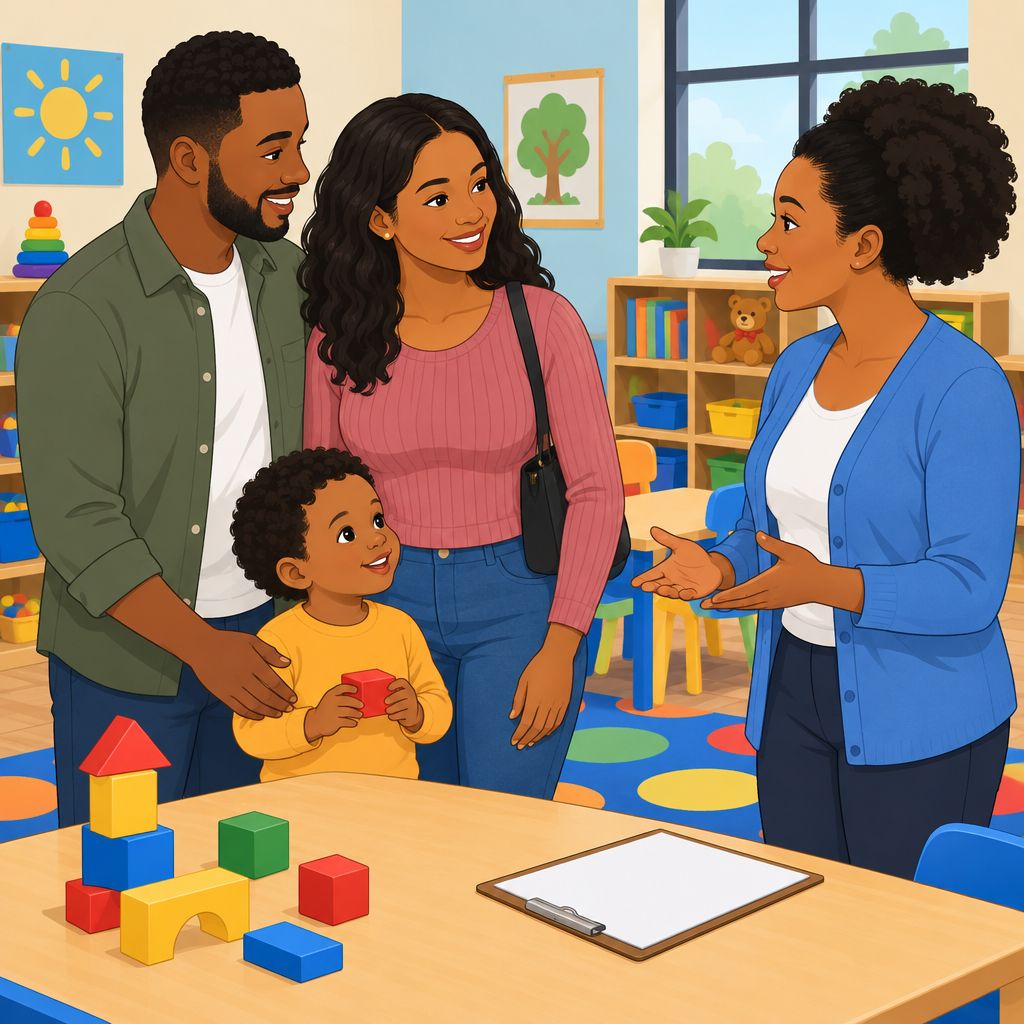
Preparing Nursery School Essentials
Gather essential items before your child begins nursery school.
First, review the school’s instructions carefully.
Then, prepare each item according to the school’s requirements.
Complete School Forms
Complete every required school form before your child attends.
Check each form for missing information.
Provide accurate details wherever the school requests them.
Keep a record of submitted forms for future reference.
Additionally, ask the school about any remaining paperwork.
Choose Suitable Clothing
Select comfortable clothing that allows your child to move freely.
Choose clothing that your child can manage independently.
Pack extra clothing in case your child needs a change.
Include items that suit the school’s clothing expectations.
Mark each clothing item clearly with your child’s name.
Prepare Feeding Items
Pack the feeding items that the school requests.
Label each feeding item clearly before bringing it to school.
Make sure your child can identify personal feeding items.
Follow the school’s instructions for sending and storing these items.
Ask the school which feeding details require written information.
Gather Learning Materials
Prepare the learning materials listed by the nursery school.
Provide only the materials that the school requests.
Label personal learning materials before your child takes them.
Keep materials organised so your child can find them easily.
Check the materials regularly and replace items when necessary.
Share Health Information
Give the school complete health information about your child.
Record relevant health details clearly on the required forms.
Tell the school about health needs that affect your child’s day.
Update the school whenever important health information changes.
Ask how the school wants families to communicate health updates.
Label Personal Belongings
Clearly label every belonging your child takes to nursery school.
Use labels that remain easy to read.
Place labels where staff can identify belongings quickly.
Label clothing, feeding items, and learning materials separately.
Check labels regularly to ensure they remain attached and legible.
Use a Simple Preparation Checklist
Create one checklist for all required nursery school essentials.
- School forms
- Clothing
- Feeding items
- Learning materials
- Health information
- Clearly labelled belongings
Review the checklist before your child attends nursery school.
Finally, confirm any unanswered questions with the school.
Learn More: Questions To Ask Before Choosing A Nigerian School
Understanding the First Weeks
The first weeks may bring different reactions as your child adjusts to nursery school.
Some children may show curiosity, while others may hesitate or resist participation.
Additionally, your child’s feelings may change from one day to another.
Recognising Adjustment Responses
Your child may cry, cling, become quiet, or resist entering the classroom.
These reactions can communicate uncertainty, discomfort, or difficulty with the new experience.
Therefore, listen carefully and respond with patience rather than criticism.
Notice what happens before, during, and after difficult moments.
This observation can help you describe your child’s experience clearly to teachers.
Responding to Tears
Acknowledge your child’s feelings using calm, simple words.
For example, you can say that leaving feels difficult right now.
Then, offer reassurance without dismissing your child’s concerns.
Keep your words calm and consistent during arrival.
Also, follow the school’s guidance for handling separation and transitions.
Avoid making promises that you cannot keep.
Instead, explain what you know about the immediate transition.
Responding to Resistance
Resistance may appear through refusal, delays, silence, or repeated objections.
First, give your child space to express those feelings safely.
Next, encourage cooperation with clear and manageable directions.
Offer limited choices when the school allows them.
For instance, your child might choose between two acceptable options.
However, avoid turning arrival into a prolonged negotiation.
Maintain a supportive tone while respecting the school’s routines.
Working With Teachers
Share relevant observations with your child’s teacher.
Explain what your child says, does, or struggles to communicate.
Ask how your child participates after you leave.
Also, ask which responses help your child engage.
Teachers can help you understand patterns that remain difficult to see.
Follow agreed approaches consistently at home and during school transitions.
Knowing When to Seek Support
Contact the teacher when tears or resistance continue and concern you.
Seek guidance when your child’s reactions become more difficult to manage.
Also, speak with teachers when your child cannot communicate ongoing concerns.
Describe specific behaviours rather than relying only on general impressions.
Ask what support the nursery school can provide.
Then, discuss whether further communication or additional support would help.
Regular, respectful communication can help adults respond consistently.
Explore Further: How To Support Your Child’s First Learning Experience
Building a Strong Parent-Teacher Partnership
A strong partnership helps parents and teachers share information about the child’s nursery school experience.
Parents and teachers can exchange observations throughout the school year.
They can also share questions and ideas about the child’s experiences.
Sharing Relevant Information
Start by sharing information that helps teachers understand your child’s needs and experiences.
Explain your child’s interests, communication style, comfort levels, and typical responses.
Also, mention changes that might affect your child’s participation or mood.
Share relevant health information according to the nursery school’s communication procedures.
Keep teachers informed when your child develops new skills or needs additional support.
However, focus on information that helps teachers respond appropriately during nursery school.
Creating Clear Communication
Ask teachers how they prefer parents to share information and raise questions.
Use the agreed communication method so important messages reach the right person.
Before conversations, prepare the main points you want to discuss.
Then, listen carefully to the teacher’s observations and explanations.
Clear communication helps both sides understand the child’s experiences more accurately.
Receiving Updates
Ask what types of updates teachers usually provide about your child.
These updates may address participation, interactions, learning, or daily experiences.
Request clarification when an update leaves you uncertain about what happened.
Similarly, share information about changes you notice outside nursery school.
Regular exchanges can help parents and teachers notice patterns over time.
Keep conversations respectful, specific, and focused on supporting your child.
Raising Concerns
Raise concerns promptly when something seems unclear or troubling.
Describe what you noticed without assigning blame.
Then, ask the teacher for their observations and perspective.
Discuss possible next steps together when the concern requires further attention.
If needed, ask how the nursery school handles ongoing concerns.
Maintain open communication while the teacher and family consider appropriate support.
Supporting Learning at Home
Ask teachers which skills or interests your child currently explores at nursery school.
Then, encourage related conversations and activities at home.
Use ordinary daily moments to invite your child to communicate, explore, and practise independence.
Follow your child’s interests while keeping activities relaxed and manageable.
Share your child’s questions, discoveries, and difficulties with the teacher.
This information helps teachers connect home experiences with nursery school learning.
Rather than recreating the classroom, provide encouragement and opportunities for your child to participate.
Working Together Over Time
Partnerships develop through consistent communication and mutual respect.
Stay open to feedback about your child’s experiences and progress.
Likewise, offer teachers information that supports a fuller understanding of your child.
When parents and teachers exchange information regularly, they can respond more thoughtfully to changing needs.
Evaluating Your Child’s Nursery Experience
Regular evaluation helps you understand whether nursery continues to support your child and family.
Ongoing review can reveal changing needs over time.
Use observations and conversations to assess your child’s experience.
Monitoring Your Child’s Wellbeing
Begin by noticing how your child appears before, during, and after nursery.
Consider whether your child seems comfortable discussing nursery experiences.
Also, notice changes in mood, behaviour, energy, or willingness to attend.
Look for patterns rather than judging one difficult day.
Then, share relevant observations with the nursery team.
Ask staff how they support your child when concerns arise.
Furthermore, make space for your child’s feelings without leading their answers.
Listen carefully, and encourage your child to describe experiences in their own words.
Reviewing Development and Learning
Nursery should continue encouraging your child’s development through suitable experiences.
Ask staff what skills your child currently practises.
Next, discuss how the nursery recognises emerging interests and abilities.
Consider whether activities encourage curiosity, communication, independence, and social participation.
However, avoid comparing your child’s development with other children.
Instead, focus on your child’s individual progress and changing needs.
Ask how staff adapt support when your child finds something difficult.
Additionally, discuss how the nursery shares observations about learning.
Understanding Relationships and Belonging
Positive relationships can influence how secure and engaged your child feels.
Notice whether your child talks about familiar adults or other children.
Ask how staff help children join activities and manage disagreements.
Also, find out how adults respond when children need reassurance.
Consider whether your child feels heard, respected, and included.
If your child describes a concern, listen calmly before seeking further information.
Then, discuss the concern with the appropriate nursery staff member.
Clear communication can help adults understand your child’s experience more fully.
Tracking Progress Through Ongoing Conversations
Keep brief notes about questions, observations, and feedback from nursery.
These notes can help you identify recurring themes over time.
During conversations, ask for specific descriptions rather than general reassurance.
For example, ask what your child enjoys and where support remains helpful.
Furthermore, ask which strategies staff use to encourage participation.
Share changes at home that might affect your child’s nursery experience.
Then, agree how you and the nursery will communicate future updates.
Review progress alongside your child’s wellbeing, relationships, and developing independence.
Checking Whether the Arrangement Still Fits
Your family’s needs may change as your child develops.
Therefore, review whether the nursery remains suitable for your current circumstances.
Consider the arrangements, communication, support, and experience that matter to your family.
Ask whether the nursery can continue meeting your child’s needs.
If your concerns remain, raise them clearly and respectfully with staff.
Explain what you have noticed and what support you hope to discuss.
Afterward, consider whether the response addresses your concerns.
Finally, make decisions using your child’s wellbeing and your family’s needs together.
Additional Resources
Google search results for What First-Time Parents Should Know About Nursery School Education
Bing search results for What First-Time Parents Should Know About Nursery School Education


