




Understanding Classroom Behaviour
Classroom behaviour describes how children listen, respond, move, and interact during learning.
At home, adults can explain each behaviour using clear and simple language.
Clear explanations help children understand what each classroom situation requires.
Listening Carefully
Listening means paying attention when someone speaks.
It also means looking towards the speaker when appropriate.
Additionally, listening includes avoiding interruptions while another person talks.
Following Instructions
Following instructions means completing the actions someone requests.
First, the child listens to the instruction.
Then, the child follows each requested step.
If the instruction seems unclear, the child can ask for help.
Waiting for a Turn
Waiting means allowing others to speak or act first.
Therefore, the child avoids interrupting or taking another person’s turn.
The child can remain ready while waiting.
Meanwhile, the child can listen to what others say.
Staying Seated When Required
Staying seated means remaining in the assigned place when necessary.
Parenting Made Just for You
Get personalized Parenting Solutions tailored to your child’s needs. Transform your parenting journey with expert guidance in 1-3 days.
Get StartedThis behaviour helps the child remain available for classroom activities.
However, the child should follow any instruction about moving.
Adults can explain when sitting remains necessary.
Respecting Others
Respect means treating classmates and adults considerately.
It includes using suitable words and actions.
Furthermore, respect means allowing others to learn without unnecessary disruption.
It also means recognising that other people need space and attention.
Participating Appropriately
Participation means joining activities in an expected way.
The child can respond when invited to contribute.
The child can also complete requested actions during activities.
Additionally, participation includes listening while others contribute.
Recognising Different Expectations
Each classroom behaviour supports a shared learning environment.
Therefore, children need to notice what each situation requires.
One activity may require listening quietly.
Unveil the Perfect Name that Tells Your Family's Story
Let us help you find a name that embodies your family's values, traditions, and dreams. Our personalized consultation weaves cultural insights to create a name that's uniquely yours.
Get StartedAnother activity may require speaking, moving, or sharing.
Adults can discuss these differences using straightforward descriptions.
Practising Respectful Communication
Children can practise respectful communication at home before using these skills with teachers and classmates.
Begin with simple conversations that encourage children to speak clearly and listen carefully.
These conversations can prepare children to use respectful communication during school interactions.
Greeting Others Politely
Teach children to greet others using polite words and a respectful tone.
Practise greetings during everyday interactions at home.
Also, encourage children to face the person they greet when appropriate.
Then, help them respond politely when someone greets them.
Using Polite Language
Show children how to choose respectful words when speaking with others.
Encourage them to use polite expressions when making requests.
Explain that their tone can support respectful communication.
Next, practise changing harsh words into calmer, more appropriate language.
For example, children can restate demands as polite requests.
Asking Questions Clearly
Help children practise asking questions when they need information or clarification.
Encourage them to use words that explain what they want to understand.
Meanwhile, teach children to wait until the other person finishes speaking.
Then, invite them to ask their question calmly.
Practise questions about instructions, conversations, and classroom activities.
Disagreeing Calmly
Children can learn to express different opinions without using disrespectful words.
Encourage them to explain their viewpoint calmly.
Teach children to listen when someone holds a different opinion.
Remind them that disagreement does not require shouting or insulting language.
Practise respectful phrases that help children share another perspective.
Afterward, ask children to repeat their ideas using a calmer tone.
Choosing Appropriate Words
Discuss how children’s words can affect teachers and classmates.
Help them identify words that show respect during school conversations.
Encourage children to avoid words that insult, interrupt, or dismiss others.
Instead, guide them toward language that communicates needs and opinions respectfully.
Practise choosing suitable words for different conversations.
Building Communication Habits
Use short role-play conversations to practise greetings, questions, requests, and disagreements.
Give children opportunities to try each conversation more than once.
Offer specific guidance after each attempt.
Next, ask children which words and tones sounded respectful.
Finally, encourage them to use these communication habits during school-related conversations.
Building Listening and Instruction-Following Skills
Home practice can help children strengthen the skills they use when listening and following directions.
First, give one short instruction at a time.
Use direct words that clearly describe the expected action.
Clear Directions
Then, ask the child to repeat the direction.
This check shows whether the child heard and remembered the instruction.
Gradually, offer directions with more than one step.
However, add steps only when the child can manage the current instruction.
Practising Attention
Choose a calm moment for short listening activities.
Ask the child to pause, look toward you, and listen before acting.
Next, give a simple direction connected to the activity.
Afterward, ask the child to explain what they need to do.
Use reminders when the child starts before hearing the full instruction.
For example, say, “Listen first, then begin.”
Building Memory Through Simple Tasks
Give the child a short sequence of actions to remember.
Ask the child to complete the steps in the stated order.
Invite the child to repeat the sequence before starting.
Then, let the child work through the task without immediate reminders.
If the child forgets, repeat the direction calmly.
Afterward, ask which step the child completed and which step remains.
Supporting Task Completion
Choose activities with a clear beginning, middle, and end.
Explain the expected task before the child starts.
Encourage the child to finish one step before moving onward.
Use brief prompts that return attention to the current instruction.
For instance, say, “Check what you need to do next.”
After the task, ask the child to describe the completed steps.
This conversation helps the child notice how instructions guide actions.
Teaching Clarifying Questions
Children may need help when an instruction seems unclear.
Therefore, teach the child to pause instead of guessing.
Model questions such as, “What should I do next?”
Also, model, “Can you explain that again?”
Invite the child to ask for clarification during home activities.
Respond by restating the direction in simple language.
Then, ask the child to repeat the clarified instruction.
Calm Practice and Review
Keep practice brief enough for the child to remain engaged.
Offer one opportunity to listen, remember, act, and review.
When the child misses a step, return to the instruction.
Next, let the child try again with a clear direction.
Use specific feedback about listening, remembering, completing, or asking.
Finally, invite the child to identify which strategy helped most.
Delve into the Subject: Preparing Your Child To Listen To Teachers
Practising Self-Control and Patience
Children can practise self-control at home before they need these skills in class.
Begin by helping children notice impulses before acting on them.
Then, guide them toward choices that respect other people’s space and attention.
Recognising Impulses
An impulse can create a strong urge to speak, move, or act immediately.
Encourage children to pause briefly when they notice that urge.
Next, ask them to identify what they want to do.
Afterward, help them choose whether that action fits the situation.
Use calm reminders such as, “Pause and choose.”
Keep reminders brief so children can focus on changing their actions.
Practise turn-taking during ordinary conversations and shared activities.
Ask children to wait while someone else speaks or completes an action.
Encourage them to keep their thoughts ready without interrupting.
When their turn arrives, invite them to speak or participate.
Gradually increase the waiting period as children practise patience.
Also, acknowledge their effort when they wait without interrupting.
Managing Frustration Calmly
Children may feel frustrated when they must wait, stop, or change plans.
First, help them name the feeling without criticising it.
Then, guide them to pause before responding.
Encourage slow breathing, quiet counting, or stillness during that pause.
Afterward, ask them to choose a calm action.
They might request help, wait quietly, or explain their concern respectfully.
Keep your voice calm while children practise managing strong feelings.
Choosing Acceptable Actions
Discuss actions children can choose instead of interrupting or disrupting others.
They can wait quietly, raise a hand, or ask to speak.
They can also move to an appropriate place when they need space.
Practise these choices before children face frustrating situations.
Next, describe a situation and ask children what they could do.
Invite them to demonstrate the acceptable action.
Then, allow them to practise again using a different situation.
Using Consistent Prompts
Choose simple prompts that remind children to pause, wait, and choose.
Use the same prompts regularly so children recognise them quickly.
However, avoid giving lengthy explanations during moments of frustration.
Offer one clear direction, then allow children time to respond.
Afterward, discuss what happened when everyone feels calm.
Reflecting After Practice
Ask children what they noticed before they acted.
Next, ask which choice helped them remain calm.
Discuss what they might choose during a similar situation.
Focus on the action they can change rather than assigning blame.
Finally, provide another opportunity to practise the skill.
With regular practice, children can strengthen their ability to pause and choose appropriately.
Gain More Insights: Preparing Your Child To Share And Take Turns
Creating Consistent Home Routines
Establish consistent times and steps for daily activities.
Keep the sequence familiar, so children recognise what comes next.
Whenever possible, use the same order, even when activities change.
Starting the Morning
Set a regular waking time and begin the morning calmly.
Next, give children time to move from waking into dressing.
Keep the steps predictable, including waking, dressing, eating, and preparing materials.
Whenever possible, allow children to complete each step themselves.
Organising Dressing and Eating
Include dressing as a clear part of the morning routine.
Then encourage children to finish dressing before beginning the next activity.
Set a consistent eating time and keep the transition clear.
After eating, guide children toward their remaining responsibilities.
Preparing Materials
Assign a regular point in the routine for preparing materials.
Before leaving an activity, ask children to gather what they need.
Keep preparation in the same place within the routine.
Finally, encourage children to check their materials before moving forward.
Completing Home Responsibilities
Include responsibilities within the daily sequence.
Clearly state each responsibility and connect it with a consistent time.
Allow children to finish one responsibility before starting another.
Recognise completed responsibilities with brief, specific feedback.
Building Transition Habits
Give children notice before one activity ends.
Then name the next activity and begin the transition.
Use consistent steps when moving between activities.
Keep transitions orderly by focusing on one change at a time.
Maintaining the Routine
Review the routine when children need help remembering its sequence.
Instead of adding unnecessary changes, repeat the same steps.
Adjust the pace while preserving the routine’s main order.
Gradually encourage children to manage more steps independently.
Discover More: How To Reduce Crying And Clinging At School Drop-Off
Teaching Care and Responsibility for Shared Spaces
Children can practise classroom responsibility by caring for shared spaces at home.
Begin by showing children how to organise their belongings in a consistent place.
Then, explain how organised belongings make shared areas easier to use.
Organising Personal Belongings
Ask children to place each belonging where it belongs after using it.
Also, encourage them to keep personal items together within shared spaces.
Show children how to check their area before beginning another activity.
Next, help them notice items that need returning, storing, or tidying.
Use clear, simple directions while children practise organising their belongings.
Gradually, allow children to complete this responsibility with less support.
Handling Learning Materials Carefully
Explain that learning materials require careful handling during every activity.
Show children how to carry, use, and return materials without damaging them.
Meanwhile, encourage gentle actions when children move or store materials.
Remind children to use materials for their intended learning purpose.
When something needs attention, guide children to pause and handle it carefully.
Afterward, ask children to return materials to their proper place.
Keeping Shared Areas Tidy
Teach children that everyone shares responsibility for keeping common areas tidy.
Begin with one clearly defined area and demonstrate how to restore it.
Next, invite children to notice misplaced belongings and return them appropriately.
Additionally, encourage children to tidy materials before starting something new.
Use brief reminders that focus on the action children should take.
For example, ask children to return materials instead of leaving them nearby.
After tidying, help children check whether the shared area remains usable.
Respecting Other People’s Property
Teach children to ask before touching or using someone else’s belongings.
Explain that ownership means another person decides how others use their property.
Furthermore, encourage children to return borrowed items to their original place.
Also, show them how to handle other people’s belongings with equal care.
If children damage or misplace something, guide them to acknowledge what happened.
Then, help them return, organise, or care for the item appropriately.
Practising Responsibility Through Everyday Actions
Connect care for shared spaces with small responsibilities children can repeat.
For instance, children can organise belongings, handle materials, and restore areas.
Keep expectations clear, consistent, and suitable for each responsibility.
Offer guidance when needed, but allow children time to complete actions themselves.
Finally, recognise careful behaviour by describing the responsibility children demonstrated.
See Related Content: What To Do If Your Child Refuses School
Classroom Responses Through Role-Play
Role-play lets children practise classroom responses in a familiar home setting.
Choose one situation at a time, then switch roles so children experience different perspectives.
Keep each scene brief and focus on one behaviour.
Preparing Each Role-Play Scene
First, describe the situation using simple, clear language.
Next, assign roles for the child and another participant.
Then, invite the child to try the interaction.
Afterward, discuss which response supported cooperation.
Responding Respectfully to Corrections
Act out a moment when an adult corrects classroom behaviour.
Practise listening without arguing or interrupting.
Then, rehearse acknowledging the correction and changing the action.
Switch roles so the child practises giving and receiving feedback respectfully.
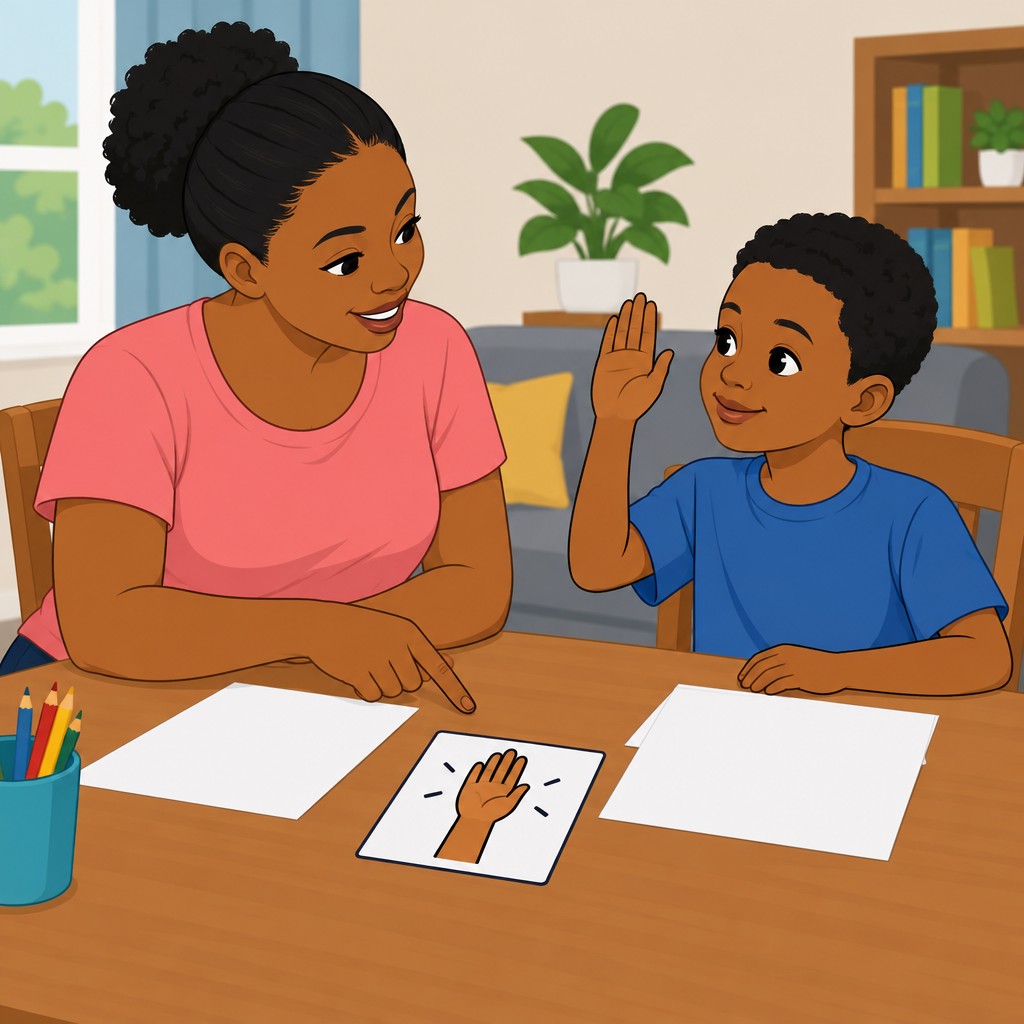
Joining Activities Appropriately
Rehearse entering an activity that others have already started.
Practise approaching calmly and waiting for an appropriate opening.
Then, rehearse accepting the group’s response without disrupting the activity.
Encourage the child to use words that show readiness to cooperate.
Requesting Help Clearly
Act out a task that the child cannot complete independently.
Practise approaching the appropriate person calmly.
Then, rehearse stating the difficulty clearly and waiting for assistance.
Switch roles to practise responding when someone requests support.
Resolving Disagreements Constructively
Use role-play to practise disagreements about shared activities or materials.
Invite the child to explain the problem without blaming another person.
Next, rehearse listening to the other person’s viewpoint.
Then, practise suggesting an acceptable way forward.
Repeat the scene with different roles when the child feels ready.
Cooperating With Peers
Act out a shared task that requires people to work together.
Practise taking a suitable role within the activity.
Then, rehearse sharing responsibilities and accepting another person’s ideas.
Encourage the child to notice when cooperation helps the activity continue.
Reviewing Each Role-Play Practice
After each scene, ask the child what happened first.
Next, discuss which response helped the interaction.
Identify one response the child can practise again.
Finally, repeat the scene and let the child try that response.
Reinforcing Positive Behaviour Without Harsh Discipline
Children learn classroom behaviour more effectively when adults guide, notice, and correct them consistently.
Adults can support learning by explaining expectations clearly and recognising responsible choices.
Consistent guidance helps children practise appropriate behaviour without experiencing harsh discipline.
Clear Expectations for Classroom Behaviour
Begin by explaining the behaviour you expect in clear, positive language.
Describe what children should do rather than focusing only on what they should avoid.
Keep expectations consistent so children understand what applies across different situations.
Also, explain why each expectation supports learning, responsibility, or respect.
Check that children understand the expectation before expecting independent compliance.
Recognising Appropriate Conduct
Recognise appropriate behaviour when it happens.
Use specific words that identify the action you want children to repeat.
For example, acknowledge calm choices, careful participation, or respectful responses.
Specific recognition helps children connect their actions with positive expectations.
Moreover, notice improvement rather than expecting perfect behaviour immediately.
This approach encourages children to keep practising responsible choices.
Effective Encouragement for Responsible Choices
Offer encouragement that focuses on effort, decisions, and responsibility.
Describe how the child handled a situation instead of using vague praise.
For instance, mention when the child corrected an action or responded appropriately.
However, keep encouragement genuine and connected to the behaviour you observed.
As a result, children can understand which choices deserve continued effort.
Consistent Consequences for Behaviour
Use consequences that follow clearly from the behaviour.
Explain the consequence calmly and apply it consistently.
Avoid changing expectations because of frustration, pressure, or convenience.
When children know what follows a choice, they can make decisions more responsibly.
Consequences should guide learning rather than create fear or humiliation.
Therefore, maintain a calm tone while reinforcing the established expectation.
Firm Responses Without Harsh Discipline
Correct behaviour firmly without using insults, threats, or unnecessary severity.
Address the action instead of labelling the child.
State the expectation again, then explain the next appropriate step.
Give children space to regain control when strong emotions affect their choices.
Afterward, return attention to responsible behaviour and continued participation.
Constructive Discussions About Mistakes
Treat mistakes as opportunities to build understanding and responsibility.
Begin by asking the child to describe what happened.
Then, discuss which choice created difficulty and which expectation applied.
Invite the child to suggest a more appropriate response.
Encourage honest reflection without turning the conversation into shame or blame.
Finally, agree on the action the child will take next.
Repairing Problems and Building Responsibility
Help children consider how their behaviour affected learning or other people.
When appropriate, guide them toward repairing the problem they created.
Repair might involve correcting an action, acknowledging responsibility, or making a better choice.
Keep the focus on accountability and learning rather than punishment.
Over time, these conversations help children manage mistakes with greater responsibility.
Predictable Responses to Behaviour
Use the same general process when behaviour needs correction.
First, identify the behaviour and restate the expectation.
Next, apply the appropriate consequence and allow reflection.
Then, recognise the child’s return to responsible behaviour.
Additionally, review expectations when repeated difficulties suggest that clarification may help.
Predictable responses create a steadier foundation for practising classroom behaviour at home.
Additional Resources
Google search results for How To Teach Classroom Behaviour At Home Behavior and Discipline
Bing search results for How To Teach Classroom Behaviour At Home Behavior and Discipline


